
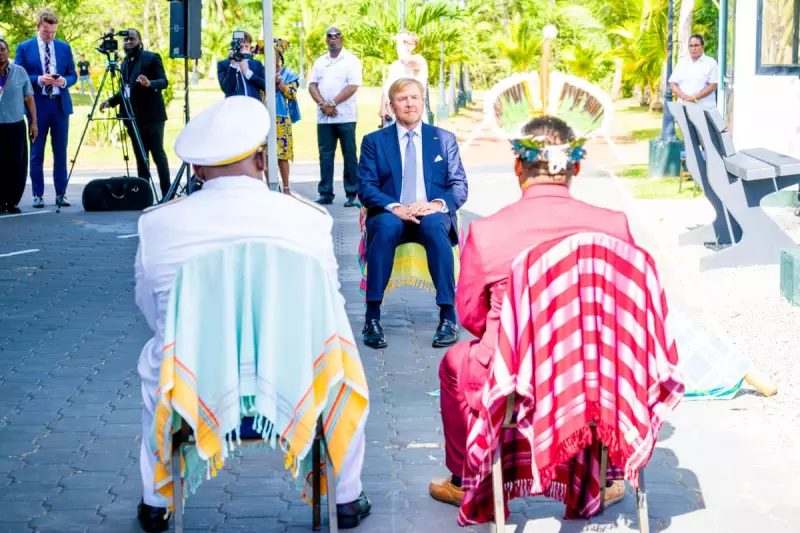
King Willem-Alexander of the Netherlands has embarked on a significant state visit to Suriname, where he is expected to directly confront the brutal legacy of Dutch colonial slavery. The visit, which began on Monday, comes as the South American nation prepares to mark a sombre milestone: the 150th anniversary of the abolition of slavery in the former Dutch colony.
A Historic Visit Amidst a Painful Past
The three-day tour represents a pivotal moment in the complex relationship between the Netherlands and Suriname. The king's itinerary is heavily focused on acknowledging a history of profound exploitation. On his first full day, King Willem-Alexander visited the ruins of the Mariënburg sugar plantation, a site synonymous with the suffering of enslaved people. He is also scheduled to meet with descendants of enslaved Africans and indentured labourers from India and Indonesia, groups whose ancestors were brought to Suriname under Dutch rule.
This visit follows a formal apology for the Netherlands' role in slavery made by Dutch Prime Minister Mark Rutte in December 2022. King Willem-Alexander later expressed his personal support for that apology. However, this journey to Suriname itself is seen as a powerful, symbolic act of recognition. The monarch's presence on the soil where these atrocities occurred adds a profound layer of contrition to the earlier statements made in Europe.
The Unresolved Demands for Reparations
Despite the historic apologies, a significant gap remains between the Dutch government's words and the expectations of many in Suriname. A central point of contention is the issue of financial reparations. The Dutch government has established a €200 million fund for initiatives related to slavery awareness, but it explicitly labels this as a fund for "historical consciousness," not reparations.
Surinamese President Chan Santokhi has publicly stated that the matter of reparations is still on the table for discussion. This stance is supported by activist groups and descendants who argue that true reconciliation requires material compensation for centuries of stolen labour and lives. The king's visit, while a step forward, highlights this unresolved tension. The Dutch monarchy's historical wealth is inextricably linked to colonial enterprises, making the king's role in this dialogue particularly charged.
Commemorating Keti Koti and Looking Forward
The timing of the visit is deeply symbolic, leading up to the commemoration of Keti Koti on July 1st, 2026. This annual event, whose name means "Broken Chains" in the Surinamese language Sranan Tongo, marks the end of slavery in 1873. The 150th anniversary next year is expected to be a major event, and the king's presence now sets the stage for continued reflection and dialogue.
Beyond the formal ceremonies, the visit includes engagements with Suriname's youth and cultural leaders, suggesting an effort to shape the future of bilateral relations. The focus is not solely on the past but on building a new partnership based on acknowledged history. However, the success of this new chapter will likely depend on how the Netherlands addresses the persistent calls for reparative justice that continue to echo from communities still living with the consequences of colonialism.
As King Willem-Alexander walks through plantations and meets with community representatives, his visit underscores a slow but undeniable shift in how European nations are forced to grapple with the darkest chapters of their imperial pasts. The outcome of this reckoning in Suriname will be closely watched around the world.




