
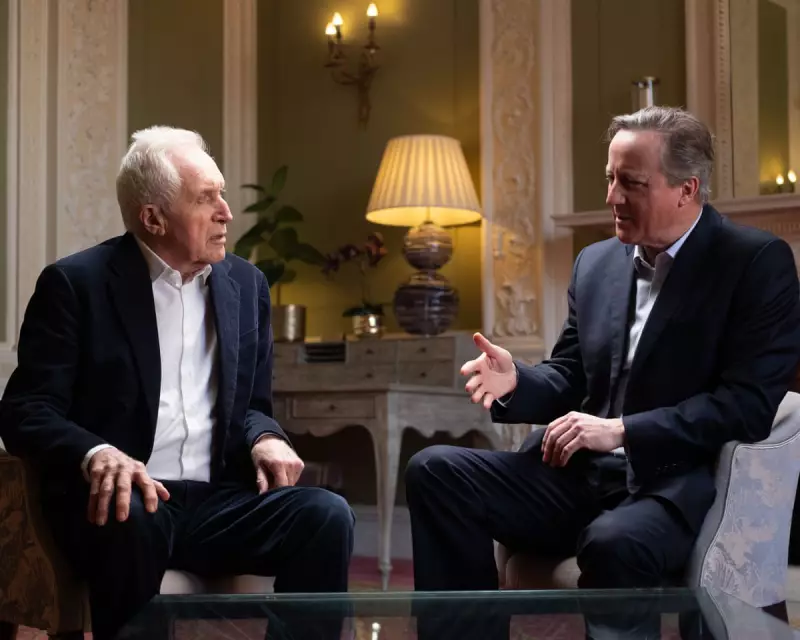
Veteran broadcaster David Dimbleby has launched a combative new three-part series for the BBC, posing a direct and challenging question in its title: 'What's the Monarchy For?'. Free from his former role as a BBC staffer, Dimbleby has stated he now feels able to robustly challenge the institution in a way he previously could not.
Questioning Royal Power and Influence
The opening episode focuses sharply on the extent of the monarchy's power and how it is used. A central theme is whether King Charles III influences government policy by advocating for his personal beliefs. The programme reveals that the Prime Minister has a weekly audience at Buckingham Palace, and letters from the King, known for writing many, are routinely placed at the top of the relevant minister's in-tray.
Former Prime Minister David Cameron described his weekly meetings with the late Queen Elizabeth II as therapeutic, a chance to clarify his thoughts with a well-briefed, discreet listener. However, Dimbleby presses interviewees on the democratic legitimacy of this unparalleled access, asking why the opinions of an unelected head of state should hold any sway.
The Hypocrisy of 'Advocacy in Confidence'
The series highlights a key moment where Dimbleby dissects what he presents as institutional hypocrisy. He challenges former Attorney General Dominic Grieve over the government's long legal battle to keep Charles's so-called 'black spider memos' secret. Grieve argued the Prince needed confidentiality to advise government while maintaining public neutrality.
Dimbleby countered that this amounted to having the right to be non-neutral while preserving the appearance of neutrality. When the letters were finally published after a 10-year court fight, they revealed Charles had lobbied ministers on issues from beef farming to army helicopters.
A Tool of Government with Limited Power
The investigation also scrutinises the limits of royal authority, using the 2019 prorogation of Parliament as a case study. While the monarch holds the constitutional power to stop a leader acting unconstitutionally, contributors agreed Queen Elizabeth II could not have practically refused Prime Minister Boris Johnson's request, as it would have meant siding with the opposition.
On soft power, Dimbleby cites Queen Elizabeth's historic 2011 visit to Ireland, where speaking Irish and shaking hands with former IRA leader Martin McGuinness helped achieve diplomatic breakthroughs. Yet he also notes the monarch often acts on government instruction, from hosting Romanian dictator Nicolae Ceaușescu in 1978 for a trade deal to the recent invitation extended to Donald Trump.
The series concludes its first instalment with a damning implication: a monarchy with little real power is scarcely better than one wielding too much undemocratically. It sets the stage for next week's episode, which promises to examine the staggering financial cost of the institution to the British public. 'What's the Monarchy For?' is available to watch on BBC iPlayer now.




