
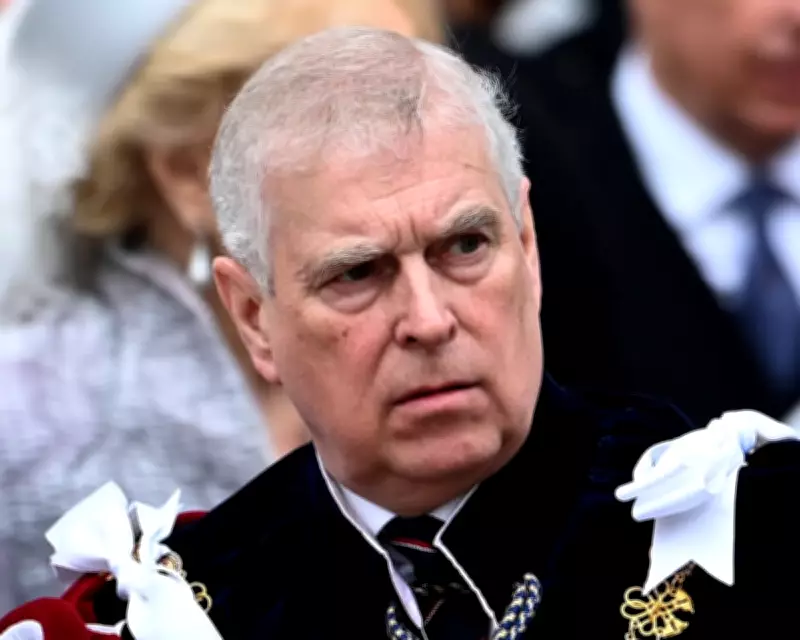
Australian Prime Minister Anthony Albanese has confirmed his government would support removing Andrew Mountbatten-Windsor from the royal line of succession, describing the former prince's arrest as an "extraordinary fall from grace." This development comes as the UK government prepares to consider legislation that could strip Mountbatten-Windsor of his right to inherit the throne.
Formal Communication Between Governments
In a significant diplomatic move, Prime Minister Albanese has written to his British counterpart, Keir Starmer, to formally offer Australia's backing for any proposal to remove the former prince from the succession line. An extract from Albanese's letter, supplied to media outlets, states clearly: "In light of recent events concerning Andrew Mountbatten-Windsor, I am writing to confirm that my government would agree to any proposal to remove him from the line of royal succession."
Legal Requirements for Succession Changes
Removing Mountbatten-Windsor from the line of succession would require an act of the UK parliament and the support of all 14 Commonwealth countries where King Charles III serves as head of state. This group includes Australia, Canada, and New Zealand, making Australia's position particularly significant in the international process.
The former prince currently stands eighth in line to the throne, following Princes William and Harry and their children. Despite relinquishing his royal titles in October following revelations about his connections to the late financier and convicted sex offender Jeffrey Epstein, Mountbatten-Windsor remains technically eligible for succession under current laws.
Buckingham Palace's Position
Reports indicate that Buckingham Palace would not obstruct plans to remove Mountbatten-Windsor from the royal line of succession. Following his brother's arrest, King Charles issued a statement emphasizing that "the law must take its course," suggesting the royal family would not interfere with legal proceedings or potential legislative changes.
Mountbatten-Windsor continues to deny all allegations against him, but the political momentum appears to be building toward significant constitutional changes regarding his royal status.
Historical Context of Succession Reforms
This potential change follows previous reforms to royal succession laws. In 2011, then-British Prime Minister David Cameron secured Commonwealth support for significant changes that eliminated male preference in the line of succession and removed the ban on heirs marrying Roman Catholics. These reforms demonstrated that international consensus could be achieved on matters of royal succession.
Australian Political Context
Despite his personal republican views, Prime Minister Albanese has clarified that Mountbatten-Windsor's arrest will not prompt his government to pursue another referendum on whether Australia should have an Australian head of state. The 1999 republic referendum under Prime Minister John Howard failed to achieve the necessary support for constitutional change.
Albanese emphasized the seriousness with which Australians view the allegations against the former prince, stating: "These are grave allegations and Australians take them seriously." He further described Mountbatten-Windsor's situation as representing "an extraordinary fall from grace" for someone who previously occupied "a position really of absolute privilege."
Constitutional Implications
The former prince remains a counsellor of state, meaning he is technically among the group of adult royals who could be called upon to fill in for King Charles III during illness or absence. However, in practice, only working royals typically perform these duties, making Mountbatten-Windsor's theoretical role largely symbolic under current circumstances.
As the UK government moves toward considering legislative changes, Australia's formal support provides significant momentum for what could become one of the most substantial alterations to royal succession arrangements in recent history.




