Labour's Electoral Coalition Unravels in Rain-Soaked Manchester Streets
You can feel Labour's electoral coalition fraying in the cold, rain-soaked streets of south-east Manchester. With just nine days remaining until the historic byelection in Gorton and Denton, one powerful sentiment unites these otherwise diverse communities: a visceral contempt for Prime Minister Keir Starmer.
Mention Keir Starmer's name and people respond with laughter—not affectionate amusement but disbelief, as though treating him as a serious topic of conversation seems faintly absurd. "He just doesn't stick to his word," says a middle-aged woman walking her dog, emphasizing that her real feelings would be too impolite to print.
The Founding Sin Becomes Defining Trait
This perception is widely shared across the constituency. According to recent YouGov polling, six in ten Britons believe Starmer is untrustworthy, with just two in ten believing the opposite. These are the fruits of a political project crafted by Morgan McSweeney, Starmer's recently departed chief of staff.

It was smart politics, McSweeney clearly believed, to mislead the Labour membership into voting for Starmer six years ago by offering leftwing policy pledges and then systematically abandoning them. But that founding sin has become the defining trait of this government: voters routinely perceive it as innately deceitful and duplicitous.
The latest evidence came as Starmer's government reeled from yet another head-spinning, chaotic U-turn—this time forced upon him by Nigel Farage and Reform. A plan to delay local elections was abandoned in humiliating fashion, not because the Prime Minister realized it was wrong, but because Farage raised a legal challenge and Starmer knew he would lose.
Splintering in Two Directions
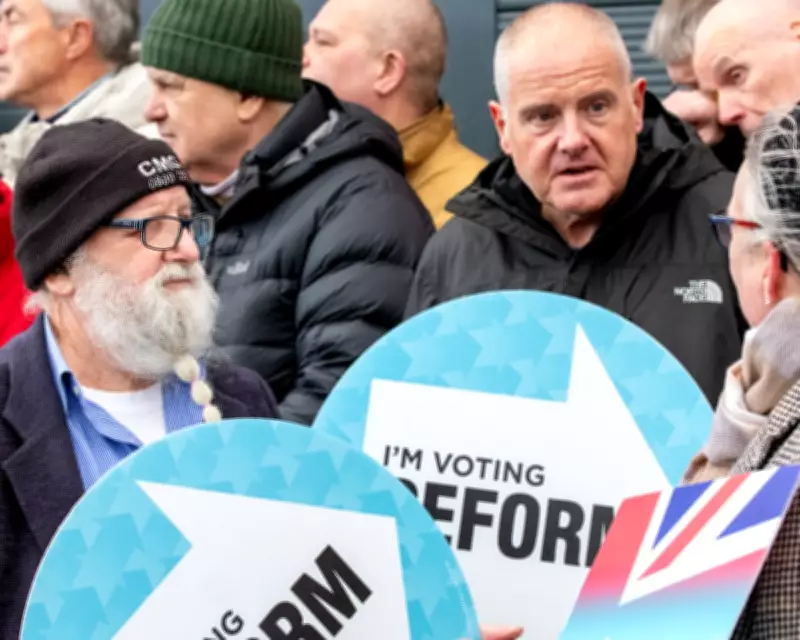
Walk the streets of Gorton and Denton now and the resulting draining of trust is easily discernible. Labour took half the vote here in the 2024 general election. Now its coalition is splintering in two directions simultaneously: toward Zack Polanski's Greens on the populist left, and Nigel Farage's Reform UK on the Trumpian nationalist right.
Commentators often attempt to divide the constituency neatly in two: younger, more diverse Gorton; older, whiter, more working-class Denton. There are certainly an astonishing number of Green Party posters and garden stakes visible throughout Gorton, while union jacks appear more frequently in Denton.
Yet people don't always fit into these neat boxes. An older woman in Denton voices her grievances about "illegal migrants" taking jobs and then reveals she's voting for the Green candidate, local plumber Hannah Spencer. A white man in his seventies uses his thick Mancunian accent to denounce Rachel Reeves for what he perceives as a vendetta against pensioners—and says he too will back the leftwing insurgents.
Reform's Immigration Focus Versus Green Optimism
For those drifting toward Reform's candidate, Matt Goodwin, immigration is almost always the first grievance voiced. A middle-aged woman explains she's voting for Reform because "Britain seems full with immigrants at the moment, and there's not enough houses." She complains that her three sons cannot even get on the council-house waiting list.
This demonstrates how rightwing populism feeds on the wreckage of a broken economic model. People feel trapped in a zero-sum game: if only there were fewer foreigners, there would be more homes, more jobs, more security for them. Yet tens of thousands remain trapped on council-house waiting lists because housing stock has been sold off and not adequately replaced.
Green candidate Hannah Spencer remains bullish about her prospects in Denton. "Reform tend to assume that white working-class communities all think and act in one and the same way," she says, "and that we don't care about each other. I think they've really, really underestimated how much people actually do care about having a place for everyone to live."
The Search for Labour Voters
Finding Labour voters in the constituency has become increasingly difficult. "The main thing is that nobody is voting Labour," says longtime resident and activist Ally Fogg. "It's become almost impossible to find a Labour voter anywhere."

One party loyalist argues that the media holds Starmer to a harsher standard than it did his Conservative predecessors. Even this supporter, however, admits to wavering: he will decide on polling day which candidate is best placed to stop Reform.
Labour remains officially bullish about its prospects, though this byelection upends normal expectations management. Typically, parties downplay their chances to motivate supporters, but when competing with another progressive party, a different calculation applies. If Labour's vote hasn't completely collapsed, it may be due to the emergence of "shy Labour voters"—people reluctant to admit their voting intentions because of the stigma now attached to supporting the party.
Struggling to Articulate Purpose
What remains undeniable is that even Labour's remaining grassroots activists struggle to articulate a coherent purpose for their party. A cheerful canvasser from Bradford tells me "equality" represents a core Labour value. When asked which policies embody that principle, she falters and cannot provide specific examples.
Party briefings insist support is holding among local Muslim voters, despite widespread fury over British complicity in Israel's war in Gaza. Leftwing activist Farrukh Haroon dismisses that claim out of hand. "Their vote has tanked," he states unequivocally. Labour treated Muslim communities as "voting fodder" and "colonial subjects," he argues, adding that "that relationship has been broken."
Angry Disengagement Threatens Democracy
What should genuinely frighten anyone invested in the future of democracy is the level of angry disengagement on display throughout these communities. Some residents made clear they've given up on voting entirely, having developed solidified contempt toward all politicians. These are citizens that even the Greens' brand of populism has yet to convince.
After so many years of declining living standards and public services in crisis, the hope that once sustained many people has shriveled. There is frustration, some apathy, but most obviously despair—and if that despair hardens further, it could carry this country into far darker political territory. Once trust has been eroded to this extent, as is evident throughout Gorton and Denton, no one can be certain what happens next.