
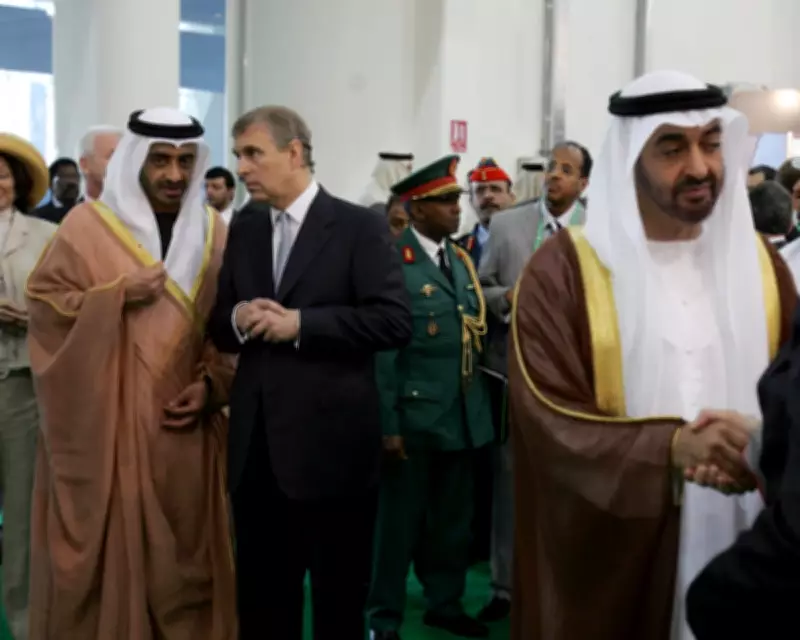
Freshly disclosed correspondence has unveiled that Prince Andrew, the Duke of York, provided a personal endorsement for the convicted sex offender Jeffrey Epstein during an official royal visit to the United Arab Emirates in 2010. The emails, released by the US Department of Justice, detail communications between the Duke and Epstein that coincide with a state trip involving Queen Elizabeth II, Prince Philip, and then Foreign Secretary William Hague.
Key Email Exchanges Reveal Introductions
In a pivotal email dated 24 November 2010, sent from "The Duke" to Epstein with the subject line "Abdullah," Prince Andrew appears to facilitate connections with high-ranking UAE officials. The message references Sheikh Abdullah bin Zayed Al Nahyan, the Emirati foreign affairs minister at the time, indicating that the minister viewed Epstein favourably and wished to introduce him to Sheikh Mohamed bin Zayed Al Nahyan, then the crown prince of Abu Dhabi.
The Duke wrote: "You are in big time. He thinks you are great and would like to introduce you to Sheikh Mohammed, the Crown Prince. Doesn't think it can be done before the end of the year though. I will discuss further and report back."
Epstein's Response and Further Meetings
Epstein responded to this communication by suggesting a joint vacation, writing: "Ask Abdullah for a date when we can all go on vacation." Additional emails indicate that Epstein had already met with Sheikh Abdullah and Sheikh Mohammed bin Rashid Al Maktoum, the ruler of Dubai, in early November 2010. In one email, Epstein noted: "I met with both abdulla -aby dhabi, and mahammed -dubai [sic] today."
Further correspondence shows Epstein advising Prince Andrew on how to vouch for him during discussions with the UAE foreign minister. Epstein listed qualities to emphasise, including:
- Trust
- Financial expertise
- Funder of extreme science
- Fun
Context of the State Visit and Royal Role
These email exchanges occurred while Prince Andrew was serving as the UK's special representative for trade and investment, a position he held from 2001 to 2011. The timing aligns with the royal delegation's visit to the UAE, which included key figures from the British monarchy and government. It is important to note that the released emails do not imply any wrongdoing by the UAE officials involved.
Discussions on Investment Restrictions
Separate email threads reveal that Prince Andrew and Epstein discussed ways to navigate restrictions on personal investments while the Duke was acting as a trade envoy. In May 2010, when Epstein was under house arrest after pleading guilty to soliciting a minor for prostitution, Prince Andrew referenced a prior phone conversation about potential investments.
He explained: "So long as I delegate any responsibility to invest then there are no problems. So Trusts are delegated responsibility as too are any Banks or Investment Vehicles or for that matter Trusted individuals."
This suggests the former prince considered himself barred from direct personal business investments or board positions during his official tenure, yet explored methods to circumvent these limitations with Epstein's input.
Denials and Ongoing Implications
Prince Andrew has consistently denied any misconduct related to Epstein's criminal activities. The release of these emails adds a new dimension to the ongoing scrutiny of his associations and conduct during his time as a royal trade representative. The documents highlight the intersection of royal diplomacy, personal connections, and controversial figures, raising questions about protocols and boundaries within such high-profile roles.
The revelations underscore the complex web of relationships that characterised Epstein's interactions with influential individuals, extending into international diplomatic circles. As these details emerge, they contribute to a broader understanding of the events surrounding one of the most notorious figures in recent history.




