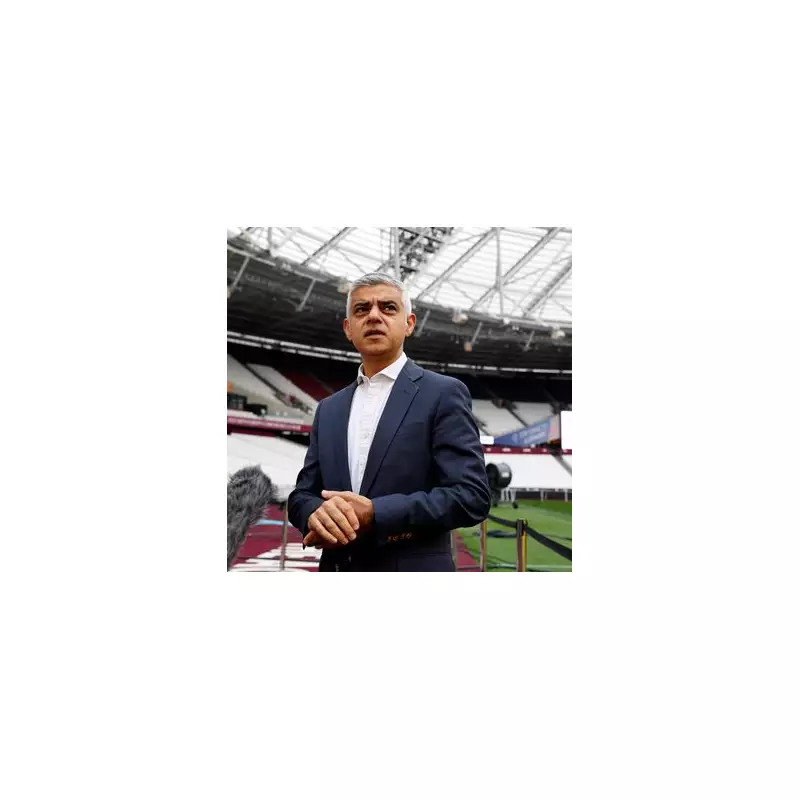
Mayor of London Sadiq Khan is confronting renewed pressure to broker a crucial naming rights agreement for the London Stadium, as new analysis reveals a potential £2.5 million annual bill for taxpayers if West Ham United faces relegation.
The Financial Threat of Relegation
West Ham United FC currently pays £4.4 million per year to use the former Olympic Stadium, with the Greater London Authority (GLA) covering the remaining operational costs. However, the club's rental fee is set to be halved if they drop to the Championship.
With the Hammers languishing in 17th place in the Premier League, this scenario is a genuine concern. The GLA, which took over stadium ownership in March, now faces the prospect of subsidising the venue by even more than the £19.5 million already budgeted for the 2025-26 financial year.

A Decade-Long Search for a Sponsor
In response, Neil Garratt, Chair of the London Assembly's Budget and Performance Committee, has formally written to the Mayor. He is urging City Hall to intensify efforts to secure a naming rights partner, an idea first proposed over a decade ago in 2012.
Mr Garratt stated the situation is "clearly not a comfortable position for the GLA to be in," emphasising that "Selling naming rights has long been seen as a way to reduce the stadium’s financial burden." Despite this, a deal has remained elusive.
The Committee has demanded that the Mayor explore all commercial avenues for the stadium and report back by autumn 2026. However, the London Legacy Development Corporation (LLDC) has indicated a "significant risk" that no naming rights deal will be secured before 2028.
Challenges and Potential Rewards
David Bellamy, the Mayor's Chief of Staff, acknowledged the difficulties, noting the "naming rights market does remain challenging" and that any agreement must satisfy the sponsor, the stadium, and West Ham United.
For any deal to proceed, West Ham's consent is mandatory. The club and the GLA would split any annual income exceeding £4 million. Previous estimates suggested a naming rights deal could generate up to this amount each year, which would significantly offset the current financial losses.
This pressure comes as the GLA separately grapples with identifying proposals to fill a wider £19.2 million funding gap across its operations.