
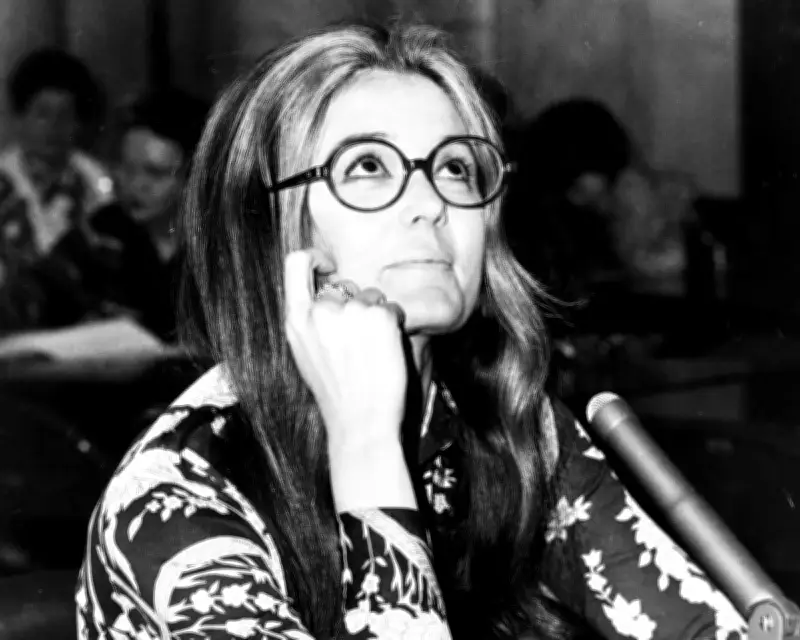
Gloria Steinem, the groundbreaking feminist campaigner, died on Wednesday at her home in New York at the age of 92. By the time of her death, Steinem had become synonymous with feminism, serving as a human mascot for the movement that she helped bring into the American mainstream.
From Obscurity to Icon: Steinem's Early Life
It is easy to forget that when Steinem was born, feminism was considered over. The suffrage movement, which had won women the right to vote less than two decades before her birth, seemed remote to a girl growing up itinerant and poor in Ohio in the 1930s and 1940s, under the care of a single mother plagued by a violent and debilitating mental illness. For Steinem, immediate concerns overshadowed the status of women.
Experience, however, radicalized her. Steinem attended Smith College, where her education opened new possibilities. In 1957, en route to a postgraduate fellowship in India, she had an illegal abortion in London. In 1969, while working as a journalist for New York magazine, she attended an “abortion speak-out” organized by radical women from the emergent Women’s Liberation movement.
The Turning Point: Abortion Speak-Out and Ms. Magazine
At the speak-out in a church near Washington Square Park, women described being blindfolded in cars driven by mobsters to motels for illegal abortions performed by drunk or cruel doctors. Others spoke of threatening suicide to obtain legal exemptions, or lying in hospital wards hemorrhaging and septic. Their rage struck something in Steinem, who had already published “A Bunny’s Tale” six years earlier, an undercover exposé of the Playboy Club. The woman she would become was born that March day in that church.
Steinem emerged as one of the most successful and visible faces of the second wave, a figurehead who personified the feminist movement. Aware of mass media dynamics and her own willowy good looks, she deployed stardom and glamour for the cause. She was perhaps the first famous feminist of the celebrity era, forging a public persona between Madonna and Joan of Arc. Her magazine Ms, launched in 1972, brought women’s liberation to newsstands across America. She also campaigned relentlessly, making feminism a power player in the Democratic party by brokering her support for policy commitments from candidates.
Coalition Building and Legacy
Steinem’s image—powerful, beautiful, and connected—lent feminism allure and mass appeal. Her aim was to use her palatable image to direct attention to others’ work and more radical visions. She stood in for a large swath of feminists—intellectuals, activists, writers, organizers, liberals, radicals, lesbians, and Playboy bunnies—and did her best to respect them all. In a movement divided by disagreements over priorities and tactics, Steinem’s side often won, perhaps due to her celebrity or fundraising gifts.
Steinem was an uncommonly gracious opponent, willing to engage in self-criticism and encourage younger feminists. She lent her advice to initiatives ranging from corporate to radical. From her Upper East Side home, she acted as an elder stateswoman, answering emails, taking meetings, and meeting activists’ daughters.
Feminism's Retreat and the Road Ahead
An honest account of women’s status today would admit that feminism is in a moment of precipitous retreat. After Ms was founded, grassroots energy diminished, and academia and the radical left lost interest. Social media proved more effective at mobilizing male resentment and spreading misinformation about birth control. Roe was struck down. Organized feminism is now largely the province of liberal NGOs, persecuted by the Trump regime. If feminism is to be revived, it will have to be rebuilt—without Steinem, the task will be that much harder.




