From Popcorn to Playbooks: A British Coach's American Dream
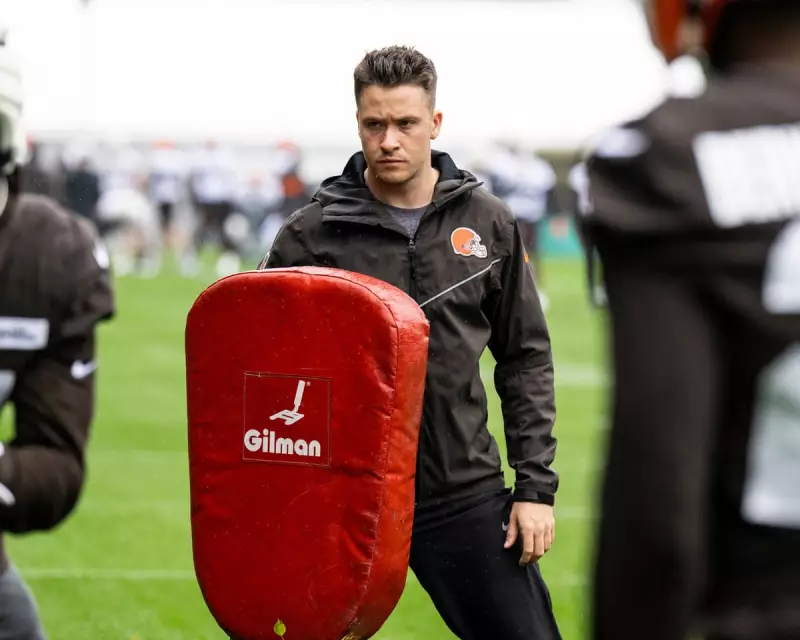
In a remarkable career transformation that defies conventional sporting pathways, James Cook has traded serving popcorn at a Surrey cinema for developing professional athletes with the Cleveland Browns. The British coach, still in his late 20s, now holds the position of player development coach at the prestigious NFL franchise after an extraordinary journey that began with channel-flicking as a 12-year-old.
Cook discovered American football accidentally while watching television with his father, immediately captivated by what he describes as "this weird and wonderful" sport. His early ambition to become Europe's first NFL quarterback saw him play for Great Britain's national team, though financial constraints prevented him from pursuing college football in the United States.
The International Pathway to Professional Football
While working multiple roles at his local cinema - from flipping burgers to cleaning seats - Cook volunteered with the NFL's International Player Pathway (IPP). Established in 2017, this programme specifically recruits athletes from outside the United States. "I was scooping popcorn, cleaning seats, flipping burgers, doing a bit of everything," Cook recalls. "Any time the NFL guys wanted me, I would switch my shifts and help out."

His quarterback skills proved invaluable during these early days. "Being a quarterback, the one thing I had was I could throw. So when they worked out with players, I'd show up all over London and throw the ball to them. I wasn't paid but they'd usually buy me lunch."
This volunteer work brought him into contact with Aden Durde, who had playing experience with the Carolina Panthers and Kansas City Chiefs before co-founding the IPP with two-time Super Bowl winner Osi Umenyiora. When Durde made history by becoming the first British full-time coach in NFL history with the Atlanta Falcons, Cook naturally stepped into his former mentor's role leading the international programme.
During his time with IPP, Cook worked with several notable athletes including Louis Rees-Zammit, Travis Clayton (recently drafted by Buffalo Bills), and Charlie Smyth, the Irish Gaelic football convert now placekicking for the New Orleans Saints.
Breaking Barriers in American Football
Cook's appointment with the Cleveland Browns came unexpectedly six months ago. "The Browns called out of the blue," he says, describing a hybrid role that involves supporting younger players, maximising practice field time, and collaborating with physios, the head coach and general manager.
His unique background working with international athletes who had never played American football provides unexpected advantages when coaching first-year rookies. "First-year rookies also have to build structure and routines: how to look after their body and deal with a huge playbook. But also just being present for guys. That's the same everywhere."
Being an Englishman who never played professionally in the NFL could be perceived as a disadvantage, but Cook sees it differently. "It's more of a perceived hurdle than an actual one. I've had a lot of reverse Ted Lasso jokes and loads of players call me 'bruv' as they love that."
He acknowledges making minor adjustments to bridge cultural gaps, saying "trash can" instead of "bin", but emphasises that fundamental coaching principles transcend nationality. "If players know you can help them, they don't care where you're from or what accent you have. And when people know that you care, all the other stuff melts away."
The Growing International Presence in the NFL
Cook's story reflects a broader, though still limited, internationalisation of American football. Only 5% of NFL players are born outside the United States, and most of those developed their skills through the US college system. True outsiders remain unusual, and foreign coaches are particularly rare.
Among the success stories is Jordan Mailata, a former rugby league player from Sydney who won the Super Bowl with the Philadelphia Eagles. Mailata represents one of the few IPP graduates to reach the sport's pinnacle.

Historically, international players typically entered the NFL as kickers, often transitioning from other football codes. Bobby Howfield moved from playing for Watford and Fulham to becoming a placekicker for the Denver Broncos and New York Jets, while Mick Luckhurst progressed from rugby union in St Albans to the Atlanta Falcons.
The challenges for non-kickers without US college education remain substantial, though not insurmountable. Ayo Oyelola, a Londoner who previously played for Chelsea's youth team, discovered American football at Nottingham University before progressing to the Canadian Football League and eventually the Jacksonville Jaguars and Pittsburgh Steelers.
Maximilian Pircher's European Journey to Minnesota
Another compelling international story comes from Maximilian Pircher, whose physical stature at 6ft 7in and 23 stone made him unsuitable for his original sports of football and handball. The Italian took up American football in his late teens, impressing with clubs in Austria and Germany before earning an IPP place in 2021.
Just one year later, Pircher found himself holding the Vince Lombardi Trophy as part of the LA Rams practice squad. Subsequent spells with the Detroit Lions, Seattle Seahawks and Washington Commanders preceded his current position with the Minnesota Vikings, though the 26-year-old offensive lineman is yet to see regular season action.
"It's not really difficult, not an obstacle," Pircher says about being a foreign player. "We have players from all different states, so it doesn't really matter. At first, they ask: 'You got an accent - where are you from?' But, once we have that figured out, we're all friends."
Pircher has embraced the social aspects of NFL life, forming close bonds across position groups. "Obviously the O-line is always very tight because we are unit and altogether one, but we have friends from every position group. My best friend, Landen Akers - my best man, actually - played wide receiver at the Rams."
Building an International NFL Family
The IPP programme has fostered a strong sense of community among its graduates, who return to Florida annually to coach the next wave of international prospects. "Almost all of us come back every year, including Jordan [Mailata], to teach the new people and help them out, tell them things we experienced," Pircher explains. "The international programme is like a family. We are giving back what the programme gave to us."
Pircher recognises his role in inspiring the next generation of international players. "I would say all the countries outside the United States. The better each one of us from the IPP does, the more young people who play football in Italy, in Germany, wherever, can see: 'Oh it is possible - if I put the work in every day, I can get somewhere.'"
Cook remains optimistic about the future of international players in the NFL, declaring: "It's going to happen. It's a matter of when, not if. Why not a German quarterback? Why not a Japanese wide receiver? The NFL is for big, fast, strong, diligent, intelligent, hard-working, structured individuals - and those aren't traits unique to one geographical location."
He concludes with a vision that reflects his own unconventional journey: "Talent and skill is distributed across the world, but opportunity isn't. The NFL's job is to provide opportunity. I can't wait to watch it happen."