Norwegian Club Demands Anti-Doping Overhaul After Artificial Pitch Incident
The Norwegian football club Vålerenga has demanded significant changes to anti-doping regulations following a groundbreaking case where one of their women's team players failed a drug test after absorbing a banned substance from artificial pitch materials.
This extraordinary seven-month saga concluded on Wednesday when the World Anti-Doping Agency decided against appealing the Norwegian anti-doping authority's ruling that the player was completely faultless. The landmark decision has exposed critical vulnerabilities in how environmental contamination is handled within anti-doping protocols.
The Unseen Danger in Synthetic Turf
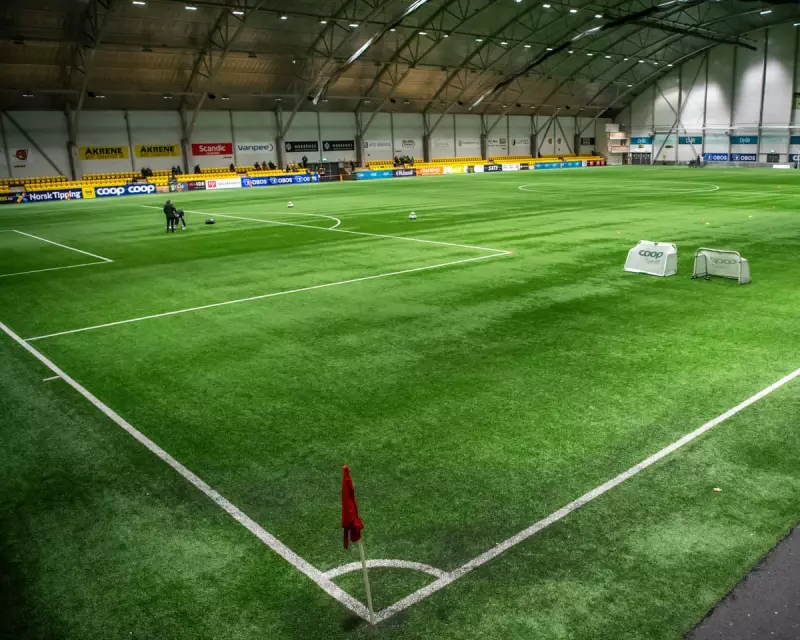
The controversy began on 22nd April during a match between Vålerenga and LSK Kvinner at LSK-Hall in Lillestrøm, near Oslo. Routine drug testing revealed that eight players - four from each team - had samples containing the prohibited stimulant DMBA.

One Vålerenga player's sample particularly concerned authorities as it exceeded WADA's reporting threshold of 50 ng/ml. The player, who has chosen to remain anonymous, described receiving the news as "a terrible moment" that left her confused and deeply distressed.
"It was a very upsetting experience and I couldn't really understand what was going on," she revealed, adding that the ongoing investigation likely affected her performances despite being permitted to continue playing.
Environmental Investigation Uncovers Shocking Source
Initial investigations baffled officials from both clubs and Anti-Doping Norway as they found no common factors in food, drink, or supplements consumed by the affected athletes. The mystery was finally solved in July when environmental testing identified the unlikely culprit.
Comprehensive analysis determined that shredded tyre granulate - commonly known as rubber crumb - used in the artificial pitch contained DMBA, which had transferred to players during the match. DMBA is a synthetic substance that stimulates the central nervous system and is banned in both Norway and the European Union.
Scientific studies had previously identified that DMBA can occur through the breakdown of rubber-type granulate, adding frustration that this knowledge wasn't applied earlier in the investigation.
This case represents the first known instance in elite sport where environmental exposure has been responsible for a perceived doping violation. The exonerated player expressed relief but noted the arbitrary nature of the outcome.
"If Adno had not been able to identify the granulate as the source, my situation would have been much more difficult," she stated. "When you're extremely careful, follow all the rules and still end up being drawn into a case like this, it shows how vulnerable you are as an athlete."
Broader Implications for Football and Beyond
The case has triggered significant concerns about the thousands of synthetic pitches across Europe, particularly as no international standards exist to ensure such turf materials are free of substances banned in sport.
Following the Vålerenga incident, the Norwegian Football Federation recommended moving indoor competitive matches outdoors. With approximately 1,800 similar pitches in Norway alone - and many more throughout the UK, especially at grassroots level - the potential for similar incidents remains high.
Vålerenga CEO Harriet Rudd emphasised the need for systemic change, stating: "Environmental factors really need to be high on the radar moving forward. Anti-doping work has to develop and issues like this have to become a much larger part of the things you take into consideration."
The club is advocating for reforms to WADA's strict liability principle, which currently means athletes can be found guilty of doping violations regardless of intent or knowledge. Rudd also questioned whether the investigation would have been as thorough if only one or two players had tested positive.

Looking ahead, the European Union will ban the sale of rubber crumb infill from 2031, though current surfaces aren't considered to pose health risks to athletes. The exonerated player hopes her experience will lead to better protection for future athletes facing similar circumstances.
"Hopefully other athletes in a situation like mine will have stronger legal protection in the future," she said. "The rules as they are today can lead to an innocent athlete being suspended for years."