Bin crisis in Orthodox Jewish neighbourhood sparks community tensions
A radical proposal to solve waste management problems in a rapidly growing Orthodox Jewish community has triggered death threats, antisemitic rumours and national concern from religious leaders in Salford.
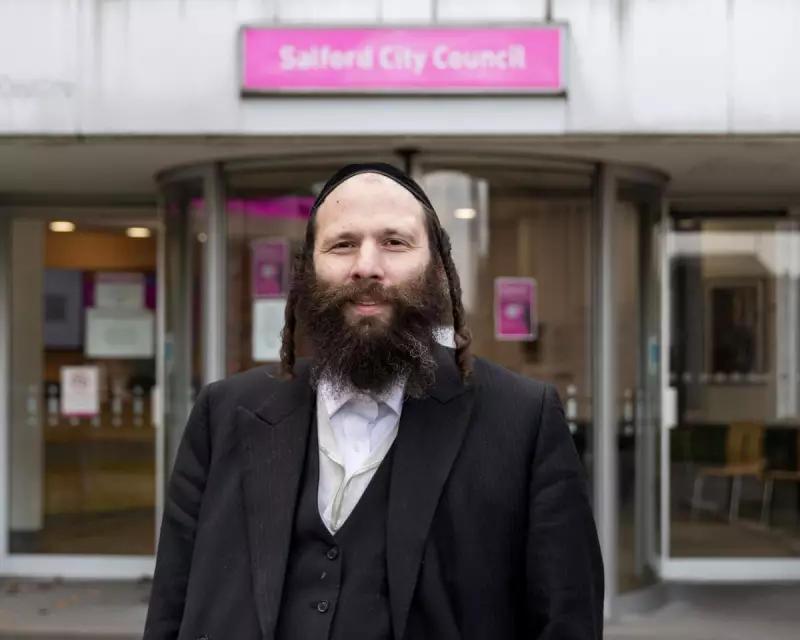
Independent councillor Andrew Walters, who serves as rapporteur for waste in Salford, proposed creating a breakaway town council for Broughton Park to address the area's unique needs. The plan, nicknamed 'BrePxit' (Broughton Park exit), will face a crucial vote on 19 November.
The unique challenges of Broughton Park
Broughton Park in Greater Manchester hosts one of Europe's fastest-growing Orthodox Jewish and Haredi communities, with specific requirements that differentiate it from typical British suburbs. The area has seen house prices rise significantly as families relocate from across the UK and abroad.
The community's distinctive characteristics include larger family sizes, with couples often having up to ten children and multiple generations sharing households. Strict kosher dietary laws mean fewer restaurant options and more home cooking, while imported food products contribute to increased packaging waste.
These factors create substantial pressure on local waste services in a city where general domestic rubbish is typically collected only once every three weeks. The combination of larger families and different consumption patterns has resulted in overflowing bins and inadequate service provision.
Proposal triggers dangerous backlash
Despite Walters' intentions to address practical service delivery issues, his proposal has sparked alarming reactions including death threats against the councillor, now subject to police investigation.
Antisemitic rumours circulated suggesting the plan represented 'a Jewish council taking over', while 47 British rabbis wrote to Salford's city mayor Paul Dennett urging him to veto the proposal.
The consultation process generated Salford council's largest ever public response, containing both expressions of support and concerning antisemitic messages. Religious leaders expressed fears that creating a council covering 10,000 voters across Kersal, Broughton Park and Broughton wards could be perceived as an ethnic enclave, potentially jeopardising community relations.
These concerns have been amplified by recent security incidents, including the 2 October attack on Heaton Park Hebrew Congregation synagogue just a mile from Broughton Park, which resulted in the deaths of Adrian Daulby, 53, and Melvin Cravitz, 66.
Councillor defends democratic process
Andrew Walters, who also participates in the interfaith Muslim Jewish Forum of Greater Manchester, insists his proposal was never intended as ethnocentric. He emphasises that the area contains significant white, black and Asian populations alongside the growing Jewish community.
'This is a democratic process recognised under statute', Walters stated. 'It's not a religious council by any sense. Anyone can stand as a councillor unless otherwise disqualified.'
The councillor explained that his 'hyper-localisation' approach aims to address specific local needs where demand for play spaces and waste services outweighs requirements for adult social care. He expressed concern that current 'one-size-fits-all' service delivery fails to accommodate the area's unique characteristics.
The proposal emerged after a community governance review was triggered by a petition signed by at least 7.5% of affected residents - approximately 1,000 people. Walters noted that misunderstanding about the plan's motives and costs had spread in the current anti-immigration climate.
Mayor voices safety concerns
In a statement this week, Salford City Mayor Paul Dennett confirmed he shares the rabbis' concerns about community cohesion and safety, particularly following the recent synagogue attack.
The Jewish population in Salford has doubled to 10,373 between 2001 and 2021, according to the Institute for Jewish Policy Research, driven by high Haredi birthrates and young families moving to the area.
Despite the controversy, Walters maintains the process has demonstrated strong appetite for local democracy while highlighting the ongoing need for community cohesion. 'I deal with Jewish and non-Jewish constituents and do my best to help everyone equally', he affirmed.
The 19 November vote will determine whether Broughton Park becomes the latest community to pursue greater local control over services, or whether concerns about community relations will prevail in this increasingly diverse part of Greater Manchester.