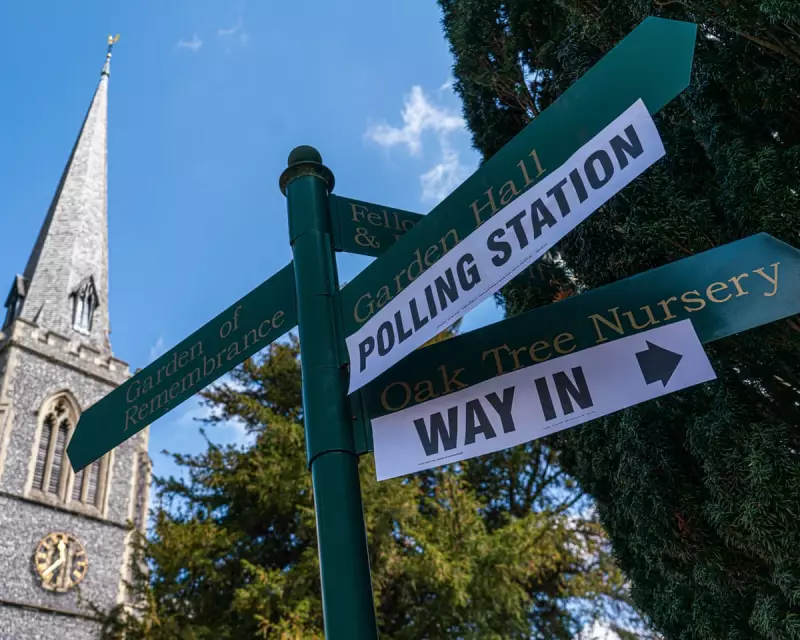
Voters across parts of England could face a longer wait to go to the polls, as the government's ongoing push to reorganise local councils threatens to delay scheduled elections for a second time.
Reorganisation Plans Prompt Election Postponement
The Department for Levelling Up, Housing and Communities has confirmed that local elections planned for May 2025 could be postponed until 2026. This potential delay is a direct consequence of ministers' continued efforts to create new, larger unitary authorities, replacing existing two-tier systems of county and district councils.
Under current legislation, when the government announces a reorganisation, it has the power to delay elections for the affected councils by up to a year. This mechanism was already used for the 2024 elections, and now appears likely to be invoked again. A department spokesperson stated that decisions on specific areas would be made "in due course," but confirmed the policy of postponement remains active where restructuring is planned.
The Devolution Drive and Its Complications
This situation stems from the government's broader devolution agenda, a central policy aimed at shifting power away from Westminster. The creation of new combined authorities, like the recent York and North Yorkshire Mayoral Combined Authority, often involves restructuring the underlying council geography. This complex process, involving consultations and implementation, is what disrupts the standard electoral calendar.
Areas such as Devon, Norfolk, and Suffolk are frequently mentioned as potential candidates for this next wave of reorganisation. The push is part of a long-term vision to simplify local government structures and strengthen regional leadership through elected mayors. However, the immediate effect is electoral uncertainty for residents in those regions.
Implications for Democracy and Local Governance
The prospect of a second consecutive delay raises significant questions about democratic accountability. Councillors in affected areas could see their terms extended without a fresh public mandate. Critics argue this leaves communities with representatives potentially serving for five years instead of the usual four without voter consent.
Furthermore, the ongoing uncertainty can hamper long-term planning and decision-making within local councils. Officials may be hesitant to commit to major projects or budgets when the very structure of their authority is in flux. The government maintains that the short-term disruption will lead to more efficient and powerful local government in the long run, but the repeated election postponements are testing the patience of communities and political groups alike.
As the policy unfolds, the balance between pursuing structural reform and upholding regular democratic engagement remains a key challenge for ministers and a point of close scrutiny for local government observers across the UK.