Council Flag Decision Ignites Indigenous History Debate in Regional NSW
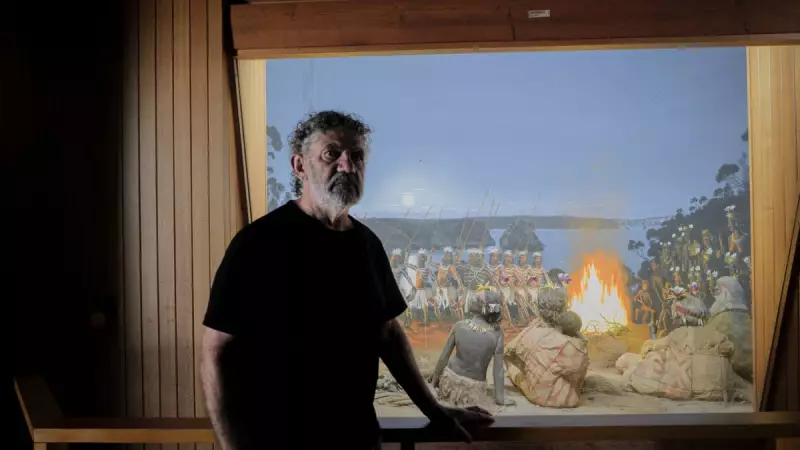
Senior Bangerang custodian Kevin Atkinson has voiced strong concerns that a recent council decision against flying the Aboriginal flag is effectively removing Indigenous history from public view. The Federation Council in regional New South Wales voted to remove both the Aboriginal and Torres Strait Islander flags from inside council chambers, opting to exclusively fly the Australian flag on all municipal flagpoles throughout the shire.
Traditional Owners Express Disappointment
Kevin Atkinson, whose history is deeply rooted in the red gums lining the Murray River, argues that respect must be mutual between communities. "If they want Aboriginal people to respect them and their history, they gotta do the same to us," the Bangerang elder states. "That's the way that you move forward together, instead of two different groups going in two different directions."
Bangerang country spans the Murray River, encompassing parts of north-east Victoria and the southern Riverina in New South Wales. Corowa, one of the largest towns on the NSW side, proudly describes itself as the birthplace of federation, having hosted a crucial conference in 1893 that paved the way for Australia's commonwealth formation in 1901.
Council's Rationale and Protocol Changes
In November, the Federation Council passed the motion five votes to four as part of a draft document titled Aboriginal and Torres Strait Islander protocols. The changes also proposed restricting welcome to country ceremonies for council events unless specifically approved by an adopted council resolution, instead relying on acknowledgments of country that don't require traditional owner participation.
Corowa mayor Cheryl Cook explained that the flag changes "were driven by a desire to return to a standardised civic protocol." She emphasized that council's position views the Australian flag as "the primary symbol of unity for all residents, regardless of background," aiming to represent the shire as "a single, cohesive community under one sovereign emblem."
Community Reactions and Historical Context
Joanne Atkinson, a Bangerang and Wiradjuri woman and Kevin's first cousin, describes the flag decision as a "ripple effect" of the failed Indigenous voice to parliament referendum. In October 2023, the electorate of Farrer, which includes Corowa, recorded a 75% no vote, with Corowa's three polling booths showing no votes ranging from 73% to 77%.
"We are a melting pot, Australia has become that," Joanne Atkinson observes. "I think the issue is, recognising other people shouldn't be at the risk of un-recognition of our people, and disrespect of our people."
Councillor Opposition and Community Concerns
Councillor David Harrison, who voted against the draft proposal, expresses concern about the town's reputation. "I can understand how Corowa is now known as the place where we have 40 neo-Nazis march up and down our main street on a Saturday morning," he notes, referencing a recent incident. "Now we're starting to remove flags. I can understand how someone can see it cascading. We need to draw a line here and say that this is not what our community is about."
Historical Significance and Local Perspectives
This stretch of the Murray River holds profound significance in Aboriginal political history. Cummeragunja Aboriginal mission, birthplace of Yorta Yorta man Sir Doug Nicholls, lies just 140km away, while Lake Moodemere Aboriginal reserve across the river from Corowa served as a refuge for Bangerang people until its closure nearly a century ago.
Among Corowa residents approached by journalists, infrastructure concerns outweighed flag discussions for most. Of more than 35 people questioned, only one expressed agreement with the council's proposal. Local woman Danielle commented, "I feel like they need to put a bit more information out to the community on what is driving that decision. Everybody has a right to be represented ... the Aboriginal flag in particular deserves a place up there with the Australian flag."
Formal Opposition and Next Steps
In late November, Ethan Williams, a Wiradjuri man and chairperson for the Southern West Yiradyuri Clans Land, Water and Sky Country Aboriginal Corporation, wrote to Mayor Cook expressing "deep concern and opposition to the proposed changes." He emphasized traditional owners' "inherent and ongoing rights and obligation to care for country and to ensure our culture, languages and stories remain strong for future generations."
The draft protocols document underwent public exhibition for submissions until 24 December 2025. The council will now consider all public feedback before holding another vote on the matter in March 2026, determining whether the Australian flag will fly alone or alongside Indigenous symbols in this historically significant region.