Ombudsman Finds Ealing Council at Fault Over Park Flooding Project
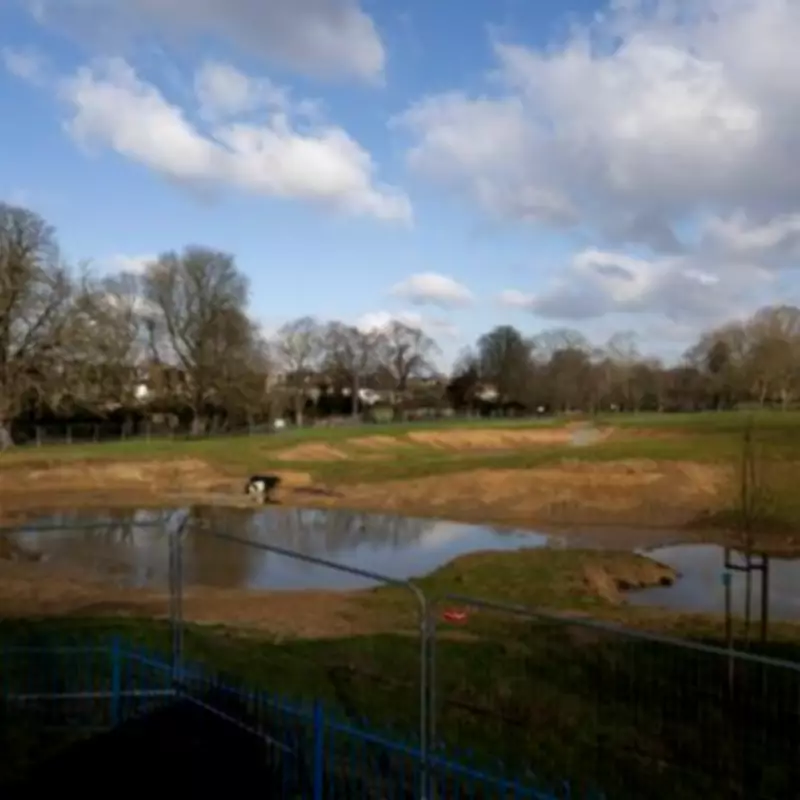
The Local Government and Social Care Ombudsman has ruled that Ealing Council committed multiple administrative failures in its implementation of sustainable urban drainage systems at Lammas Park in West London. The investigation followed complaints from residents who expressed serious safety concerns about the project, with one local woman describing the drainage basins as creating "swamps" near a children's play area.
Safety Concerns and Community Opposition
Diggers first entered Lammas Park in May 2024 as part of Ealing Council's plan to install sustainable drainage systems aimed at alleviating local flooding issues. Since completion, the drainage basin has collected rainwater from surrounding drains, leading to significant community opposition. Parents have expressed fears that children could fall into the basin from the adjacent playground, while other residents worry about potential public health risks from sewage that can enter storm water systems.
In February 2025, local resident Zoë Dobson presented a petition with 1,000 signatures to the council opposing the drainage basins. At the time, she told reporters: "No one from the council, or the executive, have responded to me. This should be a decision taken by elected councillors on the Planning Committee, not unelected council officers. Then, we can hold people accountable for their decisions."
Multiple Administrative Failures Identified
The Ombudsman's investigation focused specifically on the administrative process rather than the merits of the planning decision itself. The watchdog identified five distinct faults in the council's handling of the project:
- Unauthorized Soil Deposits: The council failed to adequately consider what would happen to soil excavated from the basins. After permission was granted, soil was deposited across the park, substantially raising ground levels, with some soil placed outside the permitted boundary, constituting unauthorized work.
- Incorrect Development Classification: Ealing Council wrongly treated the application as a "minor development," calculating the area only on the basin (0.22 hectares) rather than the entire affected area including where soil was deposited (almost 5 hectares). By law, development over one hectare must be considered a major development.
- Inadequate Advertisement: Because the work was incorrectly classified as minor, the local authority did not advertise the application properly to the public.
- Metropolitan Open Land Protection: The council failed to consider how soil deposits would impact Lammas Park's designation as Metropolitan Open Land, which carries the same protections as Green Belt land.
- Delayed Complaint Responses: The council took 26 working days to respond to a resident's initial complaint and 43 days for a stage two response, missing its own 20-day target for both.
Consequences and Required Actions
The Ombudsman concluded that the council's administrative failings led to unauthorized work taking place, causing avoidable frustration and uncertainty for residents. However, the report noted that even if the council had not made these errors, it is unlikely the application would have been refused. Ealing Council had already approved a revised planning application in May 2025 to include the wider site and work.
The council must now apologize to the complainant, identified as Mr B in the report, who argued that the work did not match approved plans, reduced public open space, and negatively impacted the character of the park. Additionally, within eight weeks, the council must:
- Review its quality control procedures
- Address the identified administrative failings with relevant staff
- Consider increasing transparency for impactful projects
- Provide evidence that it has complied with all required actions
Ealing Council was approached for comment but did not respond by the time of publication. The case highlights ongoing tensions between local authorities implementing environmental infrastructure projects and communities concerned about safety and proper procedure.