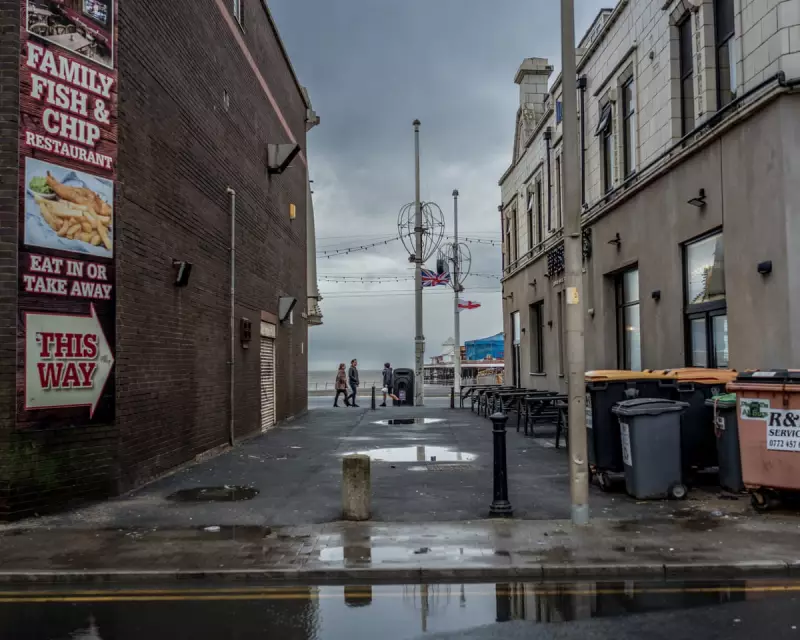
The government has announced a major overhaul of local authority funding that will see significant cash injections for deprived towns and cities across the north of England and the Midlands, marking a decisive shift away from affluent rural areas.
A Fairer System for 'Left Behind' Areas
Ministers described the changes as establishing a fairer system that properly recognises the extra needs and weaker council tax raising powers of councils in so-called 'left behind' areas. The new formula guarantees these authorities real-terms funding increases for the next three years.
Local government minister Alison McGovern declared in a parliamentary statement: "People living in the places that suffered most from austerity will finally see their areas turned around."
The changes, scheduled for implementation from April ahead of critical local elections in May, could deliver substantial funding boosts for Reform-led councils in the north with high deprivation levels, including Durham and Lancashire, alongside the party's flagship council in Kent.
Targeted Investment in Post-Industrial Communities
The extra resources directed toward traditional Labour-supporting heartlands in the north are widely seen as an attempt to boost civic infrastructure in post-industrial communities. This strategic move aims to reverse growing voter distrust in politicians, particularly among those who have switched allegiances to the Tories and Reform in recent elections.
McGovern elaborated on the government's vision, stating: "This is about providing visible proof that the state can still improve people's lives and keep its promises. The journey will at times be difficult, but the end result will be a new role of councils as agents of renewal."
While an earlier model of the government's Fair Funding formula analysed by the Institute for Fiscal Studies suggested some deprived areas like South Tyneside, Sunderland, Gateshead and Wigan might lose out, subsequent adjustments mean these areas are now expected to benefit from the revised settlement.
Mixed Reactions Across the Political Spectrum
Sir Stephen Houghton, chair of the SIGOMA group representing urban councils including Leeds, Liverpool, Manchester and Sheffield, welcomed the changes. "These reforms mark a significant step towards a fairer and more balanced funding system for councils across the country," he said.
London's councils received better news than initially feared after last-minute changes to deprivation measures recognised the capital's high housing needs and concentrated child poverty areas. However, Claire Holland, chair of London Councils, responded cautiously, warning that half of the capital's 32 boroughs would still require government bailouts to avoid effective bankruptcy by 2028 due to spiralling service demands.
The County Councils Network (CCN) strongly criticised the reforms, claiming many rural members would "lose out substantially." CCN finance spokesperson Steven Broadbent called the formula "arbitrary" and accused ministers of yielding to urban council pressure, noting that 33 of their councils face real-terms funding reductions unless they implement 5% annual council tax increases over three years.
Jeremy Newmark, finance spokesperson for the District Councils' Network, expressed concern that the government was "merely reallocating an already inadequate funding pot" rather than delivering essential financial reform and fiscal devolution.