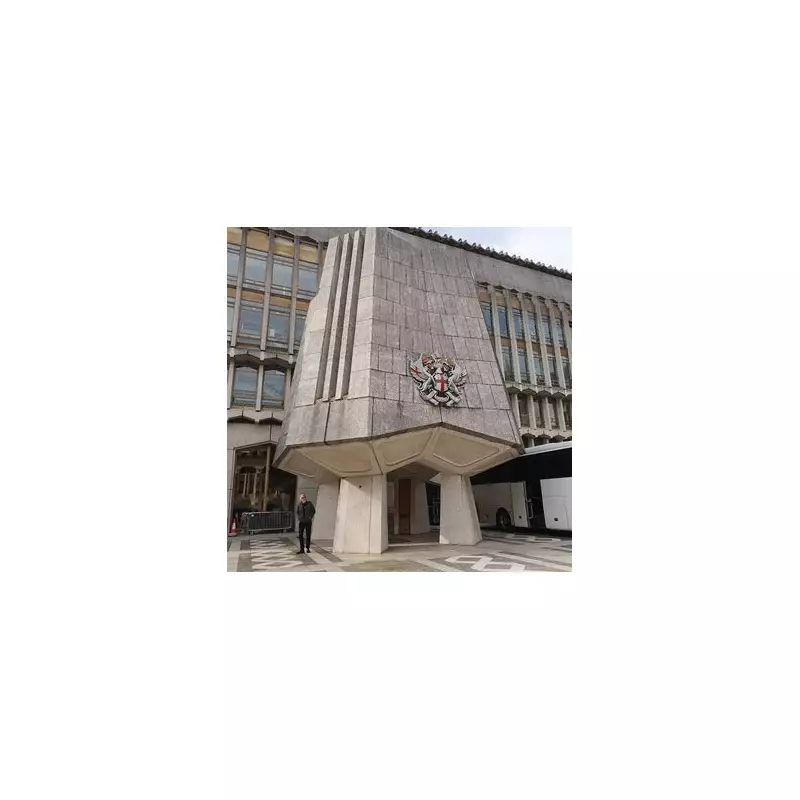
The City of London Corporation is facing serious accusations of fostering a 'culture of non-transparency' after an investigation revealed the extent to which its committee meetings are conducted behind closed doors.
Analysis reveals scale of private discussions
An exclusive analysis by the Local Democracy Reporting Service (LDRS) examined more than 70 committee meetings held by the Corporation in September and October 2025. The findings were stark: of the 1,096 items scheduled for discussion, 418 items, or 38 per cent, were designated for private session. This left just 62 per cent of business to be conducted in public.
The review counted all agenda items, excluding the procedural motion to exclude the public itself, but included administrative points like 'apologies'. Meetings that were cancelled or lacked a quorum were not included in the final tally.
Committees with a notably high proportion of private items included the influential Policy and Resources Committee, the Pensions Committee, and the Civic Affairs Sub-Committee.
A unique authority with unique secrecy?
The City of London Corporation is a unique governing body. It acts as the local authority for the Square Mile but also holds an array of extraordinary responsibilities far beyond a typical council. These include managing major green spaces like Hampstead Heath, serving as London's Port Health Authority, and acting as trustee for the City Bridge Foundation.
Its governance is also distinct, featuring its own government, Lord Mayor, and police force. The Corporation argues that this unique remit often necessitates discussing commercially sensitive, personal, or legally privileged information in private, which it says is 'fully lawful'.
However, critics argue this justification is being overused. Major decisions, such as the withdrawal from operating Smithfield and Billingsgate markets and funding allocations for the Barbican Centre, have been made away from public scrutiny.
'Too focused on its own interest', says critic
The findings have ignited criticism from within the Corporation's own ranks. Alderwoman Martha Grekos, who has consistently raised transparency concerns, challenged a recent private session discussion on the Corporation's social housing investments. She argued the significant public interest in the condition of estates like Golden Lane Estate made the private discussion inappropriate.
Her motion to move the item into public session was defeated, with only Deputy Beth Coombs siding with her. A public paper on the matter is expected in December.
Alderwoman Grekos told the LDRS: 'In my experience, the City of London Corporation, with its culture of non-transparency, is too focused on its own interest to recognise the public interest.' She added she was unaware of any instance where the Corporation had voluntarily moved an item from private to public session.
Another source stated: 'Far too many items are discussed behind closed doors... It's very understandable why tenants and leaseholders have concerns; democracy and trust are based on transparency.'
Corporation defends record, but comparison raises questions
A spokesperson for the City of London Corporation issued a robust defence: 'We are fully transparent and accountable. Any suggestion otherwise is completely unfounded. The vast majority of our business is conducted in public... When reports are considered in private, it is fully lawful and done so to protect sensitive information.'
Yet, a comparison with a neighbouring local authority highlights a significant disparity. In the same two-month period, Westminster City Council held just three items in private, relating to housing payments and business rate relief. While the Corporation's responsibilities are broader, the scale of the difference is notable.
The debate centres on where the line should be drawn between necessary confidentiality for sensitive matters and the public's right to scrutinise the decisions of a powerful and unique governing body. With nearly two-fifths of its business conducted privately, the pressure on the City of London Corporation to justify its approach is intensifying.