
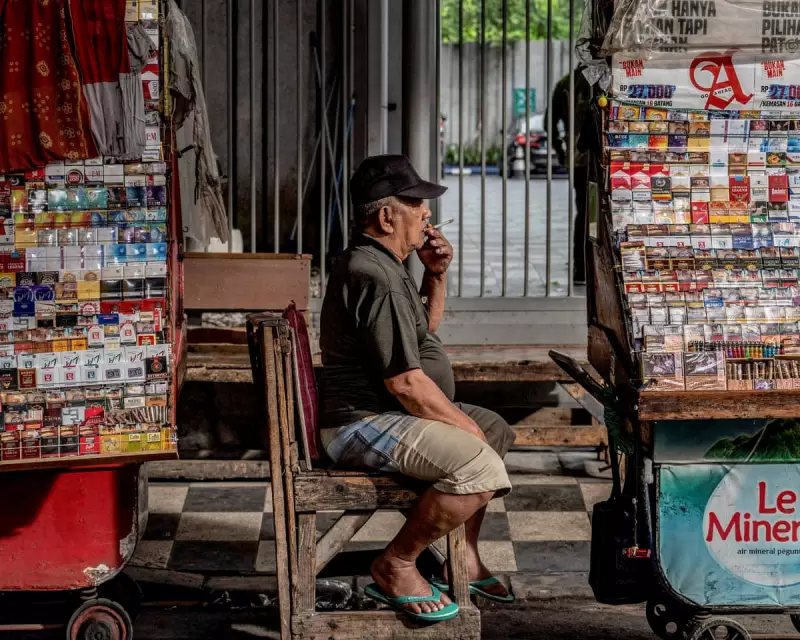
The Global Tobacco Tax Standoff
As health services worldwide face unprecedented pressure, a straightforward solution sits frustratingly out of reach. Taxing tobacco products presents a clear win-win scenario: it reduces consumption of a deadly product while generating vital revenue for strained public health budgets. Yet, according to the latest Global Tobacco Industry Interference Index, governments are consistently failing to implement these crucial tax increases.
How Big Tobacco Bends Governments to Its Will
The report reveals a disturbing pattern of influence. More than 60 out of 100 surveyed countries have either kept tobacco taxes flat, delayed planned increases, lowered rates, or granted special exemptions in the past two years. This inaction often stems from sophisticated industry lobbying targeting non-health ministries.
Tobacco companies frequently lobby finance, agriculture, and trade departments, using their economic footprint as leverage. In Bangladesh and Pakistan, British American Tobacco (BAT) is celebrated as a 'top taxpayer'. Japan Tobacco International received a two-year audit exemption in Cambodia for being a large taxpayer. These accolades create a powerful narrative that these corporations are already contributing enough.
One of the industry's most persistent arguments is that higher taxes fuel illicit trade. However, this claim has been repeatedly debunked by research, which identifies lack of enforcement, not tax levels, as the primary driver of black markets. Despite the evidence, at least twenty governments have entered into collaborations with the industry to combat illicit trade, providing another channel for corporate influence.
The Staggering Human and Economic Cost
The consequences of this policy failure are measured in lives and lost productivity. Tobacco remains one of the world's leading causes of death, responsible for over seven million fatalities annually. This includes approximately 1.6 million non-smokers who die from exposure to secondhand smoke.
The economic burden is equally crushing. In 2021 alone, the global cost was estimated at $1.7 trillion (£1.3 trillion) in healthcare expenses and lost productivity, equivalent to 1.7% of the entire world's GDP. This figure does not even account for environmental damage or impacts on food security linked to tobacco cultivation.
The burden falls hardest on low- and middle-income countries, which are home to roughly 80% of the world's 1.2 billion tobacco users. These are precisely the nations whose health systems are least equipped to handle the resulting disease burden.
A Call for Governments to Reclaim Control
From Argentina eliminating its minimum cigarette tax to countries from Cameroon to Senegal offering tax breaks for new factories, the report catalogues a global pattern of capitulation. The big four global cigarette companies generated a staggering $125 billion in revenue in 2024, demonstrating ample capacity to contribute more.
Mary Assunta, head of global research at the Global Center for Good Governance in Tobacco Control and lead author of the index, argues that the current situation is unsustainable. At a critical juncture for global health funding, it is time for governments to stop subsidising wealthy corporations from the global north that profit from products that harm health and the environment.
The path forward is clear. Substantial tobacco tax increases would create a powerful public health benefit by driving down smoking rates, while simultaneously providing governments with the funds needed to tackle other pressing health priorities. The evidence is undeniable; now political will must follow.




