
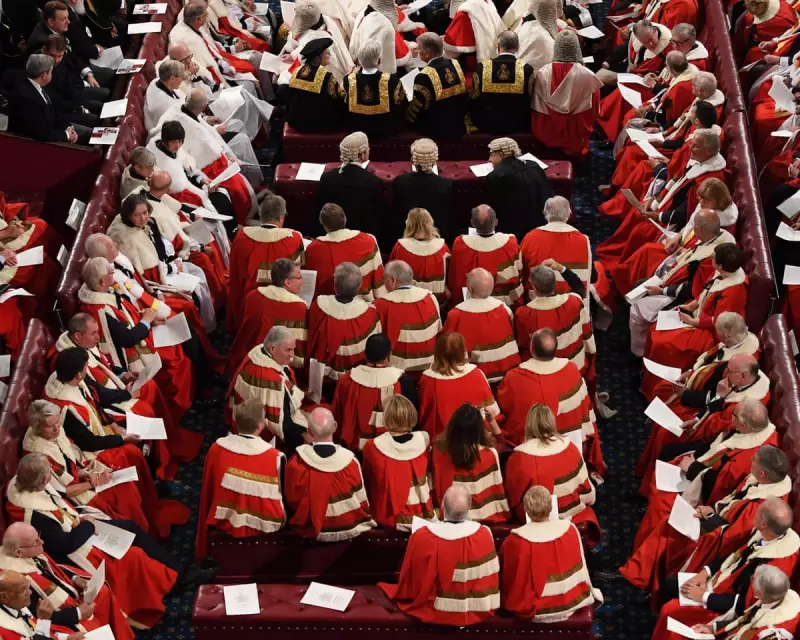
A fresh scandal has erupted within the House of Lords, leading to the suspension of two peers and reigniting fierce debate about the future of Britain's unelected upper chamber. An undercover investigation exposed peers willing to use their privileged positions for potential financial gain, highlighting systemic issues within the institution.
The Investigation and Sanctions
Two peers have been officially disciplined following a Guardian investigation into their activities. Lord Dannatt, the former head of the British army who sits as a crossbencher, received a four-month suspension from the Lords. Lord Evans of Watford, a businessman and Labour peer, was handed a more severe five-month suspension.
The investigation involved reporters posing as property developers. During recorded conversations, both peers discussed how their extensive contacts and influence within Westminster could be leveraged to benefit potential clients. This directly contravenes the parliamentary code of conduct, which explicitly forbids peers from offering parliamentary services for 'payment or reward'.
A subsequent probe by the Lords standards commissioner confirmed the breaches. It was found that Lord Dannatt had corresponded with ministers and officials regarding companies in which he held a financial interest. Meanwhile, Lord Evans had sponsored parliamentary events for a company owned by his son, in which he also held shares.
A Systemic Problem in an Archaic Institution
These cases are unlikely to be isolated incidents. The House of Lords is widely criticised for its overpopulation and lack of rigorous scrutiny. With more than 800 members, it is one of the largest parliamentary chambers in the world. Many of its members are seasoned political operators, including significant party donors.
The culture of the institution is seen as predisposed to such scandals. Peers are not salaried but can claim a tax-free daily allowance of £371, plus expenses, regardless of their actual contribution to legislative work. Statistics reveal a stark imbalance in participation: in the 2019-24 parliament, a mere 10% of peers accounted for over half of all contributions made in the chamber. Holding multiple outside business interests is commonplace.
Critics argue that too many members treat the Palace of Westminster as an exclusive club, valuing the status and networking opportunities it provides. As this scandal demonstrates, monetising that access is a tangible risk.
The Wider Implications and the Path to Reform
While lobbying concerns are not exclusive to the Lords, the unelected nature of the chamber intensifies the problem. The core principle that serving parliamentarians owe their loyalty to the public is undermined when there is even a perception of a conflict of interest.
Some issues could be mitigated by tougher regulation and enhanced transparency. The House of Commons recently tightened rules on MPs' paid consultancy work, though second jobs remain permissible. However, for the Lords, the fundamental issue is its 'essentially absurd character'.
The Labour party's manifesto included a pledge for reform, though progress has been slow. A bill to remove the remaining hereditary peers—a move widely supported by reformers—is, perhaps predictably, facing resistance within the Lords itself.
Every scandal involving peers serves as a powerful reminder that the work of British democracy remains unfinished. The ongoing absence of a democratic, accountable second chamber continues to erode public trust. The suspension of two lords is not just a story about individual misconduct; it is a symptom of an institution in desperate need of modernisation.




