
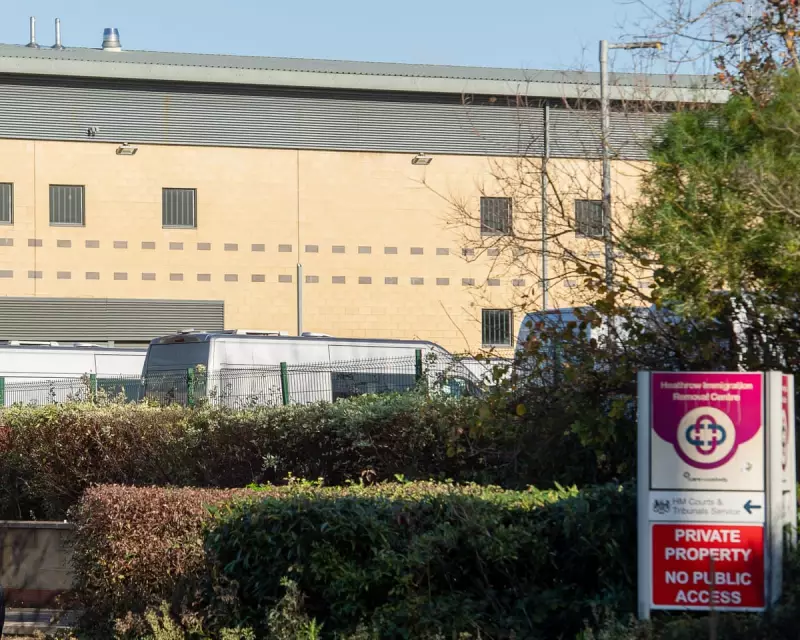
Alarming Report Exposes 'Deeply Concerning' Restraint Practices
A damning new report has uncovered widespread excessive use of force within Britain's immigration detention centres, revealing what monitors describe as a 'deeply concerning' pattern of disproportionate restraint against vulnerable individuals. The investigation by the Independent Monitoring Boards (IMB) found that force is being applied inconsistently, disproportionately, and without adequate justification across detention facilities.
Routine Handcuffing and Disturbing Incidents
The report, titled By Force of Habit: How the Use of Force in Immigration Detention Has Lost Sight of Necessity and Dignity, highlights how routine handcuffing has become standard practice rather than an exception, particularly during hospital transfers. In one particularly distressing case, a frail 70-year-old man was handcuffed despite paperwork clearly indicating he posed no evidence of risk.
Even more alarming, the investigation uncovered that some centres operate under an unofficial policy of only allowing detainees to receive hospital treatment if they agree to be handcuffed - a practice the report describes as 'a form of coercion'.
Among the most shocking incidents detailed was that of a man on constant suicide watch who was carried naked from the waist down to a plane after removing his trousers while screaming and resisting removal. Staff reportedly took turns pushing his head against his seat, with the report concluding the impact on his dignity was 'profound'.
Toxic Staff Culture and Inadequate Oversight
The investigation also exposed worrying aspects of staff culture within detention centres. A whiteboard message visible to all staff read: 'Thought of the Day: Handle Stressful situations like a dog. If you can't eat it or hump it, piss on it or walk away.' Elisabeth Davies, IMB national chair, confirmed the sign wasn't hidden and described it as representative of problematic staff attitudes.
Further evidence emerged from a personal protection training session where an instructor told officers: 'If someone's coming at me, I'm going to keep myself safe. I don't worry about what's proportionate, I won't worry about Serco or my job, my priority is to look after myself.'
The report identified significant gaps in recording and oversight, with incomplete documentation, inaccurate records, and ineffective review processes undermining accountability. It also noted missed opportunities for de-escalation and a complete absence of trauma-informed approaches, despite many detainees having experienced torture, trafficking, and other traumatic events.
Calls for Urgent Reform
Elisabeth Davies has written to the Home Office 'numerous times' raising concerns about high levels of handcuffing and lack of clear justification. She stated: 'It's about operational force being used for operational convenience.'
Davies emphasised that for the use of force to be lawful, it must be necessary, reasonable, proportionate and justifiable, but current practices show restraint has become routine, oversight is weak, and detainee dignity is frequently disregarded.
Medical Justice, which supports the health of immigration detainees, described the findings as 'distressing' and accused the Home Office of presiding over 'dangerous use of force and restraints demonstrating an inexcusable disregard for the safety of vulnerable people in its care.'
The Home Office responded that it will 'carefully consider the findings in the report' and reviews all incidents of use of force to ensure techniques are used proportionately. This comes as the government plans to expand immigration detention capacity to facilitate more deportations.




