
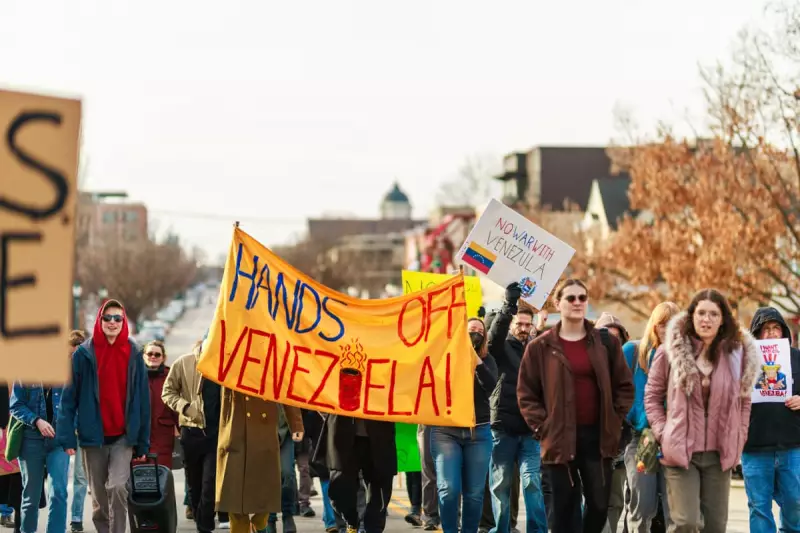
Venezuelan Immigrants Face Uncertain Future After US Policy Shift
Venezuelan immigrants who have become integral to revitalising midwestern American communities now face an uncertain future following a dramatic shift in US immigration policy. The Department of Homeland Security has announced the termination of Temporary Protected Status for Venezuelan nationals, affecting over half a million people across the United States.
Cultural Transformation in the Heartland
In downtown Indianapolis, Venezuelan entrepreneurs Juan Paredes Angulo and his mother Andreina transformed a former Coca-Cola bottling plant into a vibrant food stall five years ago, introducing authentic Venezuelan cuisine to a region traditionally dominated by Tex-Mex and Chinese takeaway options. Their story represents hundreds of similar transformations across the midwest, where Venezuelan immigrants have brought new culinary traditions and cultural diversity to areas experiencing population decline.
"We thought it might be AI at first," Juan says of hearing about Venezuelan president Nicolás Maduro's capture by US forces earlier this month. "It's only in our dreams that this would be true. I feel joy, and ignorance, because I don't know exactly what could be happening there."
Demographic Impact and Economic Contribution
Venezuelan immigrants represent the fastest-growing Hispanic group in the United States, with nearly 8,000 establishing communities in Indiana alone. Beyond coastal states and Texas, midwestern regions have become significant destinations due to lower living costs and abundant employment opportunities.
Recent census data reveals the crucial role immigrants play in midwestern demographics. Indiana's 92 counties saw 62 experience natural population decline in 2024, with nearly 70% of the state's population growth attributed to immigration. The broader midwest region witnessed a net international migration increase of 406,737 people – nearly ten times the natural population growth rate.
Immigrants have contributed substantially to local economies, with estimates suggesting they have paid over $4 billion in Indiana tax contributions alone, funding essential Medicare and Social Security programmes that benefit all Americans.
Policy Changes Create Community Anxiety
The Trump administration's announcement that Temporary Protected Status will expire for Venezuelan immigrants on 2 October has created widespread anxiety within these established communities. A Department of Homeland Security statement declared that following Maduro's overthrow, Venezuelans "can go home to a country they love."
Danielle Shipley, an organiser at the Indy Action Coalition, emphasises the complexity of the situation: "Just because Maduro isn't technically in Venezuela, in charge, his party is still there. Someone seeking asylum here because it's not safe to go back to Venezuela is not yet safe to be there."
Urban Revitalisation at Risk
Across Rust Belt cities, immigrant-owned businesses have played a pivotal role in urban regeneration. Former manufacturing spaces have been converted into vibrant food halls and cultural centres, attracting people back to downtown areas that had experienced decades of decline.
Indianapolis has particularly benefited from this transformation. A WalletHub analysis comparing cities by ethnoracial, linguistic and birthplace diversity found Indianapolis more diverse than Atlanta, Miami or Baltimore by these measures.
Karla López Owens, a naturalised citizen and attorney running for local office in Indianapolis, expresses concern about the potential impact of immigration crackdowns: "I've been living here for 25 years and seen how immigrants come into dilapidated parts of town and make these areas flourish again. I'm really scared about what this is going to mean."
Safety Concerns and Personal Uncertainties
Reports have emerged of Venezuelans deported from the United States facing harassment from authorities upon returning to their home country, with some accused of "betraying the patriarchy." Recent days have seen accounts of paramilitaries searching for American nationals on Venezuelan streets, prompting the US State Department to advise citizens to leave the country due to security concerns.
For Juan Paredes Angulo, who arrived in Indiana as a political asylee in 2015, the possibility of returning to Venezuela has never been part of his plans. "After 10 years of watching the country going deeper and deeper into the ground, the idea of going back has never been on my table," he says, while expressing hope about applying for a green card soon. "Venezuela's resources could become more accessible and that would be a boost to the economy, right? But I don't know how that can happen easily."
The situation remains fluid, with approximately 1.2 million Venezuelan immigrants who have arrived in the United States over the past decade now facing potential disruption to lives they have built in communities across the midwest and beyond.




