
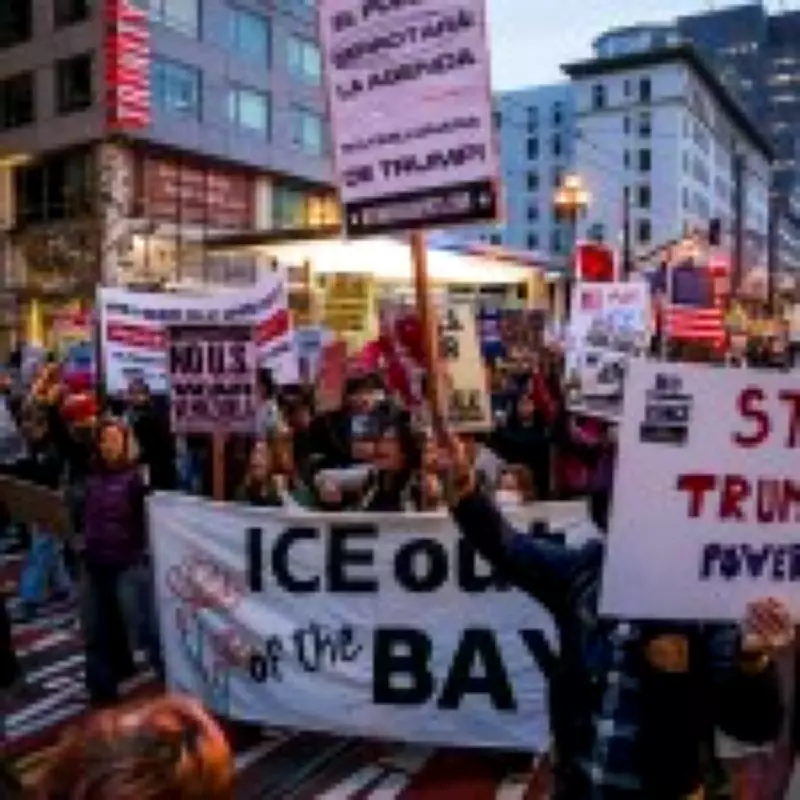
Protests have erupted across the United States, with activists in all 50 states and Washington DC demanding the removal of Immigration and Customs Enforcement (ICE) officers. The nationwide mobilisation follows eight deaths linked to ICE raids and the highly publicised detention of a five-year-old boy.
National Shutdown and Day of Action
Organisers have declared a 'national shutdown,' encouraging people to avoid schools, workplaces, and economic activities to disrupt the economy. The movement gains momentum with an 'ICE Out of Everywhere National Day of Action' scheduled for tomorrow, featuring protests, demonstrations, and vigils throughout the weekend.
Widespread Demonstrations Planned
Walkouts are planned at universities and workplaces nationwide, with protests targeting ICE detention facilities and airports used for deportations. Activists are also pressuring hotels to cease accommodating ICE agents and urging local businesses like gas stations and restaurants to participate in the '#DontServeIce' campaign.
Catalysts for the Protests
The protests demand justice for individuals detained by ICE, building on earlier mass mobilisations in Minneapolis where hundreds of businesses closed and thousands joined a general strike. Two specific cases have drawn particular outrage and international attention.
Tragic Deaths and Controversial Arrests
Among the eight fatalities are Renee Good and Alex Pretti, who were killed in Minneapolis while attending protests. In a separate incident, five-year-old Liam Ramos was detained in Minnesota earlier this month as he returned home from school.
Another tragic case involves Wael Tarabishi, a 30-year-old man with a rare genetic disease who died in a Texas hospital after his 62-year-old caregiver father was detained by ICE. The agency denied the father permission to attend his son's funeral.
Political Dimensions and Public Response
Organisers claim to have tracked voting histories to identify lawmakers who supported expanding ICE's powers, suggesting political accountability will be part of the protest focus. The movement has attracted participants from typically non-political backgrounds, reflecting broadening public concern.
Gloriann Sahay, a national coordinator with protest movement 50501, observed: 'We are responding to people's outrage. We've seen the Overton window shifting. We're seeing people from typically non-political spectrums get involved in this conversation and say: "This doesn't feel like America."'
The protests represent one of the largest coordinated responses to immigration enforcement policies in recent years, with organisers planning sustained action across multiple states through various forms of civil disobedience and public demonstration.




