Federal Account of Portland Border Patrol Shooting Collapses Under Scrutiny
Critical elements of the United States government's official narrative surrounding a controversial border patrol shooting in Portland, Oregon, have dramatically unravelled during court proceedings. The Department of Homeland Security's initial characterisation of the incident has been directly contradicted by federal prosecutors, raising serious questions about the veracity of official statements.
Contradictory Statements Emerge in Court Documents
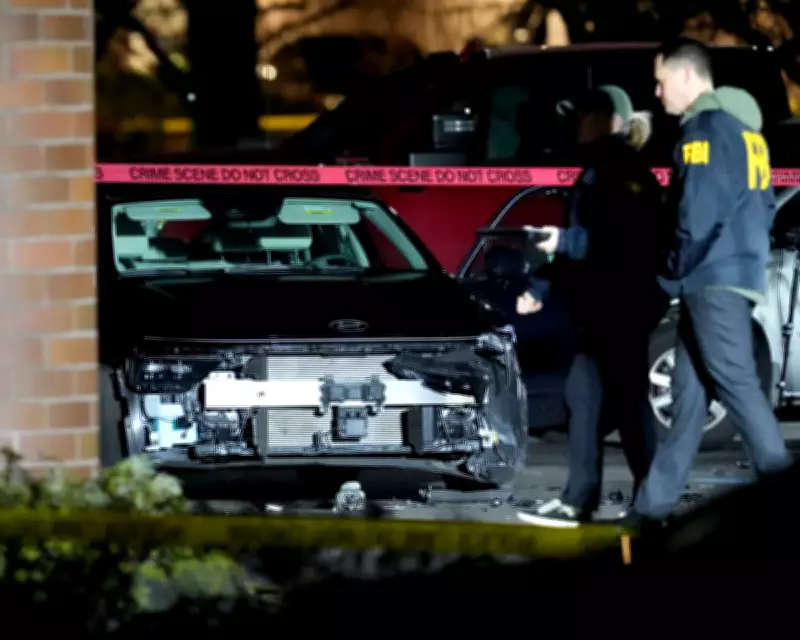
The incident occurred on the afternoon of 8th January, when a US Border Patrol agent shot and wounded two individuals in a hospital parking lot in Portland. According to an immediate DHS press release and subsequent social media posts, the agents were conducting a "targeted" stop of a vehicle occupied by two members of Tren de Aragua, described as a "vicious" Venezuelan gang.
The DHS statement claimed that Yorlenys Zambrano-Contreras, a passenger in the vehicle, had been "involved" in a Portland shooting the previous year. Furthermore, the agency asserted that the driver, Luis Niño-Moncada, had "weaponized their vehicle against" officers, prompting an agent to fire in self-defence. Both individuals were hospitalised with gunshot wounds before being taken into federal custody.

However, court records obtained by the Guardian reveal that a Department of Justice prosecutor later directly contradicted these claims during a detention hearing. The prosecutor explicitly told the court, "We're not suggesting ... [Niño-Moncada] is a gang member." This statement fundamentally undermines the DHS narrative that formed the basis of their initial public communications.
Gang Affiliation Claims Fail to Withstand Scrutiny
The government's allegations regarding gang connections have proven particularly problematic under examination. An FBI affidavit issued following the incident suggests that in the previous shooting cited by DHS, Zambrano-Contreras was not a suspect but rather a reported victim of sexual assault and robbery.
According to the FBI document, Zambrano-Contreras had been working as a sex worker on 7th July 2025 when a man forced her to provide oral sex, initially prevented her from leaving, and took her money and belongings. After escaping, she contacted Niño-Moncada, who found her "crying and [with] marks on her neck." Later that day, she returned with several men to retrieve her possessions, during which a shot was fired that hit nobody.
Immigration and criminal justice experts who have reviewed the case records have characterised the federal government's communications as a "smear campaign" against the two Venezuelan immigrants. They point to mischaracterisations of their backgrounds and unsubstantiated allegations of criminality as particularly concerning aspects of the official response.
Legal Proceedings and Evidentiary Challenges
Niño-Moncada, the 33-year-old undocumented driver, remains detained facing charges of aggravated assault of an officer based on claims he attempted to intentionally hit agents with his car. Zambrano-Contreras, aged 32, was not criminally charged but has pleaded guilty to improper entry to the US, a misdemeanour offence.
Significant evidentiary challenges have emerged in the case. None of the six border patrol agents involved recorded body-camera footage of the incident, despite increasing calls for transparency in law enforcement operations. The shooting occurred in a hospital parking lot, but the FBI acknowledged in a 10th January affidavit that surveillance cameras didn't capture the incident, stating investigators were "unsuccessful" in obtaining video evidence at that time.
Last week, prosecutors disclosed that investigators have since obtained surveillance footage partially showing the incident. Local station KGW obtained and published the grainy footage on Monday, which shows agents following what appears to be Niño-Moncada's truck in the parking lot and approaching him. The moment of the shooting is not clearly visible in the distant, silent recording.

Broader Context and Political Implications
Questions about the Oregon shooting emerge as the Trump administration faces scrutiny over its statements regarding other immigration-related incidents. The case follows patterns seen in previous allegations of "assaults" on immigration agents that have repeatedly fallen apart in court proceedings.
Sameer Kanal, a Portland city councilor, commented on the situation, stating: "The federal government cannot be trusted. Our default position should be skepticism and understanding they lie very regularly. There's a playbook of demonizing people ... and claiming vehicles were used as 'weapons.' We see a pattern of victim-blaming, and it's important we push back, because it's propaganda."
Legal experts have expressed concern about the government's approach in this case. Sergio Perez, a civil rights lawyer and former US prosecutor, noted the alarming speed with which charges were filed: "This government needs to go back to the practice of slow and thorough investigations rather than what we consistently see in immigration enforcement activities – which is a rush to smear individuals."
Prosecution Challenges and Credibility Questions
The US attorney's office will face significant hurdles if the case proceeds to trial, according to legal analysts. The government must prove Niño-Moncada had "intent" to assault agents with his vehicle, which will be challenging without body-camera evidence and considering DHS's admission that no agents were injured.
Carley Palmer, a former federal prosecutor who reviewed the hearing transcript, observed: "Prosecutors have a duty of candor to the court. It sounds like the prosecutor wanted to honor that." She noted that gang prosecutions typically include clear documentation of affiliation, such as tattoos, social media posts or past statements to law enforcement – none of which were presented in this case.
Palmer further argued that prosecutors had not only failed to prove Niño-Moncada's association with the gang but also failed to present any argument suggesting his purported Tren de Aragua affiliation is connected to the alleged crime of assaulting an officer: "It just feels like a dirtying up of the defendant."
The case highlights ongoing tensions between federal immigration enforcement and local communities, particularly in cities like Portland that have declared themselves sanctuary cities. As legal proceedings continue, the discrepancies between initial government statements and subsequent court revelations raise fundamental questions about transparency, accountability, and the credibility of official narratives in immigration enforcement operations.