German Media Outlets Draw Parallels Between US Border Official's Attire and Nazi Uniforms
A distinctive coat worn by senior US border patrol official Gregory Bovino during immigration operations has prompted German media commentators to draw uncomfortable comparisons with fascist-era uniforms, sparking international debate about the symbolism of immigration enforcement aesthetics.
The Controversial Coat and Its Historical Echoes
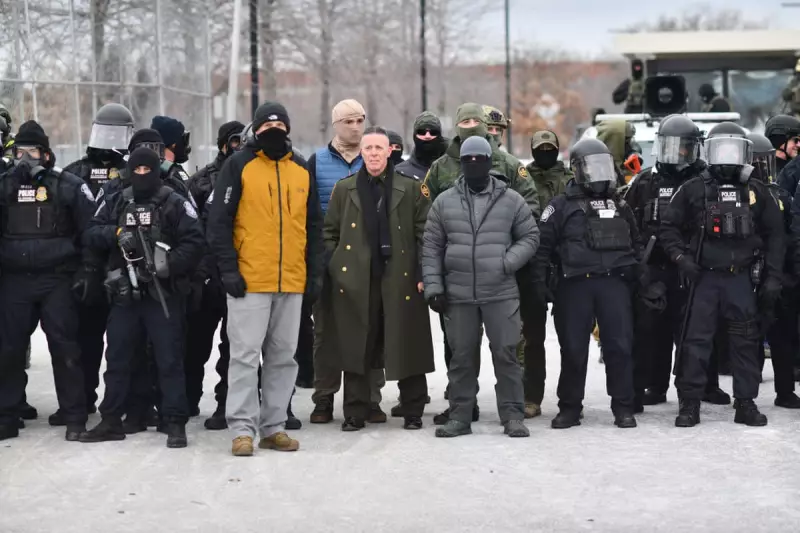
Gregory Bovino, who has spearheaded aggressive immigration operations across the United States, has become an increasingly recognisable figure during raids in Minneapolis for his brass-buttoned, calf-length olive green coat. This garment stands in stark contrast to the fatigues and body armor typically worn by federal agents, drawing particular attention from European observers.
The German media organization Der Spiegel suggested in a video feature that Bovino's overall appearance, including his close-shorn haircut, recalled that of a Nazi officer. Arno Frank, a writer at Der Spiegel, argued in a separate article that what he described as the "authoritarian intervention" in the United States was still establishing its "distinctive aesthetic."
"No wonder, then, that figures like Bovino are resorting to tried-and-tested models," Frank wrote. He contrasted Bovino's appearance with other federal agents who seem to wear "whatever they have to hand," suggesting Bovino "stands out from this thuggish mob, just as an elegant SS officer stands out from the rowdy SA mob."
Multiple German Publications Note Similarities
Another prominent German media outlet, Süddeutsche Zeitung, made strikingly similar observations about Bovino's appearance. The publication noted that while other countries have historically featured similar coats, Bovino's complete ensemble created what they termed a "Nazi look."
The newspaper specifically highlighted Bovino's closely cropped haircut, suggesting it appeared as if he had "taken a photo of [assassinated SA leader] Ernst Röhm to the barber." The publication further described how the outfit was completed by "a black shirt with badges on the collar tips" and what they called "perhaps the most extravagant accessory: a Sam Browne belt held in place by a leather strap slung diagonally across the shoulder."
Süddeutsche Zeitung noted this particular accessory has historical connections to officer uniforms but is now "mainly used in the BDSM scene," adding another layer of controversy to the discussion of Bovino's appearance.
Official Responses and Denials
Bovino has firmly denied in interviews that he intended to convey any Nazi or fascist meanings through his clothing choices, stating he has owned the coat for many years. The US Customs and Border Protection agency did not immediately respond to requests for comment regarding the controversy.
Tricia McLaughlin, assistant secretary for public affairs at the Department of Homeland Security, told the Guardian that the coat was standard issue and dismissed the criticism as "manufactured outrage." She previously told the New York Times that the garment was part of a "standard-issue border patrol winter dress uniform."
However, the New York Times also cited a 2025 document detailing the Border Patrol's Uniform and Grooming Standards in which the specific coat in question was not listed as part of any official uniform, creating some ambiguity about its official status.
Broader Political Reactions
The discussion of Bovino's distinctive style has extended beyond German media circles to include prominent American political figures. California Governor Gavin Newsom, an outspoken critic of Trump administration immigration enforcement policies, responded to a provocative US government clip featuring Bovino wearing the coat in October.
"If you think the calls of fascism and authoritarianism are hyperbole pause and watch this video," Newsom wrote. "They aren't even trying to hide who they are." This comment reflects how Bovino's appearance has become symbolic in broader debates about immigration policy and enforcement methods in the United States.
The controversy emerges against the backdrop of ongoing protests against Immigration and Customs Enforcement operations, including demonstrations outside the Bishop Whipple Federal Building in Minneapolis where Bovino was photographed standing among fellow federal agents on 15 January 2026.