
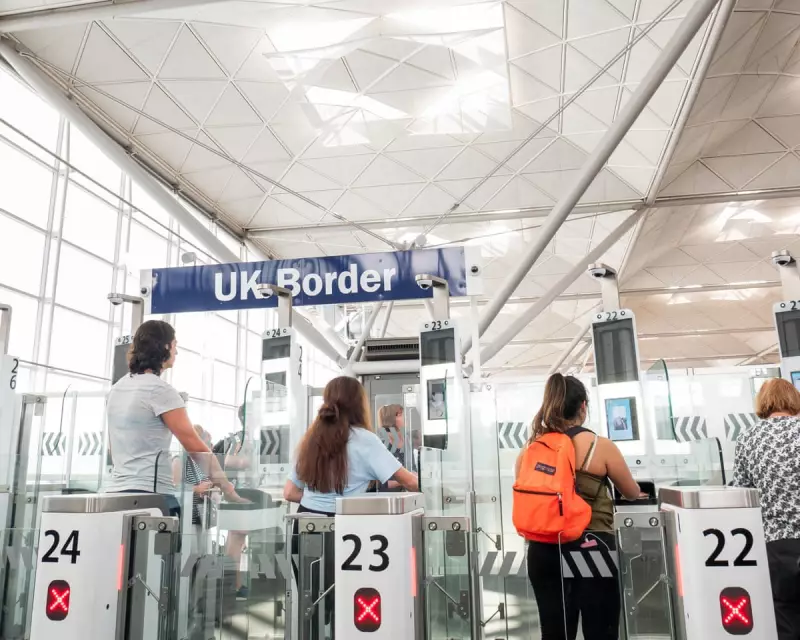
Newly revised official statistics confirm a dramatic decline in net migration to the United Kingdom, exposing a growing chasm between the country's political rhetoric and its demographic reality.
Revised Figures Show Steeper Decline
The Office for National Statistics (ONS) has published updated figures that adjust historical data for methodological changes. The revised numbers show that net migration reached 944,000 for the year ending March 2023, a figure approximately 40,000 higher than previous estimates.
More significantly, the subsequent decline has been far steeper than initially reported. The ONS now calculates that net migration stood at 345,000 for the year ending December 2024, which is 86,000 lower than the earlier count. This revision raises serious questions about the reliability of the data available to ministers shaping national policy.
The Drivers Behind the Falling Numbers
The peak in migration during 2022 is now understood to have been an anomaly, driven by unique circumstances. These included the post-pandemic reopening and the UK's welcome to those fleeing the war in Ukraine and repression in Hong Kong.
However, the current downward trend is attributed to two key factors. Firstly, the government's systematic tightening of visa conditions has successfully limited new arrivals. Secondly, there has been a notable increase in the number of people leaving the UK, comprising both recent immigrants returning home and longer-established British nationals emigrating.
Analysis from the thinktank UK in a Changing Europe forecasts this trend will continue, predicting net migration could fall to between 70,000 and 170,000 by 2026.
Economic Realities Clash with Political Posturing
Despite the clear downward trajectory, the political debate remains fixated on implementing ever-stricter controls. The Home Office continues to announce new measures designed to signal a ferocious approach to border control.
This political stance is increasingly detached from the economic consequences of reduced migration. Key sectors of the UK economy are already sounding alarm bells. The social care sector, already in crisis, faces a mounting recruitment catastrophe without migrant workers. Many universities, operating on precarious finances, rely heavily on overseas student fees and could be pushed to the brink.
Furthermore, migration typically boosts the proportion of working-age adults. As this ratio changes, the UK faces a future of harder-to-achieve economic growth and shrinking Treasury revenues, leading to painful fiscal decisions. The political conversation, however, remains dominated by an irate chorus against immigration, a monomania that continues unabated even as the numbers fall.




