
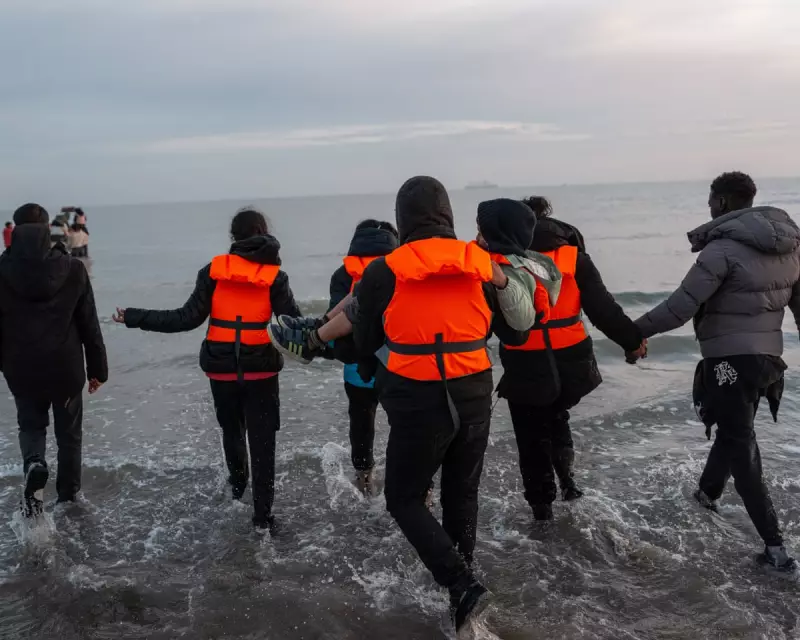
A hard-hitting new report from a coalition of human rights organisations has concluded that the UK's strategy to prevent asylum seekers crossing the English Channel in small boats has led to a surge in violence, deaths, and the power of smuggling gangs, while failing to reduce the number of arrivals.
Funding Violence and Failing to Deter
The 176-page investigation, compiled by the Humans for Rights Network with input from 23 refugee and human rights groups in northern France and the UK, paints a damning picture of the consequences of current border policies. It details how hundreds of millions of pounds in UK funding to French police has resulted in the violent policing of migrant communities, rather than effective deterrence.
The report documents the French police's use of rubber bullets and teargas against asylum seekers. It also reveals that despite the significant financial investment, Channel crossings remain at high levels. So far this year, more than 39,000 people have made the journey, exceeding last year's total of approximately 37,000, though below the 2022 record of 46,000.
A Landscape of Escalating Danger
The situation on the ground in northern France is described as increasingly perilous. The report states that reinforced security measures do not act as a deterrent but instead make crossing attempts more dangerous. This has created a vacuum filled by violent smuggling networks.
In 2024, a record 89 deaths were recorded of people trying to cross the Channel. The violence is not limited to the sea crossing itself. Human Rights Observers documented 28 violent police operations targeting migrant transport networks in northern France in 2024, leading to at least 44 arrests. Furthermore, the French association Utopia 56 found that between March and September 2025, 680 people were subjected to police violence when they were not even attempting to cross.
The power of people smugglers, who routinely carry guns, has grown alarmingly. The report notes at least four people have been shot dead in and around a camp in Dunkirk in 2025 alone. One harrowing testimony involves a 16-year-old autistic boy who had a gun held to his head by smugglers.
Human Cost and Medical Crisis
The human toll of the policies extends beyond immediate violence. The charity Médecins du Monde reported that 88% of the medical treatment it provides is for conditions linked to dire living conditions. A doctor from a Calais clinic described treating severe fuel burns from dinghy engines, often on lower legs and feet, which can become "macerated" inside shoes, especially after long walks following a failed crossing attempt.
Lily MacTaggart from the Humans for Rights Network stated: "The violence at the UK-France border is endemic, causing acute emotional distress and significant damage to people’s health. The UK and France are both responsible for funding this violence, implementing policies which abuse human rights and in some cases have caused death."
The report's authors argue that by ceding control to criminal networks, governments have abdicated responsibility. "By allowing smuggling networks to decide who is and isn’t allowed to cross, the UK and French governments have handed over the fundamental right of access to asylum to these organised criminal networks," the report states.
Calls for Action and Official Response
In response to these findings, the coalition is demanding a statutory inquiry into the rise in deaths and violence and the urgent establishment of safe, legal routes to claim asylum in the UK. "This investigation should seek to establish how UK funding contributed to the increase in violence including the rise in the power of smugglers in response to heightened security and lack of safe routes," the report concludes.
When presented with the report, the Home Office did not comment on its specific content. A spokesperson said: "The number of small boat crossings is shameful and the British people deserve better. France remains a critical partner in securing our borders, and our joint work has already prevented over 21,000 crossing attempts so far this year. Thanks to our landmark deal, people crossing in small boats can now also be detained and removed." France's interior ministry was also approached for comment.
The findings align with a separate study from the Mixed Migration Centre of the Danish Refugee Council, which found that hardline migration policies are inadvertently fuelling the people smuggling trade they aim to stop.




