
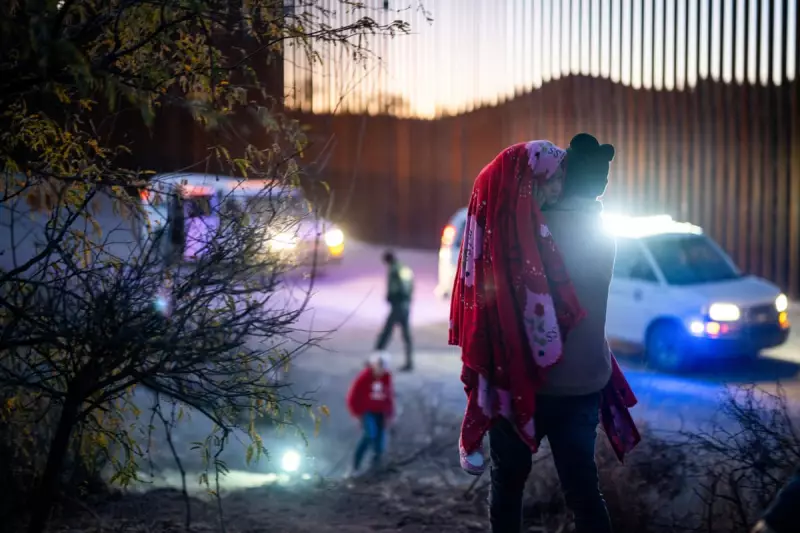
In a significant shift following a violent incident in Washington, the administration of President Donald Trump has ordered a temporary halt on processing a substantial portion of asylum claims in the United States. The move comes after the shooting of two National Guard members last week, an act for which the suspect is an Afghan national who was granted asylum earlier this year.
The Details of the Asylum 'Pause'
President Trump announced the directive, stating it "has no time limit, but it could be a long time." However, the immediate effect is more limited than initial White House statements suggested. The pause specifically applies to the roughly 1.5 million asylum cases pending before US Citizenship and Immigration Services (USCIS).
It does not, based on current information, apply to the separate system of immigration courts, where another 2.4 million asylum cases remain backlogged. The Departments of Homeland Security and the Executive Office for Immigration Review have not provided official clarification on the scope of the order.
This policy marks a stark reversal from the administration's recent approach. Prior to the pause, the Trump administration had been clearing asylum cases at a dramatically accelerated rate. USCIS data shows completions jumped to 135,091 in the most recent quarter—nearly five times the number from the same period last year under President Biden. Denials also rose sharply, and the massive backlog had begun to shrink modestly for the first time in years.
Legal Challenges and Unanswered Questions
Legal experts anticipate swift challenges if the asylum pause extends beyond a few weeks. "Almost every move is litigated and this is a pretty sweeping move," said Julia Gelatt, an analyst at the nonpartisan Migration Policy Institute. The administration is already defending multiple lawsuits over its broader efforts to reshape the US immigration system.
The fundamental legality of indefinitely halting a congressionally authorised process like asylum adjudication is untested and likely to face intense scrutiny in federal courts. The practical ability of the administration to keep USCIS officers from working on these claims indefinitely is also in doubt.
What Comes Next for US Immigration Policy?
Analysts suggest the pause itself may be a precursor to more substantive policy changes. "There might be a pause because they want to revisit procedures," Gelatt noted. "Or maybe there's a pause because they're exploring other policy options."
For now, concrete details on new procedures or long-term plans remain scarce. The immediate impact is a freeze on decisions for those whose claims are with USCIS, leaving applicants in further limbo. The real-world consequences for the suspect case that triggered the order—Rahmanullah Lakanwal, a 29-year-old Afghan parolee—and its direct link to broader asylum policy, continue to be debated.
The coming days and weeks are expected to bring more clarity, either through official policy guidance or the inevitable legal battles that will define the limits of this executive action. The pause underscores the ongoing and profound volatility in American immigration policy, with millions of lives caught in the balance.




