
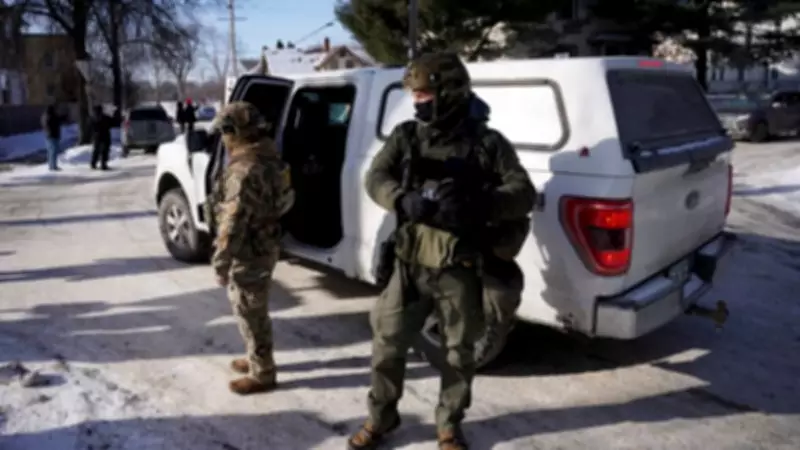
In a significant policy shift, President Donald Trump has confirmed the withdrawal of approximately 700 immigration enforcement agents from Minnesota, a move that follows intense public outcry over the deaths of two protesters in altercations with federal officials. The pullback, announced by border czar Tom Homan on Wednesday, leaves around 2,000 Immigration and Customs Enforcement (ICE) officers still deployed across the state, indicating a partial rather than complete retreat.
Background to the Controversial Deployment
The federal operation, known as Operation Metro Surge, escalated dramatically in January as part of President Trump's campaign pledge to intensify deportations of undocumented immigrants. Thousands of agents were dispatched to Minnesota, with similar deployments occurring in major urban centres like Los Angeles and Chicago, sparking widespread protests and condemnation from local authorities.
Fatal Incidents Spark Fury
The decision to reduce the federal presence comes directly in response to the tragic shootings of two individuals in Minneapolis last month. Renee Good and Alex Pretti, a nurse, were killed in separate incidents while protesting against the actions of masked ICE agents. Their deaths have ignited fierce criticism of what many describe as heavy-handed tactics, including reports of officers detaining people directly from the streets.
Local officials, including Minnesota's Democratic Governor Tim Walz and Minneapolis Mayor Jacob Frey, have been vocal in their demands for a full withdrawal. While acknowledging the reduction as a positive initial step, they argue it falls short of what is necessary. Governor Walz emphasised the need for a swifter, more extensive drawdown, state-led investigations into the killings, and an end to what he termed a "campaign of retribution."
Trump's Confirmation and Nuanced Rhetoric
President Trump confirmed the order to NBC News, Sky News' US partner, though he intriguingly noted, "But it didn't come from me because I just wanted to do it." He framed the move within his broader immigration narrative, criticising the Biden administration's past policies and vowing to continue removing "bad people" from the country.
However, in a notable departure from his typically uncompromising stance, the President suggested a potential moderation in approach. He told NBC, "maybe we can use a little bit of a softer touch - but you still have to be tough." This subtle shift in language hints at the political pressures surrounding the operation.
Administration Insists Enforcement Will Continue
Despite the partial withdrawal, senior administration figures have made it unequivocally clear that immigration enforcement remains a top priority. Border chief Tom Homan stressed that the effort to remove illegal aliens would continue unabated, stating, "President Trump fully intends to achieve mass deportations during this administration."
Vice President JD Vance echoed this sentiment, clarifying that the officers being pulled out were primarily in protective roles and that enforcement operations would persist. The administration's message is one of recalibration rather than retreat, aiming to balance enforcement objectives with growing public and political backlash.
Ongoing Tensions and Future Implications
The situation in Minnesota remains highly volatile, with frequent protests against ICE's presence continuing to underscore deep divisions over immigration policy. The partial withdrawal may temporarily ease local tensions, but with 2,000 agents remaining and the administration committed to its deportation agenda, further confrontations seem likely.
This development highlights the complex challenges of federal immigration enforcement in politically charged environments, where operational tactics collide with civil liberties concerns and tragic outcomes. The coming weeks will be crucial in determining whether this reduction marks a genuine de-escalation or merely a tactical pause in a broader, contentious national strategy.




