
The Trump administration has delivered a significant blow to approximately 340,000 Haitian migrants residing in the United States, announcing the termination of their humanitarian protections. The Department of Homeland Security (DHS) confirmed that Temporary Protected Status (TPS) for Haitians will officially expire on 3 February.
Rationale Behind the Decision
In a formal notice, Homeland Security Secretary Kristi Noem stated that conditions in Haiti no longer constitute the "extraordinary and temporary" circumstances required for TPS. This assessment was made despite overwhelming evidence to the contrary. Haiti is currently grappling with record levels of displacement, with over 1.4 million people forced from their homes this year alone due to rampant gang violence and profound political instability.
Paradoxically, the DHS notice acknowledged that "certain conditions in Haiti remain concerning," including mass displacement and gang violence that have "spillover effects … [that] threaten not only Haiti but the stability of the wider Caribbean and the western hemisphere." Nevertheless, Secretary Noem concluded that allowing Haitians to remain is "contrary to the US national interest."
A Contradiction in Policy and Reality
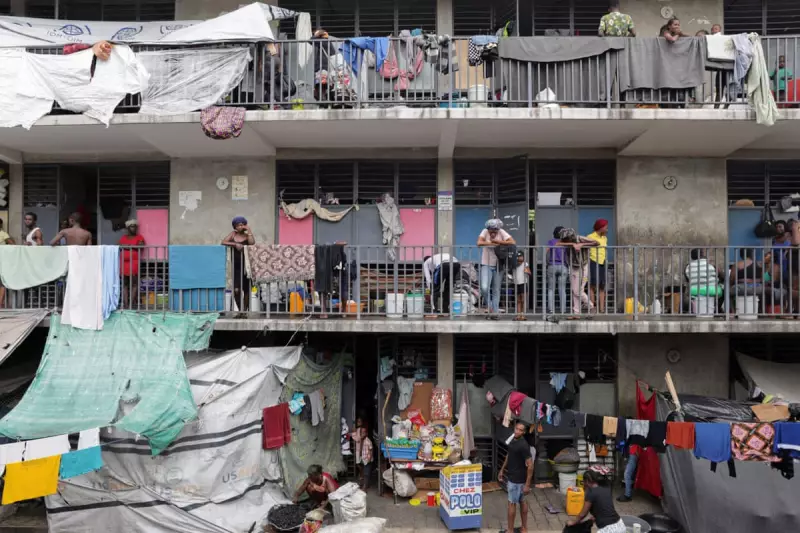
The decision appears starkly at odds with the situation on the ground. Images from Port-au-Prince show the Ecole Nationale Argentine Bellegarde, a school transformed into a shelter for those displaced by gang violence, with people crowding its balconies. This visual evidence underscores the daily struggle for safety and survival.
Furthermore, the administration's move comes as Unicef estimates from October reveal more than 6 million Haitians, including 3.3 million children, require urgent humanitarian assistance. The DHS notice justified its stance by arguing that Haiti "lacks a central authority with sufficient availability and dissemination of law enforcement information necessary to ensure its nationals do not undermine the national security of the United States."
This is not the first attempt to end these protections prematurely. In July, a federal judge halted the administration's effort to terminate TPS and work permits for about 521,000 Haitian migrants ahead of schedule. US District Judge Brian Cogan ruled that Secretary Noem had failed to follow the congressionally mandated process for reviewing Haiti's TPS designation.
Broader Immigration Crackdown and Misinformation
This action against Haitian migrants forms part of a wider crackdown on immigration by the Trump administration, which has also targeted temporary protections for nationals of other countries. The political rhetoric surrounding this issue has been charged with misinformation.
During his presidential campaign, Donald Trump baselessly claimed that Haitian migrants in Springfield, Ohio, were eating cats and dogs. This false narrative was amplified by prominent Republicans like JD Vance and Ted Cruz, leading to multiple bomb threats across the city last year, illustrating the real-world consequences of such inflammatory rhetoric.
The termination of TPS for Haitians marks a pivotal moment in US immigration policy, directly impacting hundreds of thousands of lives and raising serious questions about the alignment of policy with on-the-ground humanitarian realities.




