
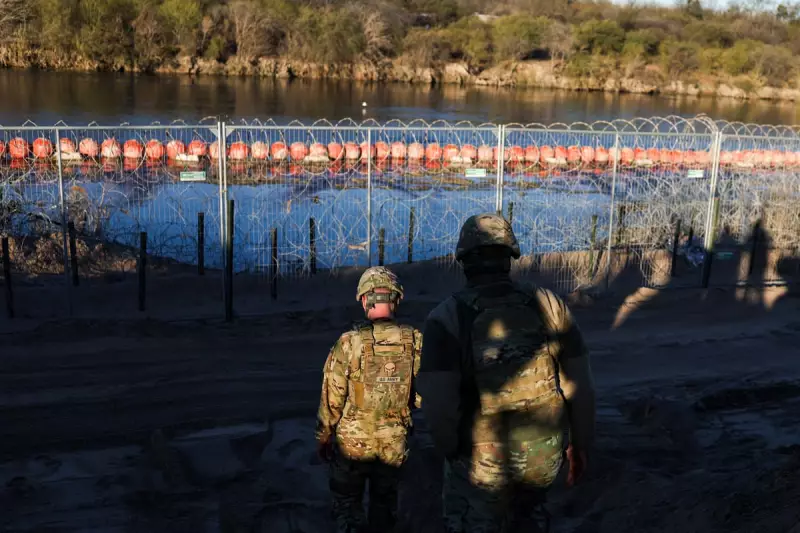
In the Texas border town of Eagle Pass, a dramatic political shift has unfolded alongside equally dramatic changes in border security. This Hispanic-majority community, which became the epicentre of America's immigration debate during record migration levels in 2023, made history in 2024 by voting for Donald Trump - the first time Maverick County had supported a Republican presidential candidate in a century.
From Border Crisis to Political Realignment
The transformation began amid unprecedented migration pressures. During the final year of the Biden administration, Eagle Pass fire chief Manuel Mello III witnessed scenes unlike anything in his 33-year career. His department received between 30 to 60 emergency calls daily concerning injured migrants, including people with broken femurs and a woman experiencing emergency childbirth while crossing the Rio Grande.
Throughout 2024, the Eagle Pass fire department responded to more than 400 emergency calls and recorded eight drownings in the treacherous river that forms the natural border between the United States and Mexico. The situation became so intense that foreign journalists descended upon the town of 28,000 people, while Texas National Guard troops became regular customers at local restaurants.
This backdrop explains the remarkable political shift that saw Trump secure 59% of the vote in Maverick County, representing a 14% increase from his 2020 performance. Across the southern border, Trump won 14 out of 18 counties, gaining more support there than any Republican in three decades.
The New Normal: Reduced Crossings, Rising Concerns
Since Trump's return to office, the border dynamics have changed dramatically. Within hours of his inauguration, the president declared a national emergency that deployed additional troops to the southern border. His administration also terminated the CBP One mobile application created under Biden, which had allowed tens of thousands of asylum seekers waiting in Mexico to cross legally into the United States.
The statistics reveal a striking transformation. In December 2023, the Border Patrol recorded over 2,300 daily crossings in the Del Rio sector that includes Eagle Pass. By September of this year, that number had plummeted to just 30 crossings per day. The Eagle Pass fire department has responded to fewer than 100 emergency calls this year and reported only three drownings.
Ricardo Lopez, a 79-year-old former city council candidate who gathers regularly with friends at a local McDonald's, articulated the mixed feelings many residents now experience. "I think most people that live here can agree that it was the illegal immigration that was causing all the problems," Lopez said. Though he personally dislikes Trump, he acknowledges that many neighbours believe "he fixed the problem."
Operation Lone Star and Environmental Consequences
Texas Governor Greg Abbott had already launched Operation Lone Star before Trump's return to power, an initiative that Texas authorities say has led to more than 500,000 apprehensions of undocumented people. The operation included building an 80-acre base camp in Eagle Pass to house 1,800 Texas National Guard soldiers and busing thousands of migrants to Democratic-led cities like Chicago, New York and Washington DC.
Today, armed Texas National Guard troops patrol the border atop shipping containers, while coils of razor wire line the banks of the Rio Grande on the American side. Observers recently noted no migrants crossing the river, and in the Mexican city of Piedras Negras opposite Eagle Pass, no razor wire prevents access to the water.
However, the intense border security measures have raised environmental concerns among long-time residents. Abbott used a natural disaster declaration to install floating buoys separated by saw blades in the river, prompting a lawsuit from Jessie Fuentes, a local kayaking company owner. "The river was part of my grandfather's upbringing, my father's upbringing and mine," Fuentes explained. "Now it's been mistreated with this militarization. The river can't defend itself so I sued the Texas government."
As Eagle Pass adjusts to its new normal, the community finds itself grappling with complex questions about security, humanity and the future of border life. The dramatic reduction in crossings has brought relief, but the methods employed and their broader consequences have left some residents wondering about the true cost of their political choice.




