
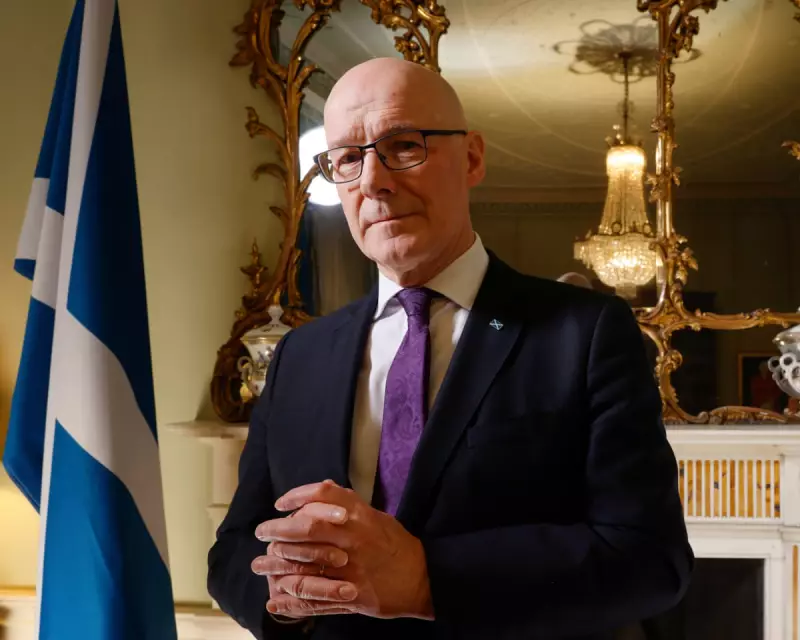
Scotland's First Minister, John Swinney, has issued a forceful defence of immigration, arguing it is essential for bolstering the nation's workforce, as his Scottish National Party (SNP) confronts rising support for Nigel Farage's Reform UK ahead of next May's Holyrood elections.
Confronting a Shift in Sentiment
The intervention comes at the close of a year marked by a notable shift in Scottish public opinion. Reform UK secured 26% of the vote in its first Holyrood byelection test, and Farage now polls higher in popularity than UK Labour leader Keir Starmer. This surge forces a reckoning with Scotland's self-image as a welcoming nation, amid protests outside asylum accommodation in towns like Falkirk, Perth, and Inverness.
"Of course I am concerned about it because I believe with every fibre of my body in the importance of inclusion within our society," Swinney stated. He expressed pride in Scotland's growing diversity over his lifetime and a determination to maintain that outlook.
Economic Argument vs. "Poison" of Prejudice
As 750 Reform UK supporters in Scotland gathered for an event with Farage, Swinney acknowledged some "will be attracted by the absolutely core prejudicial message." He condemned the far-right tactic of blaming asylum seekers for societal pressures, calling it "the root of the poison that Farage and his cohorts are spreading."
However, he carefully distinguished between extremist views and residents with "legitimate points" about strains on local services or community safety, noting such issues are not exclusive to areas housing migrants.
With immigration now a voter priority in Scotland, Swinney said he was prepared to listen but also to engage in rational debate about economic benefits. He highlighted a critical problem with "the size of our working-age population," which he believes "needs to be addressed by migration." He frequently hears from businesses struggling to recruit, he said, arguing a welcoming economy generates wealth for all.
Political Battleground and Future Alliances
Swinney placed blame for public service pressures squarely on UK government austerity since 2010, rather than on migrants. He pointed to SNP tax policies for higher earners as a break from that mould to fund services.
Denying complacency over Scottish exceptionalism, he referenced the Brexit vote as proof of historically different attitudes in Scotland. He also dismissed concerns that attacking Reform could boost its vote, stating its visibility must be acknowledged.
Ahead of the SNP's first campaign event, Swinney regretfully predicted Reform UK will win seats in the Scottish parliament in May, with polling suggesting a clutch of seats via Holyrood's proportional system. The same polls show the SNP back in the lead after a poor general election, with Labour in second.
While he would not be drawn on potential cooperation with Scottish Labour to lock Reform out of influence, he offered an "absolute guarantee" he would not work with Farage's party and aimed for an outright SNP majority. He speculated that after May, Wales, Northern Ireland, and Scotland could have Plaid Cymru, Sinn Féin, and SNP first ministers respectively, presenting the UK government with "an altogether more challenging set of circumstances."




