
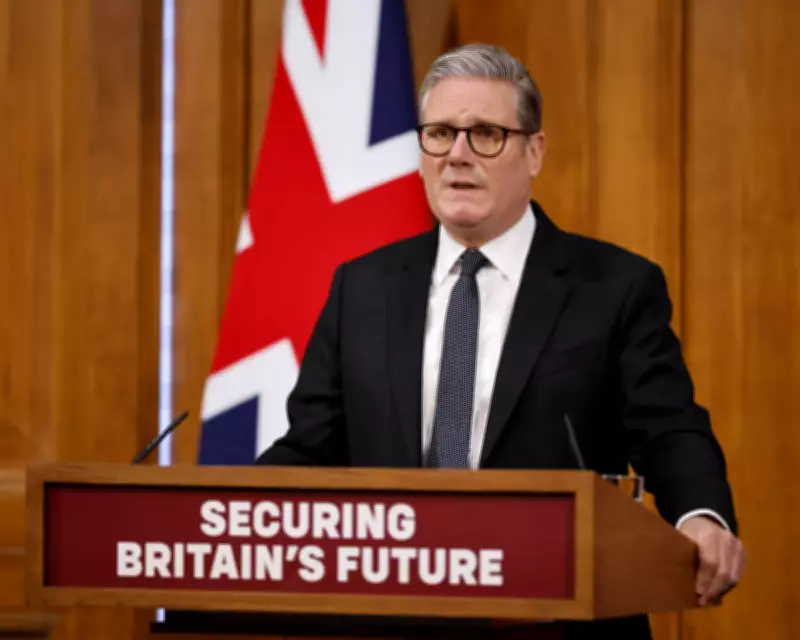
Starmer Under Fire as Small Boat Arrivals Continue to Rise
Prime Minister Keir Starmer is confronting escalating criticism from opposition parties over his inability to significantly reduce the number of individuals arriving in the United Kingdom via small boat crossings across the English Channel. This political pressure comes as new data reveals that 2,209 people have reached British shores in small boats as of February 25, 2026, representing an approximate 7% increase compared to the same timeframe in 2025.
Expert Analysis: A Pattern of Unfulfilled Promises
Madeleine Sumption, the director of the University of Oxford's Migration Observatory and a member of the government's independent Migration Advisory Committee, has issued a stark warning about the prime minister's approach. According to Sumption, Starmer's prominent election pledge to "smash the gangs" profiting from these dangerous crossings follows a well-established pattern of political rhetoric that consistently overpromises and underdelivers.
"Governments of all stripes like to make bold claims, from 'stop the boats' and 'smash the gangs' to 'net migration falling below 100,000'," Sumption stated. "In practice, the results have consistently disappointed because factors outside governmental control play a massive role. This includes EU membership dynamics, France's willingness to cooperate on asylum policy, or the sprawling, decentralized activities of smuggling networks that prove exceptionally difficult for any administration to contain effectively."
Historical Context: Echoes of Previous Administrations
Sumption emphasized that this is not a partisan issue but rather a systemic problem in immigration discourse. She pointed to historical examples, noting that former Prime Minister David Cameron promised to reduce annual net migration from "hundreds of thousands" to "tens of thousands" during his tenure from 2010 to 2016, yet the figure soared to over 300,000 by 2015.
Similarly, Rishi Sunak's "stop the boats" slogan during his premiership was later acknowledged by Sunak himself as "too stark, too binary" following his electoral defeat to Starmer in 2024. Despite this admission, Starmer appears to be repeating similar rhetorical strategies with his "smash the gangs" commitment.
The Political Dilemma: Honesty Versus Electability
Sumption highlighted a fundamental tension in immigration politics, explaining that while the public claims to want honesty from their leaders, realistic assessments often fail to resonate during campaigns. "Saying 'we don't know if this will work, but we'll try it out, and if it fails, we'll try something new' won't land very well on the campaign trail," she observed.
Consequently, immigration debates frequently feature "bold claims with great certainty about things governments only partially control," a phenomenon Sumption noted occurs "across administrations, across the world." This creates a cycle where politicians feel compelled to make sweeping promises they may be unable to fulfill, setting themselves up for future criticism when results fall short.
Current Challenges and International Dimensions
The criticism of Starmer's approach comes amid ongoing negotiations between the UK and French governments regarding a new agreement to combat people-smuggling operations in the Channel region. These international complexities underscore the limitations of unilateral action, as effective solutions require substantial cooperation across borders.
During Prime Minister's Questions last week, Starmer dismissed criticism of his "smash the gangs" slogan after Reform UK leader Nigel Farage labeled it "a total, abject failure." However, with arrival numbers continuing to rise and expert analysis questioning the feasibility of such absolute commitments, the prime minister faces mounting pressure to demonstrate tangible progress beyond rhetorical assurances.
Downing Street has declined to comment on the specific criticisms, but the ongoing debate highlights the persistent challenges surrounding immigration policy and the difficult balance between political messaging and practical governance in this highly charged arena.




