
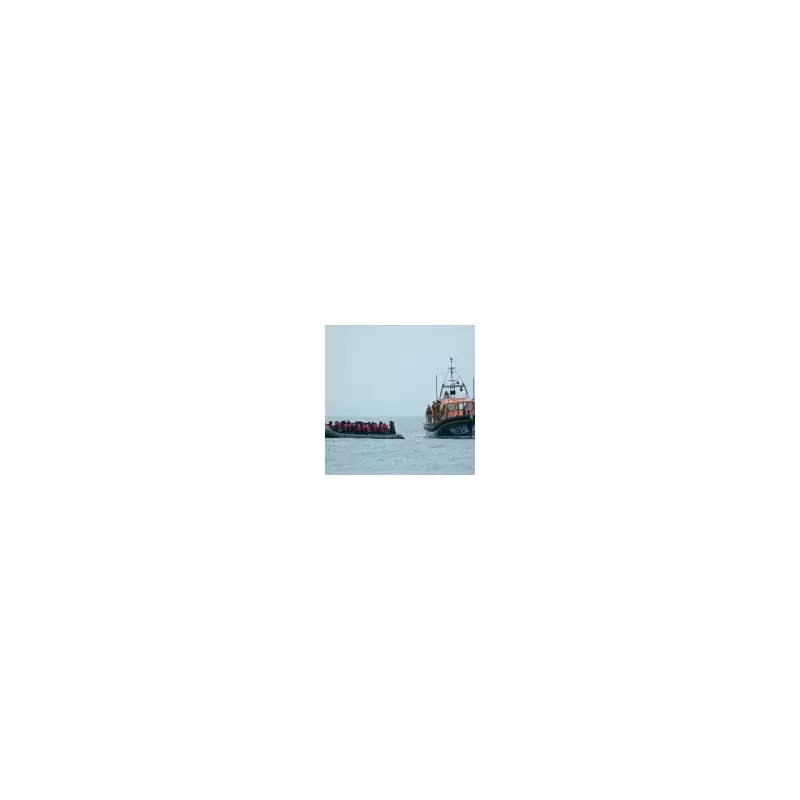
Dramatic Channel Rescue Reveals Overloaded Dinghy Crisis
Newly released documents have exposed the harrowing details of one of the largest migrant boat rescues in the English Channel last year, showing passengers standing knee-deep in water as their vessel struggled toward the UK coast.
The incident, which occurred on June 18, involved an overloaded dinghy carrying approximately 50 people that required intervention from multiple rescue services across both Britain and France.
Chaotic Scene as Vessel Falters
According to logs obtained from the Maritime and Coastguard Agency, the six-metre long boat was described as being in "poor condition" and severely overloaded when first spotted by French rescue ship Ridens at approximately 6:10am.
The documents reveal that French charity Utopia 56 initially raised the alarm, reporting that there were six women and seven children among the passengers attempting the perilous crossing from France.
As the situation deteriorated, the log entries show the RNLI lifeboat crew reported the vessel was "low in water" with migrants having "water over their knees" inside the failing dinghy.
Multi-Agency Response Pushed to Limits
The rescue operation eventually involved nine sea and air assets from both countries, stretching UK Border Force resources to capacity during what proved to be an exhausting day in the Channel.
At 7:08am, the Dover lifeboat was launched due to the deteriorating condition of the migrant vessel, with logs noting that "UK BF assets are reaching their capacity."
The incident was upgraded to "distress phase" as the true scale of the emergency became apparent. Border Force vessel Defender initially reported 56 people on board - 47 males and 8 females, including one individual suffering from a rash.
During the rescue operation, four people entered the water but were immediately recovered by lifeboat crews. The logs state: "Was heavily overloaded once alongside. A number did enter water but was recovered immediately."
Children Among the Casualties
RNLI crews expressed particular concern for the welfare of children onboard, who were described as being "wet and cold" following their ordeal. The rescue plan focused on "disembark[ing] at speed" once the lifeboat reached Western Jet Foil, the migrant processing centre in Dover.
All 49 people recovered from the vessel - including the women and children - were successfully transported to Dover Harbour, with the Defender reporting that one minor had been changed out of wet clothing during the operation.
The French vessel MCS Taku eventually recovered the abandoned dinghy, with the incident formally closed at 10:31am.
Political Fallout and Policy Responses
The logs have emerged as Home Secretary Shabana Mahmood announced new efforts to clamp down on illegal immigration across the English Channel and North Sea.
The government revealed that almost 50,000 failed asylum seekers, foreign criminals and other immigration offenders have been removed or deported from British soil since July 2024, representing a 23% increase compared to the previous 16-month period.
Shadow home secretary Chris Philp MP commented: "No one should be making these dangerous crossings across the Channel. France is a safe country. Only the Conservative Party has done the hard work to develop a detailed and proper plan to stop illegal immigration."
Meanwhile, the Refugee Council has argued that many asylum seekers making the crossing are fleeing "brutal regimes or the horrors of war" and has called for more legal pathways to the UK to prevent dangerous journeys.
The incident was one of 13 separate responses handled by UK rescue elements on the same day during the peak summer crossing season, highlighting the ongoing challenges facing border authorities.
A Home Office spokesperson stated: "The number of small boat crossings are shameful and the British people deserve better. We have detained and removed more than 35,000 who were here illegally, and our historic deal with the French means those who arrive on small boats are now being sent back."




