
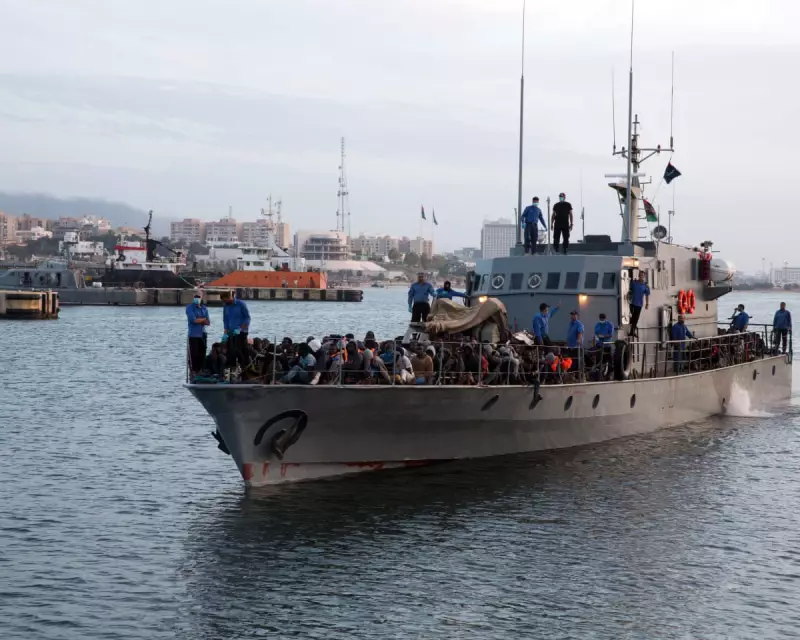
In a significant escalation of tensions over European Union migration policies, more than a dozen humanitarian organisations operating in the Mediterranean have severed all operational communication with the Libyan coastguard.
Breaking Point Reached
The 13 search-and-rescue groups announced their collective decision this week, citing mounting evidence of violent interceptions at sea and systematic human rights abuses against asylum seekers returned to Libyan detention centres. The organisations described the Libyan coastguard as an "illegitimate actor at sea" and declared that Libya cannot be considered a place of safety for refugees.
This dramatic move represents a direct challenge to pressure from the EU, particularly Italy, to coordinate with Libyan maritime authorities. The Libyan coastguard receives substantial training, equipment and funding from the European Union as part of efforts to reduce migrant arrivals on European shores.
Pattern of Violence and Abuse
The decision follows what rescue groups describe as escalating incidents of violence. A recent report published by Sea-Watch documented 54 violent incidents involving the Libyan coastguard since 2016, including shootings, vessel ramming, and physical assaults on people in distress.
In August, Libya's coastguard faced accusations of firing on a vessel belonging to SOS Méditerranée, highlighting the dangerous environment facing humanitarian workers.
The situation on land appears equally dire. A 2021 United Nations investigation found that migrants, asylum-seekers and refugees in Libya were subjected to a "litany of abuses" in detention centres and at the hands of traffickers. One UN mission member noted that the findings were "suggestive of crimes against humanity".
Moral and Legal Stand
Ina Friebe of the German activist group CompassCollective explained the decision in a joint statement: "We have never recognised these actors as a legitimate rescue authority – they are part of a violent regime enabled by the EU. Now we are increasingly being pressured to communicate with exactly these actors. This must stop."
Giulia Messmer of Berlin-based Sea-Watch reinforced this position, stating: "It is not only our right but our duty to treat armed militias as such in our operational communication – not as legitimate actors in search-and-rescue operations."
The organisations acknowledge their decision could have serious consequences, including fines, vessel detentions and confiscations. Italian authorities have already implemented hardline rules that have blocked rescue vessels from leaving port for a collective total of more than 700 days.
New Alliance Formed
In response to increasing pressure, the search-and-rescue organisations have launched a new coalition called the Justice Fleet. This alliance represents the largest group of civil search-and-rescue organisations to date and aims to push back against what they describe as escalating criminalisation of their work.
The Justice Fleet website will track incidents involving the Libyan coastguard and compile information on legal cases pursued by the NGOs. Over the past decade, these organisations have saved more than 155,000 people from drowning in the Mediterranean.
"For 10 years, civil sea rescue has been providing first aid in the Mediterranean. For that, we have been blocked, criminalised, slandered," the Justice Fleet website states. "That's why we are joining forces now, stronger than ever – to defend human rights and international maritime law together."




