
The New Wave of Western Migration to Russia
Imagine uprooting your entire family to a country you've never visited, with an unfamiliar culture and a language you cannot speak. Now add that your new homeland is engaged in a conflict with its neighbour. This is precisely the reality for the Hare family, who relocated from the United States to Russia two years ago, describing themselves as 'moral migrants' fleeing persecution.
Seeking Sanctuary in a Conservative Haven
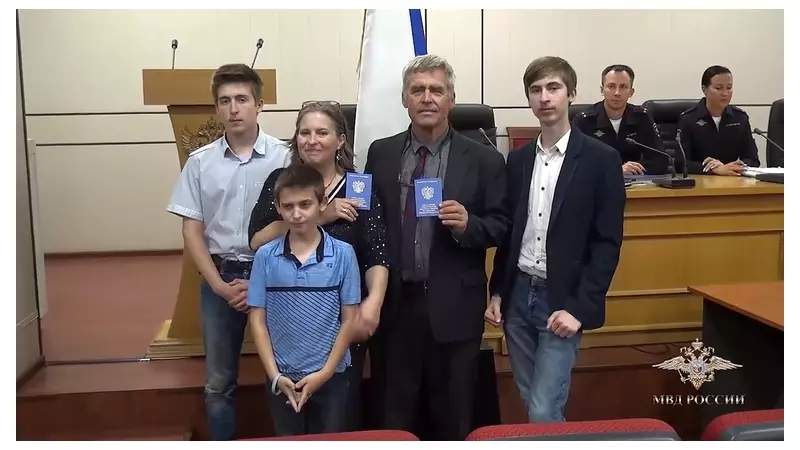
Leo and Chantelle Hare, devout Christians from Texas with three sons aged 17, 15 and 12, now reside in an apartment in Ivanovo, a city 150 miles from Moscow. Their dramatic move stemmed from profound discomfort with changing social policies in America. 'We were noticing a great upsurge in LGBT-type policies coming into the government, especially the school system,' Leo Hare explains. His wife Chantelle adds, 'This is where we drew a line in the sand. This is a complete demonic attack against the conservative Christian families.'
In Russia, where so-called 'LGBT propaganda' is banned, they assert they feel safer. 'There are laws that say: 'no you can't just run wild and have gay pride parades and dance in front of all the children'. You can't do this. I like this,' Leo states. The family was granted asylum last year in a ceremony broadcast on Russian state television.
The Shared Values Visa: A Growing Trend
The Hare family's story, while remarkable, is not isolated. According to the latest data from Russia's interior ministry, 2,275 Westerners have applied for a new 'shared values visa' introduced by President Vladimir Putin in August 2024. This visa targets individuals who believe the West has become 'too woke'.
Citizens from nations Russia deems 'unfriendly' – including Britain, the US, and most EU countries – are offered a three-year residency permit without needing to meet language proficiency or specific skills criteria.
Philip Hutchinson, whose company Moscow Connect assists Westerners with applications, reports receiving between 50 and 80 inquiries per week from the UK alone. 'There's a huge amount of people that are frustrated by the way the country's got in,' he reveals. 'Taxes keep going up and up and up. And we're giving all this money to Ukraine.' Mr Hutchinson, a former Conservative Party local election candidate, moved to Moscow after his Russian wife was denied a UK visa.
Integrating into Russian Society
Efforts to adapt are underway within this new community. In a Moscow skyscraper's language class, adults grapple with Cyrillic script, part of an expat club's initiative to foster integration. Among them is British national Philip Port from Burnley, Lancashire. Despite running a visa agency for Russians moving to the UK, he applied for the shared values visa for both practical and ideological reasons.
'I love Russia,' he states unapologetically, describing it as 'safe as houses' with 'no crime, clean streets, and well-developed.' His view of Britain is less favourable: 'I'm all for gay rights, don't get me wrong, but I think when they're teaching them to children in school - I've got a seven-year-old son, I don't want him being influenced in that way.'
A Political and Personal Calculation
When questioned about the ongoing conflict in Ukraine, Hutchinson's response is unequivocal: 'It doesn't [bother me]. As far as I'm concerned, I'm not getting involved in that. You know, I'm not here to deal with politics.' This sentiment appears common among the newcomers.
Russian lawmaker Maria Butina, who leads the shared values programme, emphasises that Russia is not running a recruitment campaign. 'We don't give any social security guarantee or any free housing,' she notes. 'People come on their own with their own money, own families, at their own expense.'
However, the transition is not always seamless. The Hare family disclosed they were scammed out of $50,000 (£38,200) by the family who initially hosted them. Furthermore, their two eldest sons have returned to America due to difficulties in securing school placements, as state education requires Russian language proficiency.
Reflecting on their journey, Leo Hare admits, 'Moving so fast? Probably. At times though, your pathway in life takes you places you wouldn't have willingly gone. But through God and providence, you're meant to go through this.' Their story encapsulates the complex blend of ideology, faith, and challenge characterising this unconventional migration trend.




