
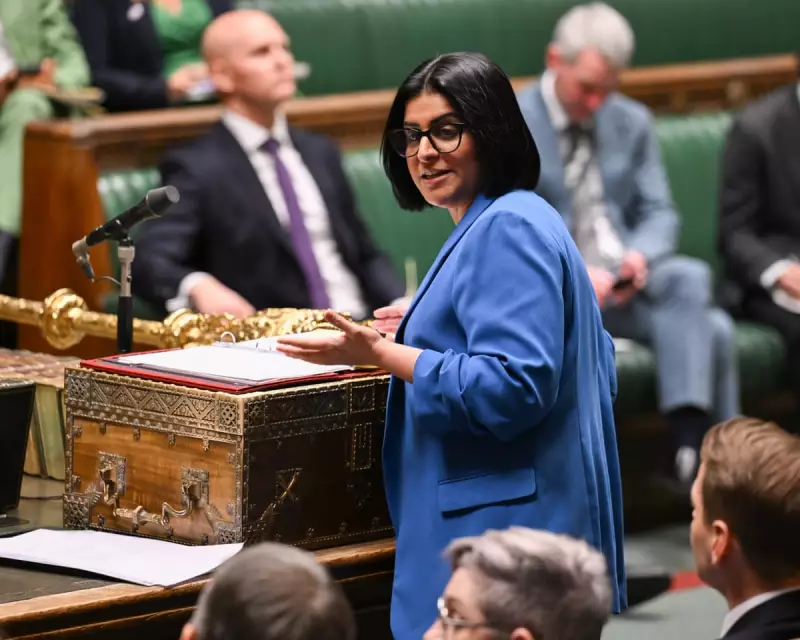
On 20 November 2025, Labour's Shabana Mahmood stood in the House of Commons to announce a significant shake-up of the UK's legal migration rules. The announcement, however, has become deeply intertwined with what critics are calling her personal "fable" - a narrative that uses her identity as the daughter of immigrants to justify what many see as cruel asylum policies.
The Personal Justification for Hardline Policies
Mahmood's approach is built around a powerful personal story. "I am the child of immigrants," she begins, establishing her credentials before proposing policies that would see UK-born children deported and refugees left homeless. She describes this crackdown as "a moral mission for me," creating what observers note is an inseparable link between her identity and her politics.
The Home Secretary has faced accusations of using "immoderate language" that stokes division, but she counters this by revealing she's regularly subjected to racist abuse. This positioning allows her to claim superior understanding of racial tensions while arguing that reducing immigrant rights might actually decrease xenophobia.
A Growing Trend in British Politics
Mahmood is not the first British politician to use immigrant heritage to justify hardline immigration policies. She joins ranks with Conservative figures like Suella Braverman, Kemi Badenoch, and Priti Patel, all of whom have referenced their backgrounds while pursuing restrictive measures.
What makes Mahmood significant is that she represents the first Labour politician to adopt this approach. Her policies include fighting "vexatious last-minute claims" that frustrate removals and shutting down asylum hotels, accompanied by what critics call flippant "sorry, we're closing!" imagery.
The Structural Problem of Immigration Discourse
This development reveals two concerning trends in British politics. First, the phenomenon of immigrants creating different classes of immigrants - legal versus illegal, working versus benefit-claiming. Second, and more structurally significant, is how identity politics is being weaponized in a country struggling with immigration discourse.
Commentators note this represents a form of late-stage identity politics where victim narratives, often condemned as "wokeness," become unquestionable when used to serve authority rather than challenge it. At a time when Reform UK is ascendant, Mahmood provides the Labour government with cover to outflank the right while maintaining plausible deniability about racist motivations.
The excitement in certain political circles about Mahmood's approach has been palpable. She's been described as the "new hard woman of British politics" and proponent of "Mahmoodism." Even Conservative figure Michael Gove has expressed admiration, calling her "far and away the most impressive person in the Labour government."
This political glee contrasts sharply with the human impact of policies that will affect some of the most vulnerable people in society. Meanwhile, Mahmood's own political history shows a significant reversal from her previous positions, including supporting a general amnesty for undocumented workers in 2020 and calling to halt deportation flights.
As the debate continues, the fundamental question remains: is Mahmood's story a genuine expression of conviction politics, or a cynical tool to advance policies that absolve the country of confronting deeper issues of economic failure and cultural capitulation that have enabled the far right's rise?




