
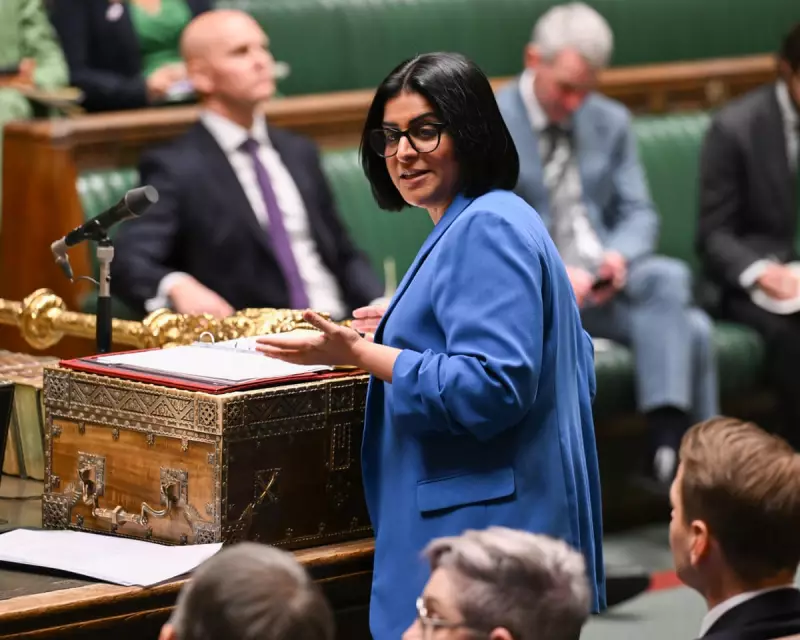
Home Secretary Shabana Mahmood delivered her second major immigration statement to Parliament this week, turning her attention to legal migration rules after previously addressing illegal immigration. The announcement came amidst notably sparse attendance in the Commons chamber, suggesting either political fatigue or growing confidence in the government's hardline approach.
Personal Backstory and Political Justification
Mahmood began her statement with personal reflections, describing herself as a proud immigrant who valued the welcome Britain had shown her parents. However, she argued that changing public attitudes necessitated stricter measures. Patriotism was narrowing in this country, she suggested, implying that the government must respond to increasing public concern about immigration levels.
The Home Secretary framed the new rules as politically necessary, warning that failure to act firmly could lead to worse outcomes under alternative governments. Her comments came after her earlier statement on illegal migration had drawn praise from Reform UK's Lee Anderson, who described the approach as dog whistle politics - apparently intended as a compliment from the right-wing party.
Sweeping Changes to Settlement Rules
The centrepiece of Mahmood's announcement involved significant tightening of requirements for indefinite leave to remain (ILR). Under the new rules, the qualifying period will extend from five to ten years, dramatically lengthening the pathway to permanent settlement.
Applicants will now need to meet stricter criteria including a clean criminal record, English language proficiency at A-level standard, and evidence of financial independence. The requirements effectively demand that migrants demonstrate higher standards than many British citizens, particularly regarding language skills and financial stability.
Critics immediately questioned how these measures would affect vital sectors like healthcare, which relies heavily on migrant workers. The changes appear to disregard the staffing crises facing the NHS and social care systems.
Political Fallout and Absent Critics
Remarkably, Reform UK MPs failed to attend the statement on their self-declared specialist subject. Their absence suggested either satisfaction with Mahmood's direction or disengagement from the parliamentary process. Both Conservative and Labour benches also showed limited interest, with many seats remaining empty during the Thursday afternoon session.
Shadow Home Secretary Chris Philp responded for the Conservatives, largely endorsing the government's approach while suggesting further restrictions. His response indicated cross-party consensus on tightening migration rules, despite concerns from some Labour backbenchers.
Stella Creasy and other Labour MPs made token appeals for compassion, but their interventions lacked conviction, suggesting the party leadership has settled on a firm immigration stance. The political landscape appears to have shifted decisively toward restrictionist policies.
Broader Immigration Context
Mahmood's legal migration announcement followed her earlier statement addressing illegal immigration, where she revealed plans to increase financial incentives for asylum seekers to depart voluntarily. The previous scheme offering £3,000 had proven insufficient, with new proposals suggesting significantly higher payments to avoid costly legal battles that could reach £30,000 per case.
The Home Secretary also addressed recent tensions within government, describing No 10 briefings against herself and Health Secretary Wes Streeting as a total car crash and humiliation for the Prime Minister. Her frank comments revealed ongoing friction at the highest levels of government.
As the week of immigration announcements concluded, the political direction appeared clear: Britain's welcome mat is being firmly rolled up, with both major parties embracing increasingly restrictive policies that could have profound consequences for public services and community relations.




