
Minnesota Communities Grapple with Profound Changes Amid Federal Immigration Operation
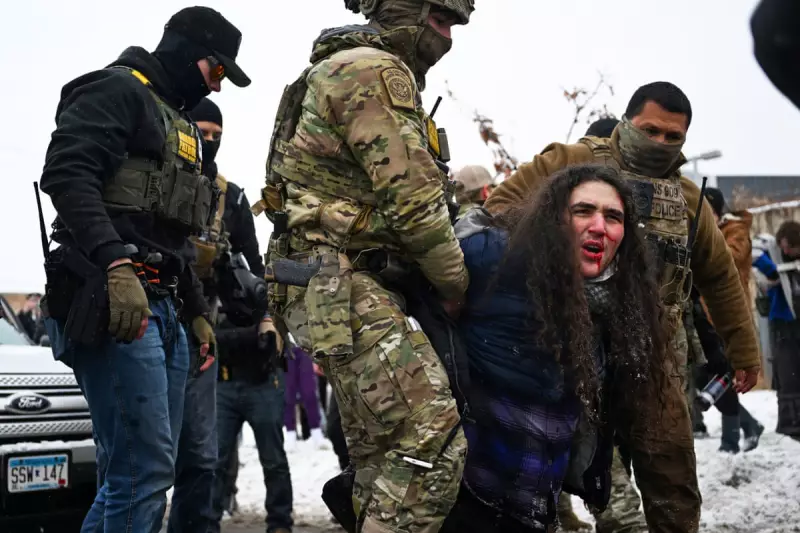
The deployment of more than three thousand federal immigration officers to Minnesota has fundamentally altered daily existence for residents across the Twin Cities of Minneapolis and St Paul. Since the Trump administration significantly escalated its immigration enforcement operation in January 2026, communities have reported witnessing violent clashes, carrying identification documents constantly, restricting movements, and experiencing deep anxiety about family safety in public spaces.
A Climate of Fear and Altered Daily Routines
Over one hundred and fifty Minnesota residents recently shared with journalists how their lives have been transformed since federal troops arrived in their state. An overwhelming majority described the atmosphere in the Twin Cities as profoundly tense, with many feeling their communities were effectively occupied or under siege. Numerous individuals agreed to speak only anonymously, expressing genuine fear of government retribution for sharing their experiences.
Dan O'Kane, a sixty-nine-year-old resident, observed Immigration and Customs Enforcement officers fighting with students and throwing a teacher to the ground at Roosevelt High School, just three blocks from his home. He stated emphatically that he had never witnessed anything comparable within the United States. The situation intensified following the fatal shooting of thirty-seven-year-old Renee Good by an ICE officer in Minneapolis, which triggered widespread protests across the city.
Community Responses and Protective Measures
Marcus Kessler revealed that his wife now carries her tribal identification card everywhere following guidance from White Earth Ojibwe Nation leadership, who documented instances of immigration officers racially profiling tribal citizens. Similarly, a fifty-seven-year-old Latina resident of St Paul, who requested anonymity, explained that she and other brown friends now take extensive precautions including carrying passports, maintaining open phone lines while driving, and providing detailed itineraries to concerned contacts.
A thirty-eight-year-old expectant mother shared that her obstetrician had conducted an entire conversation about how to respond if she encountered teargas or pepper spray. She now avoids protests entirely to prioritize safety, focusing instead on supply runs to support neighbors while protecting her unborn child. This climate of apprehension has extended to educational and healthcare settings, with teachers reporting dramatically declining classroom attendance and physicians noting unusually empty emergency departments despite cold and flu season, as families fear bringing ill children for treatment.
Psychological Impact and Community Solidarity
Therapist Gerard James observed that people are experiencing complex emotional responses including fear, sadness, and rage, with many simply too scared to venture outside. Some families are actively considering whether to remain in Minnesota after witnessing violent arrests, shootings, and the deployment of chemical agents like teargas in their neighborhoods. Seth, a thirty-three-year-old Minneapolis resident, sent his wife and baby daughter to stay with parents in another state, unable to tolerate exposing them to the surrounding violence.
Despite these challenges, many residents expressed deep pride in their communities' resilience and mutual support networks. Jason C, a fifty-year-old south Minneapolis resident, noted that current circumstances feel reminiscent of the George Floyd uprising, retriggering past traumas while simultaneously reactivating community systems established during that period to assist marginalized populations. New waves of Minnesotans are learning protective strategies, including a seventy-two-year-old Minnetonka resident who mastered recording ICE interactions on her phone despite officer threats.
Broader Implications and Future Concerns
Community members have adapted routines in remarkable ways, carrying whistles to alert neighbors of approaching ICE agents, volunteering for school drop-off supervision, and acquiring protective equipment for potential protest situations. Dan, a thirty-year-old resident who relocated to escape LGBTQ discrimination, praised Minneapolis for its vibrance and kindness, suggesting that the city's inclusive spirit represents precisely what the Trump administration seeks to undermine.
Yet as the ICE operation continues, many residents feel they no longer recognize their home environment. Mike from St Paul expressed shock at witnessing federal agents assaulting and kidnapping people in broad daylight within residential neighborhoods, comparing the situation to historical regimes. An anonymous Minneapolis resident voiced concern that the Twin Cities represent merely a testing ground to determine what Americans will tolerate when not directly affected, with disturbing implications for the nation's future.




