
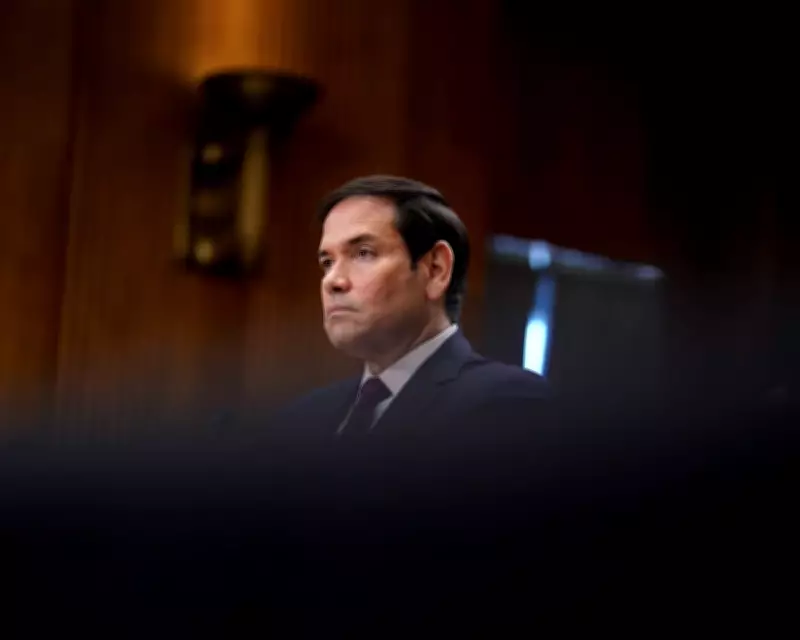
Legal Challenge Mounts Against Rubio's Controversial Visa Suspension
A significant coalition of immigration advocacy organisations, legal professionals, and American citizens has initiated a federal lawsuit against Secretary of State Marco Rubio and the United States Department of State. The legal action seeks to overturn a recent administrative order that has suspended the approval of immigrant visas for nationals from seventy-five specified countries. The plaintiffs argue that this directive fundamentally undermines established immigration policy and constitutes blatant discrimination based on nationality.
Allegations of False Premises and Discriminatory Policy
The lawsuit, formally lodged in a U.S. district court located in New York, contends that the State Department and Secretary Rubio are denying immigration rights based on what it describes as "the demonstrably false claim" that individuals from these nations are predisposed to seek welfare benefits upon arrival in the United States. The policy was announced last month through an official social media post, which employed notably undiplomatic language.
The department's statement declared it would "pause immigrant visa processing from 75 countries whose migrants take welfare from the American people at unacceptable rates." It further asserted that the freeze would remain until safeguards could ensure new immigrants would not "extract wealth from the American people." The listed countries include Somalia, Haiti, Iran, Eritrea, and notably Cuba—the homeland of Secretary Rubio's parents, who arrived as undocumented immigrants in 1956.
Broader Context and Legal Arguments
This visa suspension coincided with operational deployments by Immigration and Customs Enforcement (ICE) agents to Minnesota. The Trump administration has alleged widespread welfare fraud in that state, specifically implicating members of the local Somali community. The lawsuit posits that the suspension effectively bars nearly half of all immigrant visa applications currently in processing.
Legal representatives for the coalition argue that the "public charge" justification is baseless. "Many applicants for immigrant visas are not eligible for cash welfare and remain ineligible for years," the suit states. It further accuses the State Department of inventing a visa processing regime not grounded in the Immigration and Nationality Act (INA), one that authorises refusals "based solely on nationality, without individualized assessment or statutory authority."
Plaintiffs and Personal Impacts
Joanna Cuevas Ingram, an attorney with the National Immigration Law Center, emphasised the human cost, stating the ban "upends the lives" of people who have navigated complex processes to reunite families. "These policies exceed the government’s authority, violate the constitution, and strip families and working people of rights that the law squarely protects," she asserted.
Baher Azmy, Legal Director of the Center for Constitutional Rights, characterised the order as "base racism … clothed … in obviously pre-textual tropes about nonwhite families undeservedly taking benefits," adding that "Congress and the constitution prohibit white supremacy as grounds for immigration policy."
The lawsuit includes individual plaintiffs whose lives have been directly disrupted. Among them is Dr. Fernando Lizcano Losada, a Colombian endocrinologist whose approved employment-based visa (EB-1A) is now suspended. Other plaintiffs are U.S. citizens facing family separation, such as Cesar Andred Aguirre of Long Island. His wife, Dania Mariela Escobar, attended a visa interview in Guatemala but was denied return. Their younger daughter, who requires treatment for Turner syndrome unavailable in Guatemala, remains there with her mother.
This legal challenge sets the stage for a significant constitutional and policy battle over the scope of executive authority in immigration matters and the criteria used to determine visa eligibility for thousands of prospective immigrants worldwide.




