
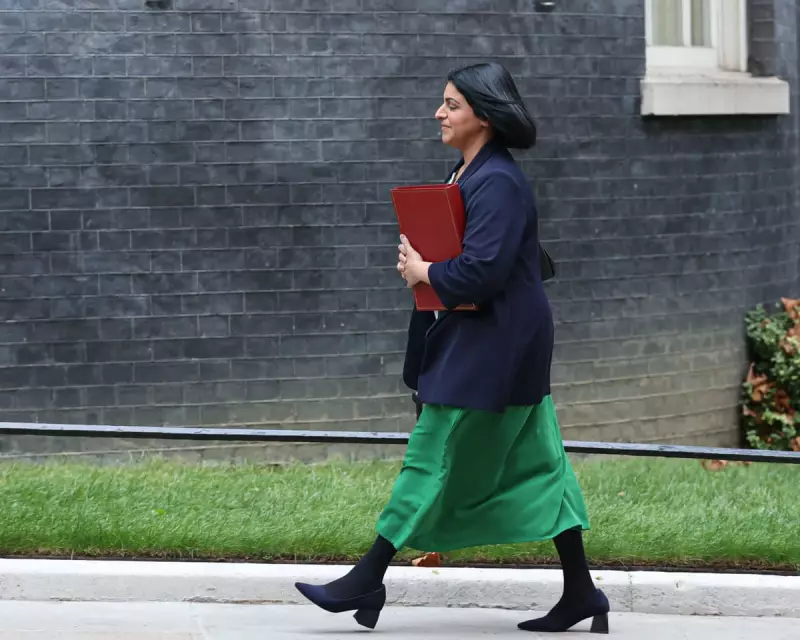
Labour Backbenchers Revolt Against Home Secretary's Asylum Plans
Home Secretary Shabana Mahmood is confronting significant internal party dissent as more than two dozen Labour MPs express anger over her controversial asylum policies. The rebellion comes amid growing concerns about the government's hardline approach to immigration and refugee admissions.
Limited Numbers Spark Outrage
The controversy intensified when Mahmood revealed that only a few hundred asylum seekers would initially be permitted entry to the UK under three newly announced refugee schemes. This admission has drawn sharp criticism from both within her party and from refugee advocacy organisations.
Mahmood had previously justified several stringent measures - including family deportations and asset confiscation from claimants - by promising to establish safe and legal routes for genuine asylum seekers. However, during a Monday night statement, she described the new schemes as modest at first and declined to specify when or how admission numbers would increase.
Refugee Council Condemns 'Meaningless' Routes
Enver Solomon, chief executive of the Refugee Council, delivered a stark assessment of the government's approach. People fleeing war, persecution and torture do not have the luxury of waiting months or years for safe and legal routes to be expanded, he stated.
Solomon emphasised that a route helping only a few hundred people with no clear expansion plan would fail to prevent dangerous journeys or create the orderly system the government claims to want. This approach would in effect be meaningless, he warned, calling for transparent targets and rapid scaling of refugee admissions.
The criticism extends beyond refugee organisations, with Labour MP Stella Creasy demanding greater transparency. Safe and legal routes are the key to a functioning and fair asylum system, she asserted, insisting the government must come clean about its plans.
Three New Routes Announced
The government's proposed schemes include an enhanced community sponsorship programme building on the Homes for Ukraine model, a pathway for talented individuals displaced by conflict to work in Britain, and a study route for students facing war or persecution.
Mahmood told the Observer: I want to stop people getting on boats. We want to change the calculus that people are making and disincentivise illegal migration but also show that we have safe, legal routes that will incentivise people to come here under that route.
According to official policy documents, the Home Secretary will publish an annual cap on the new routes and prioritise individuals identified by the UN refugee agency (UNHCR). However, when questioned by ITN's Robert Peston, Mahmood confirmed the initial numbers would remain modest, beginning with just a few hundred people.
International Concerns and Family Removal Policies
The UNHCR has raised serious concerns about the government's approach, warning against treating refugees as economic migrants. Vicky Tennant, UNHCR's UK representative, stressed that refugees need stable status that allows them to rebuild their lives rather than short-term arrangements that create prolonged uncertainty and despair.
Meanwhile, the Home Office has confirmed it will consult on measures to remove financial support from families with children under 18 if their asylum claims are refused. Ministers argue the current system incentivises asylum seekers to subject children to dangerous crossings.
The policy document states: Our hesitancy around returning families creates particularly perverse incentives. To some, the personal benefit of placing a child on a dangerous small boat outweighs the considerable risks of doing so.
This approach has drawn condemnation from Labour peer Alf Dubs, who arrived in Britain as a child refugee fleeing the Nazis. He told BBC Radio 4's Today programme: To use children as a weapon, as the home secretary is doing, I think is a shabby thing. Dubs emphasised the importance of protecting children and maintaining family reunion rights.
The growing rebellion signals significant challenges ahead for Mahmood's immigration agenda, with pressure mounting from both parliamentary colleagues and humanitarian organisations to adopt a more compassionate and transparent approach to asylum policy.




