
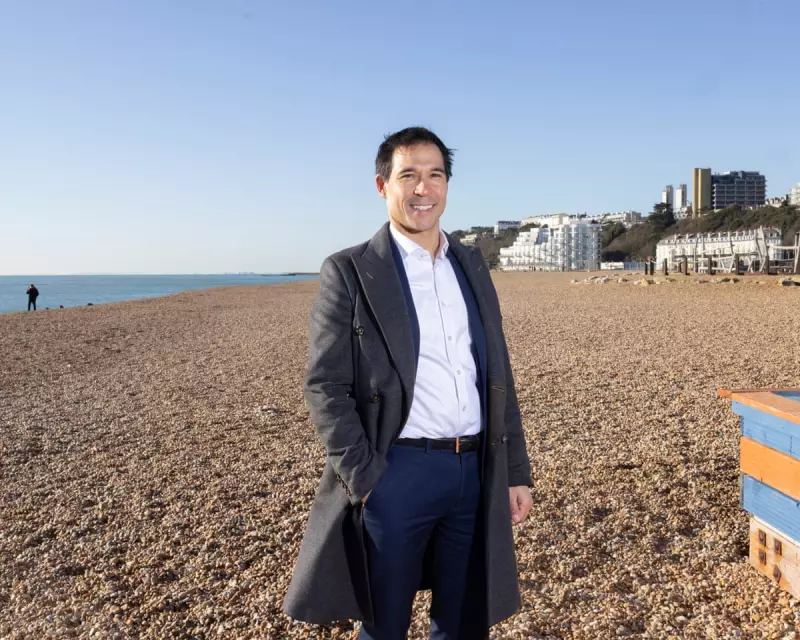
In a significant rebellion against his own party, Labour MP Tony Vaughan has publicly condemned the government's sweeping reforms to the UK's asylum system, branding key elements as "wrong" and potentially inflammatory.
From Party Loyalist to Vocal Critic
The MP for Folkestone and Hythe, previously known for his polished social media content supporting government initiatives, has dramatically shifted his approach this week. As Home Secretary Shabana Mahmood unveiled what was described as the biggest shake-up to Britain's asylum system in forty years, Vaughan took to multiple media platforms to voice his strong opposition.
On social media platform X, he stated: "The idea that recognised refugees need to be deported is wrong." He continued: "We absolutely need immigration controls. And where those controls decide to grant asylum, we should welcome and integrate, not create perpetual limbo and alienation."
An Expert Voice Against Reform
Vaughan's criticism carries particular weight given his professional background. Before his election in 2024, he worked as an immigration barrister at the same chambers where Keir Starmer once practised. He has represented refugees, asylum seekers, and victims of human trafficking at the Supreme Court and was appointed as a KC earlier this year.
His constituency position also gives him unique insight, representing an area at the frontline of the immigration debate. Folkestone sits along the Kent coast, with clear views across the Channel towards France just 23 miles away.
Vaughan expressed particular concern about media briefings suggesting jewellery and other assets could be seized from asylum seekers, and more fundamentally, the decision to change refugee status from permanent to temporary. "Once you are granted asylum, you should be supported, integrated and you shouldn't have a sword of Damocles hanging over you for 10 or 20 years," he argued.
Constituency Divided on Immigration
The MP's perspective is shaped not only by his legal career but by personal experience living in the area. He recalls witnessing a small boat carrying about 20 people arriving from the window of his former home overlooking Sandgate beach, an event that "really brings home the human element" of the issue.
Despite rising support for Reform in his constituency, Vaughan believes many locals want asylum seekers treated humanely. However, a brief visit reveals deep divisions among residents.
Napier Barracks, which has housed about 320 male asylum seekers since 2020, remains the site of regular pro and anti-immigration demonstrations, despite scheduled closure. The barracks has become a flashpoint in the national debate about asylum policy.
Vaughan belongs to a group of approximately 33 'bonus MPs' - politicians in non-target seats that Labour had little expectation of winning in last year's election. These MPs, unconstrained by prospects of long political careers, have developed a reputation for political disobedience.
He appears sanguine about potentially damaging his promotion prospects, noting: "I'm not one of the people who decided they wanted to be prime minister when they were a kid."
Political Future Hangs in Balance
Vaughan's political future remains uncertain. He benefited from Reform eroding the Conservative vote to secure Folkestone's first non-Conservative victory since 1885, achieving a 3,729 majority. However, Electoral Calculus currently estimates he has just a 6% chance of winning next time, with Reform at 91%.
How Labour handles immigration will likely determine whether constituents stick with Vaughan or switch to Reform. Janice Biffen, a retired NHS matron who voted Labour in 2024, is considering switching. "We haven't got the facilities in the area to accommodate people coming through unauthorised routes," she said. "Farage says a lot of positive things about how to solve it. I probably would consider voting for him."
Meanwhile, Tony Cooper, a Labour and Co-operative district councillor, suggested much local unease stems from elsewhere: "People are angry not necessarily at the level of immigration or illegal arrivals, but at substandard NHS services they're receiving."
As the first politician of Filipino heritage elected to parliament, Vaughan brings personal perspective to the debate. His mother, a care assistant who moved to the UK in the early 1970s and spent 30 years with the NHS, occasionally experienced racism at work. This has made him particularly sensitive to policies that might incite division.
He proposes a radical scaling up of the UK-France agreement to allow more small boat arrivals to be returned instantly to France, seeing this as a more powerful deterrent than the potential withdrawal of refugee status. He also places responsibility for surging boat arrivals firmly with Nigel Farage, noting that people smugglers now tell migrants that Brexit has removed deportation prospects.
As the debate continues, Vaughan's rebellion highlights the difficult balancing act facing the Labour government as it attempts to address public concern about immigration while maintaining its principles and party unity.




