
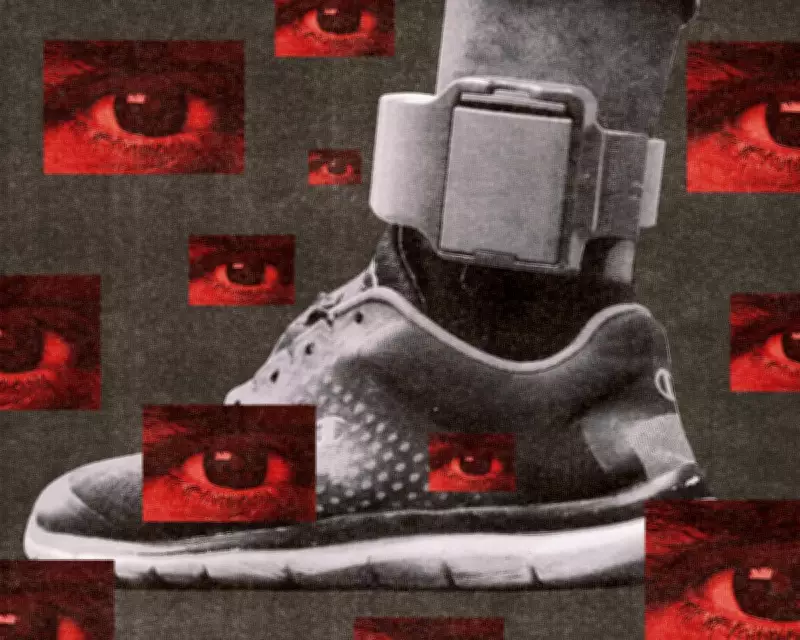
ICE's Dramatic Increase in Ankle Monitoring Sparks Outcry Over Immigrant Harms
Critics assert that ankle monitors inflict severe psychological, economic, and physical damages on individuals mandated to wear them, labeling the practice as deeply detrimental. In a concerning trend, U.S. Immigration and Customs Enforcement (ICE) has nearly doubled its deployment of ankle monitors for legal immigrants over the past year, a move advocates describe as a "very harmful phenomenon." The agency utilizes these uncomfortable devices, which often interfere with employment, in what many believe is a strategy to pressure people into self-deportation.
Personal Stories Highlight Arbitrary Enforcement and Job Loss
For five years, an asylum-seeking woman complied with routine immigration check-ins without incident. However, at her October appointment, she was unexpectedly ordered to wear an ankle monitor, according to her attorney, Deepa Bijpuria of Legal Aid DC. Bijpuria described the client as a single mother who fled severe domestic violence while pregnant with her daughter. "The order was a drastic shift after years of compliance while awaiting her asylum decision," Bijpuria noted. The working mom, who requested anonymity due to her vulnerable situation, lost at least one job after receiving the monitor, underscoring the economic toll.
This case is not isolated. Evan Benz, a senior attorney at the Amica Center for Immigrant Rights, observed a "marked shift" toward ankle monitors following an internal ICE memo from June 2025, which directed officers to place devices on anyone in the Alternatives to Detention (ATD) program. The ATD program, formally implemented in 2004, aims to ensure compliance without detention through methods like mobile apps and phone check-ins. Yet, the number of people with ankle monitors in ATD surged from about 24,000 at the memo's issuance to roughly 42,000 by last month, as per a February 2026 ICE report, even as overall program enrollment remained stable.
Regional Disparities and Lack of Transparency Fuel Concerns
Enforcement varies significantly by region, with the Washington D.C. area, covering Virginia and D.C. itself, having the highest rate of ankle monitor usage. "If you're in the D.C. field office area, you're drastically more likely to be subjected to ankle monitoring," Benz explained, though the reasons for this regional variation remain unclear. An ICE spokesperson stated that the ATD program uses "individualized determinations" based on factors like criminal history and compliance records to tailor supervision. However, Bijpuria criticized the "arbitrary" nature of assignments, noting many clients received monitors despite full compliance, raising doubts about the true goal of ensuring compliance.
A 2021 study by the Cardozo School of Law found that ankle monitors may not improve compliance and could be counterproductive. The report revealed that 98% of immigrants released without monitors attended all court hearings and check-ins, compared to 93% of those wearing devices. Legal experts argue that limited transparency exacerbates uncertainty about ICE's motives. The internal memo was never publicly released, prompting the Amica Center to file a Freedom of Information Act lawsuit. ICE initially promised to publish the memo but later cited an ongoing Department of Homeland Security (DHS) shutdown as a barrier. "ICE is not an agency that cares much about transparency," Benz remarked.
Psychological, Economic, and Physical Harms Detailed
Julia Decker, policy director at the Immigrant Law Center of Minnesota, suggested the lack of transparency reflects a strategy of "intentional chaos," where creating anxiety in immigrant communities is "part of the plan." She warned that the ATD program could funnel people back into detention, especially under an administration focused on arrests and deportations. Benz echoed this, calling ATD an "alternative form of detention" rather than a true alternative, citing cases where ICE used ankle monitors to track and detain individuals under false pretenses.
Beyond detention risks, ankle monitors impose significant harms. "There are very onerous conditions like curfews, home inspections, and travel restrictions," Benz said. "These take a psychological toll, making people feel watched and restrained." He added that monitors often lead to job loss due to associations with the criminal legal system. Bijpuria emphasized physical discomfort, noting difficulty sleeping and the shame involved. She linked these harms to pressure for self-deportation, referencing a DHS campaign under former Secretary Kristi Noem that offered financial incentives for voluntary departure.
Calls for Action Amid Ongoing Policy Shifts
Amid a shifting immigration landscape, DHS shutdowns, and leadership changes, Benz stressed the importance of submitting written requests to ICE for monitor removal, supported by medical documentation of negative impacts. Guides are available for attorneys and individuals navigating the process without representation. "Ankle monitoring has flown under the radar amid other awful ICE actions," Benz concluded, "but it's a very harmful phenomenon that demands attention."




