
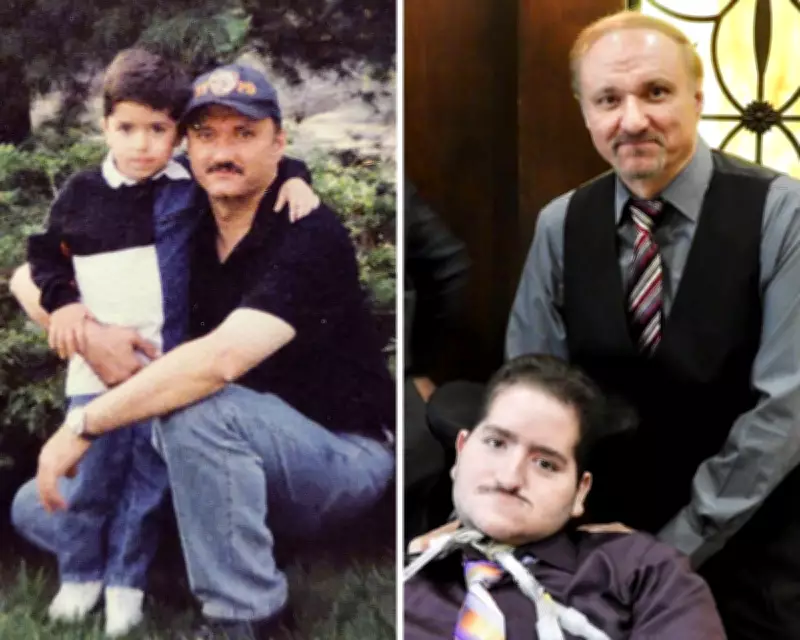
Maher Tarabishi has served as the devoted primary caregiver for his son, Wael, who was diagnosed during childhood with Pompe disease, a severe and progressive muscle disorder that requires constant attention and specialised care. This father-son bond was not merely emotional but essential for Wael's survival, with Maher fulfilling multiple critical roles in his son's daily life.
A Vital Caregiver Detained
For many years, Maher and Wael Tarabishi were inseparable companions, their relationship built on necessity as much as affection. Wael, aged 30, relied entirely on his father for management of his Pompe disease, a condition that weakens muscles over time and can be life-threatening. As Wael's mother poignantly noted in November, Maher acted as his son's "case manager, his equipment company, his doctor, his everything," highlighting the irreplaceable nature of his caregiving duties.
In a devastating turn of events in late October, Maher was detained by Immigration and Customs Enforcement (ICE) agents following a routine visit to a field office in Dallas, Texas. This visit was part of his long-standing compliance with immigration authorities, as he had been permitted to remain in the United States specifically because he was Wael's primary caretaker. His detention immediately created a care crisis for Wael, whose health began to deteriorate rapidly without his father's support.
Health Decline and Pleas Ignored
Following Maher's detention, Wael's condition worsened significantly, leading to multiple hospitalisations and several surgical procedures. Throughout this period, the Tarabishi family made desperate appeals to federal officials, begging for Maher's release or at least for him to be granted communication privileges with his son. Tragically, every single request was either ignored or formally denied by the authorities, leaving the family in a state of helpless anguish.
On 23rd January, Wael succumbed to his illness and passed away in hospital. In a further blow, ICE officials subsequently denied Maher the opportunity to attend his son's funeral, even under supervised conditions. Shahd Arnaout, Maher's daughter-in-law, expressed the family's profound grief and anger, stating, "ICE is responsible for the death of Wael Tarabishi. They may not have killed him with a bullet, but they killed him inside. They killed him mentally. How many people need to die until this stops?"
Immigration History and Allegations
Maher Tarabishi originally entered the United States in 1994 on a tourist visa and later applied for asylum. Although his asylum claim was rejected in 2006, he was allowed to stay under supervised release due to his caregiving responsibilities for Wael. His recent detention places him among the majority of ICE detainees who have no criminal record, raising questions about the enforcement priorities.
ICE has repeatedly asserted that Maher is associated with the Palestine Liberation Organization (PLO), an internationally recognised representative body for Palestinians that was once labelled a terrorist organisation by the US. However, Ali Elhorr, the family's attorney, vehemently disputes this claim, describing it as unfounded. "This PLO claim really has come out of nowhere for us," Elhorr explained. "Maher was not part of the PLO."
Elhorr suggested that the allegation might stem from Maher's original immigration paperwork, which was prepared decades ago by an individual later convicted of practicing law fraudulently without a licence. "It's been proven in a court of law that this individual was practicing law without a license," Elhorr noted, casting doubt on the validity of the accusations.
Funeral Request Denied
After Wael's death, the family and their attorney urgently petitioned ICE to allow Maher to attend the funeral under supervision. Text messages and voicemail transcripts indicated that officers were initially discussing arrangements, giving the family a glimmer of hope. "There were preliminary steps already being taken," Elhorr said, including plans to transfer Maher to a detention facility closer to home for the funeral. "Management was talking, discussing the request."
However, a final decision "from higher up" abruptly denied the request. When contacted by The Guardian, an ICE spokesperson claimed that no official request had been submitted, despite documentation provided by Elhorr showing discussions as early as Monday morning. Further inquiries from The Guardian received no response, leaving the family without explanation or recourse.
Family Trauma and Broader Implications
The detention has inflicted severe trauma on the Tarabishi family. Arnaout's husband resigned from his job to remain at Wael's hospital bedside, sleeping there for nearly a week, while Arnaout herself left a second job to transport Wael's mother to and from the hospital. Despite their own suffering, they recognise that Maher's isolation is even more profound. "We have each other here," Arnaout said. "But he's alone there."
As the family prepares to bury Wael without Maher present, Arnaout hopes that this case will draw attention to the broader impacts of immigration enforcement on vulnerable families. "People need to open their eyes and look around," she urged. "This is the reality that we live in." The story underscores the human cost of policies that separate caregivers from those who depend on them, particularly in cases involving serious medical conditions like Pompe disease.




