
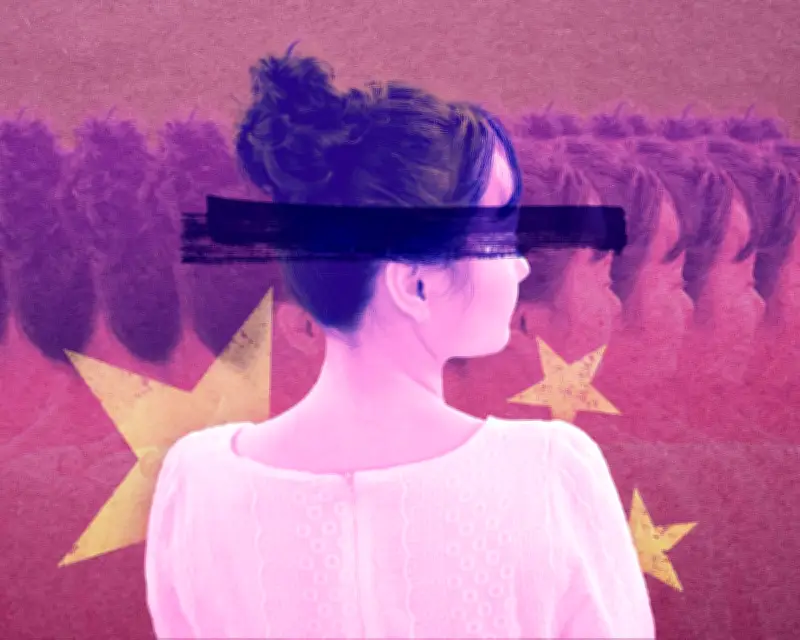
Cases of vulnerable women forced into marriages have galvanised a new generation of feminists in China. Female activists are working in the shadows to find and support vulnerable women they fear are being failed by authorities.
Activist Investigations
Last summer, Xiaocao, a softly spoken woman in her 40s, received a tip-off that in Lüliang, a small city in China’s Shanxi province, vulnerable women were being forced into marriages. Along with another volunteer, she wanted to investigate. After leaving Beijing, the two volunteers travelled south for hours, on trains and in rental cars. A few villages turned out to be dead ends. But on the final day of their trip, the women stopped in a county where they’d heard about a woman with learning disabilities who was “married” to two brothers. Soon, they found her.
“She could see we didn’t mean any harm, so she stopped and chatted with us,” says Xiaocao, who asked to be referred to by her nickname because of the sensitive nature of her work. The woman ultimately declined their assistance. But her case is just one of possibly thousands across China that activists pursue in an attempt to identify and help vulnerable women who have been either abused or trafficked.
The ‘Chained Woman’ Incident
The trafficking and exploitation of women in China gained global attention after a case in 2022. Every detail was shocking: A woman chained by the neck in a filthy shed. The eight children she’d given birth to. Local officials’ initial defence of her marriage to the man who had tied her up. The case of the “chained woman”, a woman with a mental illness who was later named as Xiao Huamei, quickly went viral after being posted online by a vlogger in 2022. And despite the efforts of the authorities to contain the reaction, the incident inspired a new type of feminism in China, one that operates in the shadows.
The Chinese government says that tackling trafficking is a priority, but activists say that the government’s plans lack transparency. In 2021, the Chinese government launched a 10-year action anti-trafficking plan that said investigation methods should be “modernised and upgraded”. In April this year, the supreme people’s court claimed the number of trafficking and abduction crimes involving women and children has declined nearly 80% since 2012. But in recent years, China has dramatically reduced the number of legal judgments that are available online, making it hard to find details about cases or to check the official claims. Traditional social norms in rural areas mean that many cases are never reported in the first place.
Growing Activism
Since Xi Jinping came to power in 2012, he has cracked down on all forms of civil society, including organisations working to eradicate sexual harassment, domestic violence and discrimination. Despite this, new groups of women across China are taking action. Since Xiao’s case, more and more privileged women have become willing to speak up for rural women with disabilities, a feminist activist who asked not to be named said. The activist said that as “anti-marriage, anti-childbirth” attitudes become more common among urban women, many have become more sensitive to the idea that in rural areas, women are being forced into marriages and childbearing against their will.
Activists are focused on helping women whom they see as the victims of trafficking, exploitation and abuse. As well as being bought or sold into marriages, some are forced into relationships that they’re unable to consent to. Celine Liao, a PhD candidate at the University of Washington who studies feminism in China, said that prior to the “chained woman” incident, “trafficking was not at the centre of mainstream feminist discourse” online. But since 2022, “feminists and the broader public have become significantly more sensitive to trafficking-related issues. In subsequent cases … there has been stronger public pressure on prosecutors to examine whether trafficking was involved”.
An Indictment of Society
Women have responded in a range of different ways. Some, like Xiaocao, physically travel to places where there are reports of exploitation, to investigate cases. Others use their spare time to monitor national anti-trafficking efforts. Some have lobbied internationally to raise awareness of the issue in China – a highly risky move in today’s climate. Nearly all of them operate under a cloak of anonymity because of the fear of retribution from the authorities, who, despite officially supporting the cause, treat independent activists harshly.
An analysis published by researchers from Renmin University found that of the more than 1,200 female victims of trafficking mentioned in judicial case files between 2017 and 2020, 20% lived with a physical or mental disability. And many cases, like the woman whom Xiaocao discovered in Shanxi, are not reported. In February, Free Nora, a media collective that was launched in the wake of Xiao’s case, published an article marking the fourth anniversary of the case. It described it as “an indictment of the society and history we live in” and published a lengthy analysis of the government’s progress and shortcomings in protecting the rights of rural women, based on publicly available judicial statistics. It concluded that progress was “insufficient”. The article, and Free Nora’s WeChat account, were later deleted.
Six people, including the husband, were later convicted of crimes relating to Xiao’s case. The authorities launched a special operation to uncover similar incidents which resulted in the discovery of more than 1,000 missing women and children. But efforts to investigate the problem more deeply have been quashed. Activists have noted that Chinese law criminalises the buying and selling of women, but it does not cover cases in which vulnerable women are forced into marriages. The Chinese government did not respond to a request for comment.
For now, women like Xiaocao are limited to trying to help women on a case-by-case basis rather than pushing for more wide-ranging reforms. But Xiaocao is studying to be a lawyer to better equip herself to advocate for women and children. She believes the government has failed to take the problem seriously enough, despite the renewed push since Xiao’s case. “I don’t think it’s realistic to rely on the authorities to crack down on this,” she says.




