
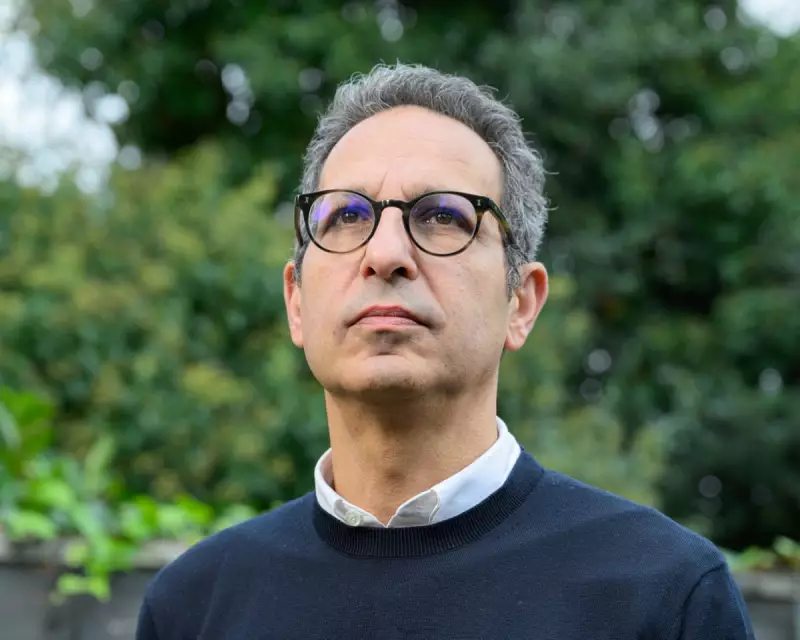
Enver Solomon, the Chief Executive of the Refugee Council, is reflecting on what he describes as a particularly grim week. The source of his dismay is the Labour government's newly announced asylum plans, a suite of policies that has sent shockwaves through the refugee and migrant support sector.
Home Secretary Shabana Mahmood unveiled controversial measures including the power to revoke refugee status if a home country is later deemed safe, extending the pathway to citizenship to 20 years, using AI for age assessments, and even seizing jewellery from new arrivals.
A New Low in Asylum Policy
For Solomon, a seasoned campaigner who has navigated the turbulent waters of UK immigration policy for years, the announcement from a Labour government stings with a particular sharpness. 'We thought the Rwanda scheme was the worst it had ever been,' he remarks, referencing the Conservative plan that cost £700m and deported just four people voluntarily.
He concedes that this latest development from a party many in his sector had hoped would bring change makes it 'more of a letdown, more of a disappointment.' He echoes the sentiment of Labour peer Alf Dubs, who called the plans 'grubby', a description Solomon fully endorses.
The political strategy behind the move also baffles him. 'I don't think that the 'Nigel Farage is right, don't vote for Nigel Farage' strategy is going to work,' he states, drawing on conversations with pollsters and political scientists.
Finding Hope in a Hostile Environment
Despite the political storms, Solomon maintains a professional duty to optimism. He finds this hope not in Westminster, but in the individuals he serves. 'I was with a group of teenage boys last week – all have come here unaccompanied,' he shares. 'You look at their faces and you see the bloodshot eyes, but they are desperately trying to learn English, they want to get on, and they're still able to laugh.'
This resilience is part of his own origin story. His mother, a Muslim social worker who worked with Winnie Mandela in apartheid South Africa, fled the country's degrading racial hierarchy in the 1960s. In the UK, she met his father, David, whose Jewish forebears had fled pogroms in eastern Europe. Solomon grew up steeped in both faiths and in a leftwing, politically active household.
He believes these core values of social justice are shared by a 'decent majority' of Britons who were appalled by scandals like Windrush and the painting over of cartoon murals in a children's asylum unit.
The Human Cost of Political Rhetoric
Solomon is scathing about the practical implications and the cost of Labour's proposed policies. The plan to review refugee status every 30 months would, according to Refugee Council estimates, cost £872m over a decade to administer.
He paints a stark picture of the human impact. 'Say I've got a daughter who's studying for their GCSEs... Then, they get a knock on the door, they're told their home country is safe, and they have to go now,' he illustrates. He also highlights the plight of children born in the UK to parents stuck in the proposed 20-year limbo, questioning what kind of country would create such a two-tier system.
Instead, he argues the government should focus on clearing the asylum backlog and closing the expensive, problematic asylum hotels. His organisation proposes granting limited leave to remain to people from countries with high grant rates, like Afghanistan and Syria, allowing them to work and contribute.
He forcefully counters the narrative that refugees are workshy or criminal. 'People don't realise that refugees come from countries where the idea that you would sit at home and receive benefits off the state is deeply humiliating,' he says. 'They're just people, like you and me.'
The toxic political climate has had real-world consequences, including a recent incident where a group of brown British students were mistaken for asylum seekers and protested against. The hostility has become so severe that the Refugee Council has been forced to implement security measures at its offices and Solomon's own home.
Moving On to Fight Another Fight
After five intense years, Solomon is leaving his post in January to lead Nacro, a criminal justice charity. He admits to a palpable exhaustion from the relentless nature of the role. 'It's the intensity of it: it's always in the headlines, it's always coming at you,' he explains. 'I don't want to do the job feeling that I'm worn out.'
Yet, his commitment to social justice remains undimmed. 'This really matters. It's about who we are,' he states. 'Part of me does feel that it's walking away from a cause which is so pivotal... But lots of others will fight the good fight, and I'm going on to fight the good fight in another area.'




