
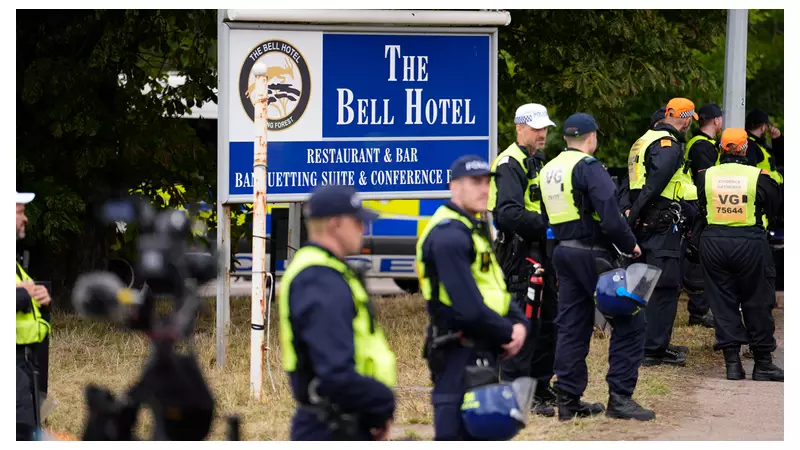
A High Court judge has ruled that asylum seekers can continue to be housed at The Bell Hotel in Epping, Essex, dismissing a legal challenge from the local council.
Council's Planning Challenge Fails
Epping Forest District Council (EFDC) had sought a High Court injunction to stop the accommodation of asylum seekers at the hotel, claiming it breached planning rules. Lawyers for the council argued that housing asylum seekers constituted a "material change of use" and had led to "increasingly regular protests".
However, Justice Mould ruled against the council on Tuesday 11 November 2025, stating he had "not been persuaded that an injunction is a commensurate response" to the alleged planning breach.
Judge Criticises Lack of Evidence
In his ruling, Justice Mould addressed the council's concerns about crime and anti-social behaviour, noting that no evidence had been provided to support claims that asylum seekers had a particular propensity for such behaviour.
"The fact that persons accommodated in asylum accommodation... from time to time commit criminal offences or behave antisocially provides no reliable basis for asserting any particular propensity of asylum seekers to engage in criminal or anti-social behaviour," the judge stated. "Persons who are members of the settled population also commit crimes and behave antisocially from time to time."
Political Fallout and Protests
The ruling has sparked immediate political controversy, with Conservative Shadow Home Secretary Chris Philp calling it "a dark day for local democracy" and "a slap in the face to the people of Epping".
The hotel has become a focal point for protests since July 2025, though Justice Mould noted that public opposition alone doesn't constitute planning harm. The case gained additional attention following the conviction of Hadush Gerberslasie Kebatu, an Ethiopian national housed at the hotel who was jailed for sexually assaulting a girl in Epping before being deported.
The Home Office, which intervened in the case, welcomed the judgment, with a spokesperson reiterating the government's commitment to close all asylum hotels and move residents to "more suitable accommodation such as military bases".




