
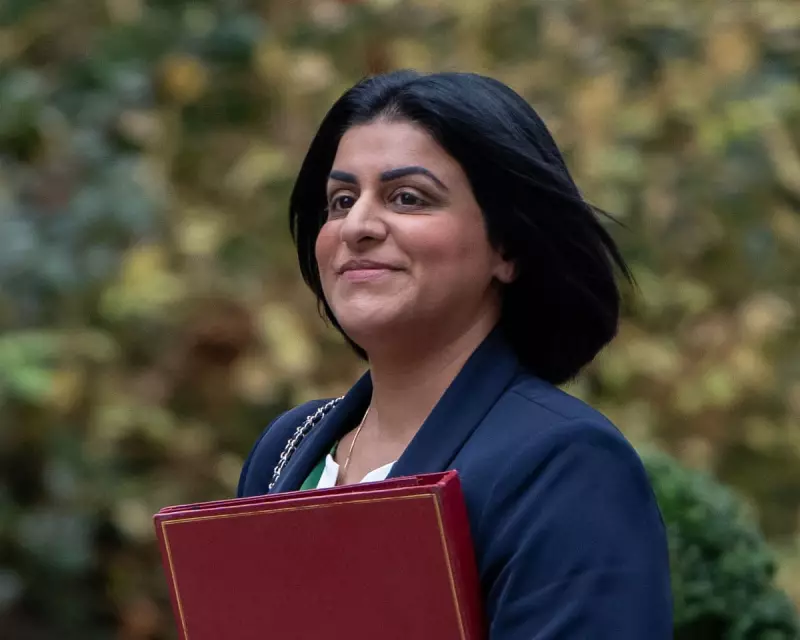
A retired academic has revealed a surprising discovery from two decades ago that appears to foreshadow the current immigration stance of Home Secretary Shabana Mahmood.
Unexpected School Interview Findings
Rev Dr Michael Fox, while making a documentary on politics for the Open University twenty years ago, interviewed a group of 15-year-olds at a school in Moss Side, Manchester. The school had selected a mixed group, with half identifying as white British and half as second-generation immigrants.
Contrary to his expectations, Dr Fox found that the children of immigrants strongly expressed views on immigration that closely resemble those now championed by Ms Mahmood. One student notably declared that "the country is full" - a sentiment that has since become common in political discourse about immigration controls.
Analysing the Motivations Behind the Views
At the time, Dr Fox theorised that these children were likely reflecting their parents' views and language. He suggested that factors such as a desire to "fit in" with their host country and identify with their neighbours' perceived values might be at play.
This phenomenon, which he described as a kind of "self-othering", could represent a natural response to the trauma of migration. Meanwhile, the white British children in the same discussion demonstrated openness and acceptance toward immigrants.
Family Perspective on Conservative Compassion
Dr Fox brings a unique personal perspective to the discussion as the son-in-law of the late Conservative home secretary Robert Carr. He notes that Carr made the compassionate decision to admit refugees from Idi Amin's Uganda in 1972.
Expressing his disappointment with recent developments, Dr Fox stated he finds it "unthinkable that some more recent Tory holders of that office have abandoned the compassion he personified" in favour of what he characterises as a "drawbridge mentality" toward immigration.
The revelation provides historical context to current political debates and suggests that the views expressed by second-generation immigrant politicians like Shabana Mahmood may have deeper roots within immigrant communities than commonly assumed.




