
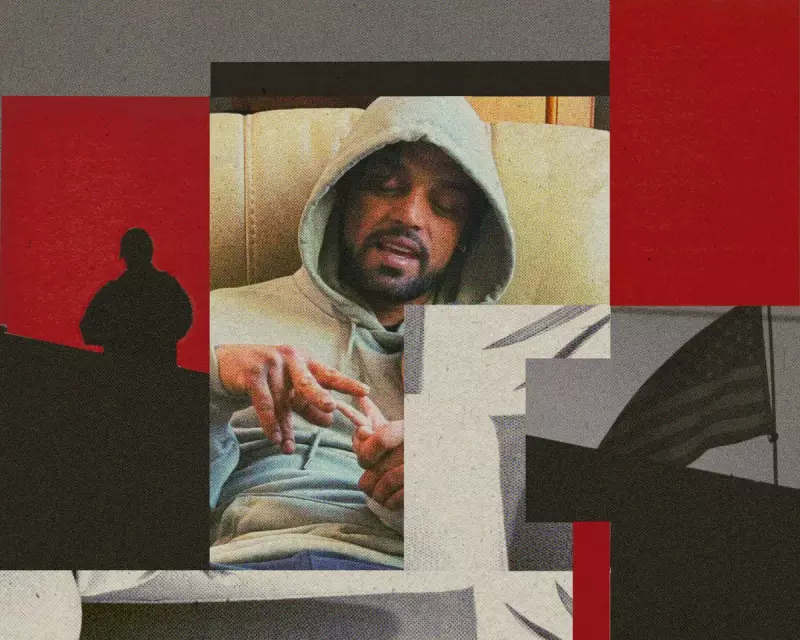
The quiet town of Twin Falls, Idaho, has become the unlikely backdrop for a story that challenges conventional American immigration narratives. Binod Shah, a Bhutanese refugee who built a successful business, started a family, and embraced his community, now finds himself separated from everything he worked for after being deported under the Trump administration's expanded immigration enforcement.
From Refugee Camp to American Dream
Binod Shah's journey to America began decades earlier when Bhutan expelled more than 100,000 Nepali-speaking Lhotshampa people during the early 1990s. The ethnic cleansing campaign stripped minorities of citizenship and forced families like Shah's into refugee camps in eastern Nepal. Living in bamboo huts behind barbed wire with rationed food and no electricity, they waited years for resettlement.
When the United States began accepting Bhutanese refugees in 2007, Shah was among those who found a new home in Twin Falls. The conservative Idaho town, which consistently votes Republican and supported Donald Trump in both 2016 and 2024, has nevertheless welcomed refugees since the 1980s. Shah embraced his new community, taking multiple jobs while washing dishes at a Chinese restaurant and working in a gun shop.
"Binod was always working," recalled Pastor Randall Davis, who knew Shah for over 16 years. "He was sharp and relentless."
Building a Life and Business
Shah's path to permanent residency seemed assured until a 2017 altercation with his first wife led to an aggravated assault charge. Despite denying he threatened her with a knife, Shah accepted a plea bargain that resulted in five years probation and 90 days in jail. His wife Stephanie believes language barriers and inadequate legal counsel contributed to this decision.
"Even though Binod had been here for a decade, his English was still rough. He didn't fully understand what pleading guilty meant," Stephanie explained.
The conviction triggered deportation proceedings, but when Bhutan initially refused to accept him, ICE released Shah under supervision. During this period, he married Stephanie and they established Shah Automotive together. The business flourished, employing local mechanics and offering discounts to refugees and veterans.
Jackson Stewart, who interned at the auto shop, remembered Shah as "a great teacher and a great leader." Stewart added: "He took a chance on me when I needed experience."
The Deportation Machine Accelerates
Following Trump's 2024 election victory and subsequent executive orders expanding immigration enforcement, Shah received a phone call in March ordering him to appear for removal proceedings. Despite gathering 16 letters of support from community leaders and his parole officer's positive report, his appeals failed.
The couple's desperate attempt to seek asylum in Canada was refused at the border, forcing them to continue to the Northwest ICE processing center in Tacoma. In a heartbreaking scene, Shah kissed his nine-month-old son goodbye before surrendering to authorities.
On June 3rd, Shah called his wife from New Delhi airport, informing her he was being deported to Bhutan. ICE confirmed his removal, citing his criminal record. Emily Covington, ICE assistant director, stated: "Let me be clear, illegal aliens who commit heinous crimes in this country will be swiftly removed from American communities."
Community Reckoning and Political Disillusionment
The deportation has caused soul-searching within Twin Falls' conservative Christian community. Pastor Randall Davis, who voted for Trump, described the situation as "ICE's mistake" and referenced biblical instructions to "care for the widow, the orphan, the poor, and the refugee."
Dr Diane Davis, who mentors refugee youths, sees refugees as "adopted children" of the United States. "When you adopt a child, you don't do it with the plan of sending them back," she said.
Stephanie Shah, raised in a conservative Christian household, finds her political convictions shaken. "Republicans say they're about family values, about keeping families together. But what about my family?" she questioned. "What value is there in tearing a father away from his wife and baby?"
She characterizes the immigration crackdown as political theater, noting that Trump targets "easy targets – people working hard, paying taxes, living quietly" while pardoning convicted drug dealers.
According to recent reports, deported Bhutanese refugees face immediate expulsion from Bhutan upon arrival. Some have been arrested in Nepal and processed for return to Bhutan, while others have gone into hiding. One deportee reportedly died by suicide in a refugee camp in August.
Stephanie now runs their auto shop alone while caring for their son. The business struggles to replace Shah's mechanical expertise. When their son sees his father's face during rare video calls, the connection often freezes and goes dark, mirroring the family's fractured reality.
As Stephanie reflects on her husband's case, she poses a fundamental question: "What do we ask of immigrants as born Americans? Binod owned a business, employed Americans, went to church, raised a family, and worked to assimilate. Republicans get mad when people don't assimilate. But Binod did, and it still wasn't enough."




