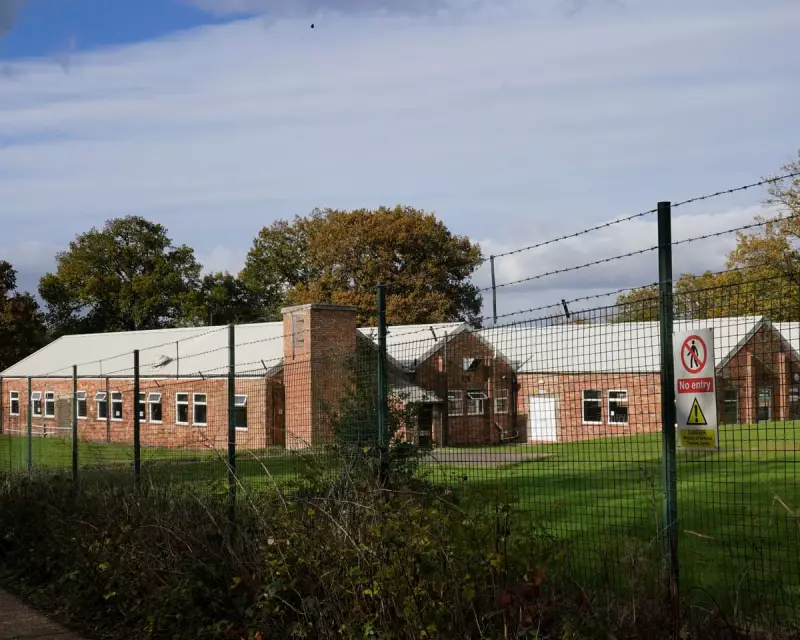
The first group of asylum seekers has been transferred to a former military training camp in East Sussex, according to an official announcement from the Home Office. This relocation has occurred amidst significant local opposition and the looming threat of legal proceedings challenging the government's decision.
Initial Arrivals and Expansion Plans
Early on Thursday morning, Crowborough training camp received twenty-seven male asylum seekers. This initial contingent represents just the beginning of a much larger operation, with authorities planning to scale up the numbers to approximately five hundred individuals over the next several months. The camp is one of two former military sites specifically identified by ministers to accommodate around nine hundred people in total, with the other location situated in Inverness, Scotland.
Government Rationale and Political Stance
In a statement reflecting the current administration's stringent approach to immigration, Shabana Mahmood emphasised that this move forms a crucial part of a broader strategy to transition asylum claimants out of temporary hotel accommodations. The government aims to utilise larger-scale facilities like the Crowborough camp instead.

"Illegal migration has been placing immense pressure on our communities," Mahmood stated. "That is precisely why we are actively removing the incentives that attract illegal migrants to Britain and closing down the asylum hotels that have been negatively impacting local areas. Crowborough represents merely the initial phase. I intend to bring forward site after site until every asylum hotel is closed and returned to the communities they belong to."
Background and Delays
Official Home Office statistics reveal a concerning trend: the number of asylum seekers housed in temporary hotel accommodations increased by thirteen percent, reaching 36,273 by the end of September. Under the previous government, more than four hundred hotels were utilised for this purpose at a staggering daily cost of nine million pounds. Currently, just under two hundred hotels remain in operation.
The transfer of individuals to the East Sussex barracks was originally scheduled for the first week of December. However, the move was postponed until January, as previously reported, to ensure all necessary safety checks were thoroughly completed. This delay was implemented to prevent a repeat of incidents like the discovery of legionella bacteria on the Bibby Stockholm barge, which caused a major operational setback.
Security and Arrival Procedures
The Home Office has confirmed that the new arrivals at Crowborough are expected to be individuals who have recently entered the UK, typically via small boat crossings of the English Channel. The accommodation facility is equipped with comprehensive security measures, including round-the-clock surveillance, CCTV systems, and strict sign-in protocols for all residents. Furthermore, all individuals have undergone mandatory health screenings and police checks prior to their arrival at the base.
Local Opposition and Legal Challenges
The decision to house undocumented male migrants near the town has sparked considerable local unrest. For several consecutive weekends, hundreds of residents have taken to the streets of Crowborough to protest the plans. Demonstrators have managed to raise nearly one hundred thousand pounds to fund potential legal action, specifically aiming to seek a judicial review of the entire scheme.
On Wednesday evening, Wealden District Council confirmed that Immigration Minister Alex Norris had contacted them to announce that the plan had received official approval. Council Leader James Partridge expressed strong dissatisfaction with this development.

"I informed the minister in clear terms that we strongly believe this is the wrong decision," Partridge said. "Despite our vigorous objections, the minister has not listened to any of our concerns. We have immediately instructed our legal team to review the decision in detail to determine if there are grounds for a legal challenge. We acknowledge this may be a difficult endeavour, but we have been scrutinising the Home Office's actions throughout this process to identify any potential avenue for a successful legal action. We will proceed if our barristers advise there is a reasonable prospect of success."
The situation remains fluid, with the potential for ongoing protests and a significant legal battle that could ultimately be decided in the High Court.