
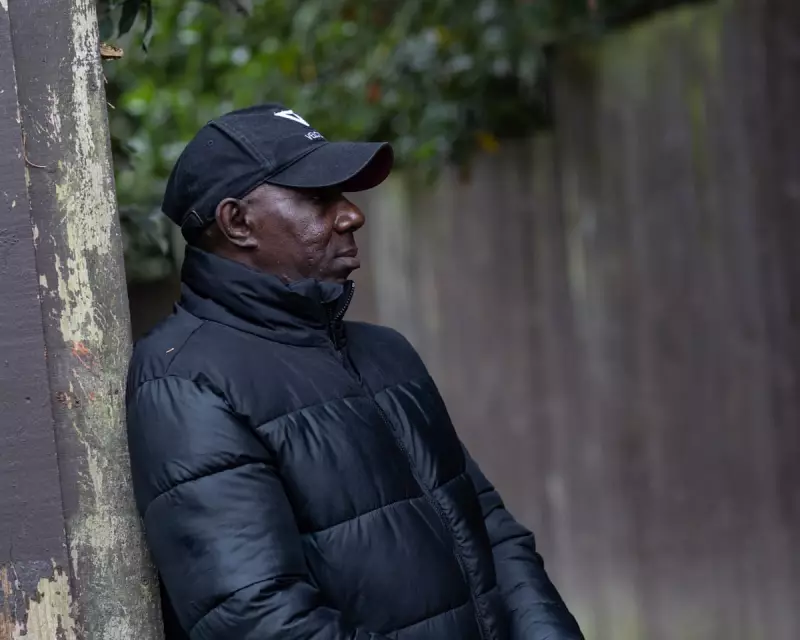
For seventeen agonising years, Ussu existed in a state of uncertainty, trapped within the UK's asylum system after fleeing imprisonment and torture in his home country. His story reveals profound flaws in Britain's approach to those seeking sanctuary.
From Military Coup to UK Limbo
Ussu grew up in a small, unstable African nation, a former Portuguese colony familiar with political turmoil. An ambitious student dreaming of becoming a doctor, he faced an unexpected detour when required to complete military service. Once enlisted, his superiors refused to release him, trapping him in the army for years.
"A few of us army colleagues got involved in the coup to overthrow the government because we were surrounded by killings and corruption, and we wanted something better for the country," he explains. The attempted coup failed disastrously, leading to his capture and brutal torture with iron bars that left permanent scars down his right side.
After two months and seventeen days of imprisonment, Ussu and a friend made a desperate escape attempt. "People in countries like the UK don't understand how refugees make decisions because our experiences are so different from theirs," he reflects. "We decided to risk escaping because we couldn't face any more torture. We knew we might be killed but decided to take the risk."
A Fateful Decision and Legal Nightmare
On 28 April 2008, Ussu's family helped him obtain a false Portuguese passport and escape the country. He initially planned to seek asylum in Portugal, where he could communicate in Portuguese and likely have been granted protection quickly, eventually bringing his wife and two small children to join him.
Instead, circumstance led him to the UK, where he arrived bewildered and unable to speak English. His troubles escalated dramatically when he attempted to travel to Portugal from Luton airport. Unable to read departure boards, he missed his flight and was arrested for using false documentation.
Here began what would become years of legal misfortune. His duty solicitor, unfamiliar with refugee protections under the Geneva Conventions, advised him to plead guilty rather than mounting a defence recognising that refugees often have no choice but to travel on false documents. This critical error would haunt his case for years.
"When I finally found out I had been given the wrong legal advice, I wanted to try to get my conviction overturned but the law firm the solicitor was working for had gone out of business so I couldn't access my records," he says.
Homelessness, Racism and Systemic Failure
After serving a six-month prison sentence, Ussu was moved to Colnbrook immigration detention centre in early 2009 before being released to asylum accommodation in Stockton-on-Tees. The experience proved isolating and hostile.
"I could walk for miles in Stockton and not see a single Black person," he recalls. "I faced a lot of racism there. Some people shouted out things like: 'Hey, monkey, what are you doing here? Go back to your country.'"
When the Home Office refused his asylum claim and terminated his accommodation, he became homeless in London, sleeping on an abandoned mattress on a church veranda. Police officers occasionally took pity on him, offering leftover food.
Despite obtaining medical evidence of torture from Freedom from Torture, his fresh asylum claims were repeatedly refused. "I am not a liar. All I was doing was telling the truth," he states, expressing frustration at the system's disbelief.
Catastrophic Injury and Eventual Breakthrough
In 2013, another tragedy struck when a car hit him while cycling, leaving him with severe leg injuries. Hospital staff informed him that as a refused asylum seeker, he was only entitled to emergency treatment and planned to discharge him while he remained immobile.
"The way the staff in that hospital talked to me, and the way they told me they were going to discharge me on to the street, when I couldn't walk, was in so much pain and could hardly get out of bed, hurt me so much," he remembers.
His fortunes finally turned when reputable firm Wilsons Solicitors took on his complex case, spending four years untangling the legal mess. After the Home Office rejected his claim yet again, lawyers successfully appealed, with a judge granting his appeal immediately.
This summer, after seventeen years—one of the longest waits endured by any asylum seeker in the UK—Ussu finally received his eVisa confirming leave to remain.
Broken System, Unbreakable Spirit
Sonia Lenegan, editor of Free Movement, notes that the degradation of legal aid over three decades has significantly contributed to the asylum system's current state. Despite government announcements in November 2024 and July 2025 promising increased legal aid fees for immigration work, the essential funding has yet to materialise.
Ussu now works as a kitchen porter while hoping to move into construction. He maintains contact with his children, now 20 and 24, whom he hasn't seen since they were small. He dreams of supporting their master's degree studies.
"I have a few simple words to say to the Home Office: you destroyed my life," he states. "How can they hold on to a person for 17 years who has done nothing wrong? Being an asylum seeker here is like living in an open prison."
Despite the ordeal, Ussu remains determined to contribute to British society through work, taxes and continued volunteering. "The Home Office tried to break me, but despite all the bad things that have happened to me, God put some really good people in my path who helped me fight. Despite everything, I'm still strong and I'm still here."




