
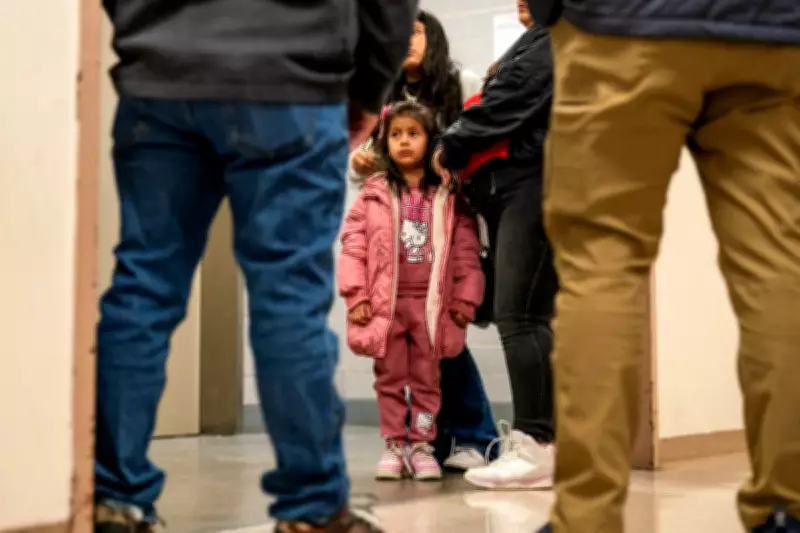
More than 145,000 children in the United States have likely experienced the detention of a parent by immigration authorities since the start of Donald Trump's second presidency, according to a new report published by the Brookings Institution, a reputable think tank.
Key Findings of the Study
The report, released on Monday, estimates that approximately 146,635 children who are US citizens have had a parent detained during the mass deportation campaign that the Trump administration launched after he returned to office in early January. The study further found that among these children, more than 22,000 experienced the detention of all parents living in their household. Roughly 36% of the affected children were younger than six years old, highlighting a stringent immigration enforcement strategy that has drawn widespread criticism from civil rights and immigrant advocacy groups.
Demographic Breakdown
The Brookings Institution's report also revealed that the largest share of US citizen children with a detained parent is linked to Mexico, accounting for nearly 54%, while children with parents from Guatemala and Honduras together make up more than 25%. Washington DC and Texas have the highest proportion of American children with an affected parent, with more than five per 1,000 facing parental immigration detention, according to the report.
Underreporting Concerns
Brookings researchers noted that the US Department of Homeland Security (DHS) reported 18,277 detainees with US citizen children in fiscal year 2025 but described this figure as “almost certainly a substantial undercount.” Earlier in May, a Guardian investigation found that the arrest of about 18,400 parents had affected as many as 32,000 children in the first seven months of 2025 alone, including at least 12,000 US citizen children. That investigation also found that the Trump administration arrested about 2,300 parents and deported about 1,400 parents each month in 2025, nearly double the monthly deportation rate recorded in 2024 during the end of Joe Biden's presidency.
Methodology and Data Sources
Brookings researchers pointed to anecdotal evidence suggesting that many immigrants are either not asked whether they have children or choose not to disclose that information out of fear. Instead, the researchers relied on demographic data from the Detention Data Project, matching detainees' characteristics—including country or region of origin and marital status—with similar undocumented individuals identified in the American Community Survey (ACS), a nationally representative household survey.
Broader Context
Roughly 13 million adults in the United States are undocumented or hold only limited legal protections. As a result, more than 4.6 million US citizen children live with at least one parent vulnerable to deportation, and about 2.5 million could face the detention of all parents in their household. “For both logistical and political reasons, the administration will not achieve its stated goal of removing every unauthorized immigrant from the United States,” researchers said. “At a minimum, DHS should collect and publicly report accurate data on the number of parents facing detention or deportation, as well as the number of US citizen children who leave the country following a parent's removal.”
The researchers added: “As immigration enforcement expands, ensuring that affected children have access to basic supports and protections should be understood not as optional, but as a necessary governmental responsibility tied to the foreseeable consequences of family separation and displacement.”
Government Response
In a statement to the Guardian, a DHS spokesperson argued that “being in detention is a choice.” The spokesperson said: “ICE does not separate families. Parents are asked if they want to be removed with their children or ICE will place the children with a safe person the parent designates. This is consistent with past administrations' immigration enforcement.” The spokesperson added, among other things, that “parents can take control of their departure” from the US with the CBP Home app “and reserve the chance to come back the right legal way.”
In March, a report by the Women's Refugee Commission (WRC) and Physicians for Human Rights (PHR) found that the Trump administration deported many immigrant parents without asking whether they had children or allowing them to decide if their children would accompany them.




