
Judicial Ruling Reshapes Utah's Political Landscape
In a decision with national implications, a Utah judge has dramatically altered the state's political map, creating a new House seat favourable to Democrats. The ruling by Judge Dianna Gibson, delivered just before a midnight deadline on Monday, represents a significant victory for the Democratic party in a state where Republicans currently hold all four congressional districts.
The Battle Over Fair Representation
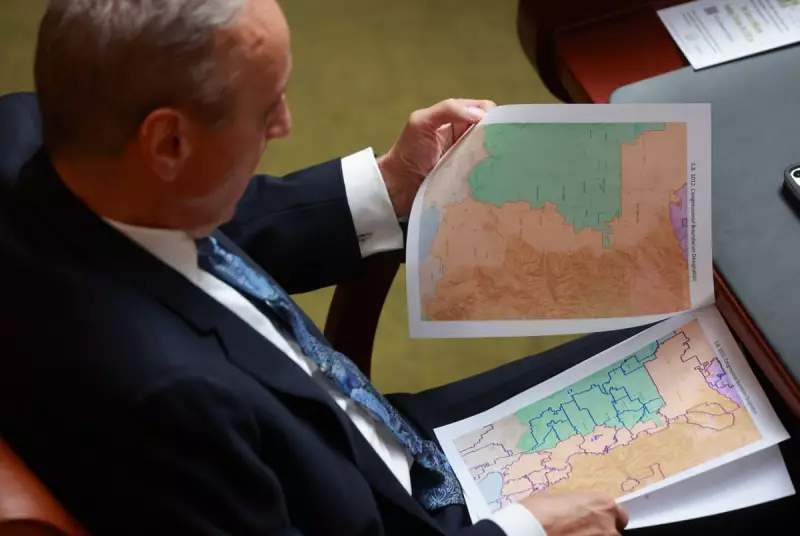
Judge Gibson determined that a revised map submitted by Utah's Republican-controlled legislature "unduly favours Republicans and disfavours Democrats", marking the second time she has rejected lawmakers' attempts to draw district boundaries. This ruling throws out the replacement map that Republicans passed after Gibson first struck down Utah's congressional map in August.
Instead, the judge approved an alternative proposal created by the League of Women Voters of Utah and Mormon Women for Ethical Government. The key change consolidates Salt Lake County – home to the state's largest city – primarily within a single district. This approach prevents the division of the Democratic-voting population centre among all four seats, a practice critics argue diluted Democratic voting power.
National Implications for House Control
The timing of this decision could prove crucial for Democrats' national ambitions. Democrats need to flip just three seats nationwide to regain control of the House of Representatives in next year's midterm elections. The creation of a competitive district in Utah suddenly puts one of those seats within reach.
This ruling lands squarely in the middle of an intense nationwide battle over congressional redistricting. The conflict was sparked by Donald Trump's push for Republican-led states to redraw their congressional maps mid-decade, breaking from the traditional practice of doing so only after each decade's census.
The redistricting advantages already secured by Republicans include:
- Nine locked-in seats across Texas, Missouri, North Carolina and Ohio
- Potential gains in Indiana, Kansas, Florida and Louisiana
Democrats have mounted their own counteroffensive, with California voters recently backing a ballot measure that could deliver five additional seats to the party. Virginia's Democratic-controlled legislature is also advancing a plan that might yield two or three more seats.
Legal Challenges and Political Fallout
At the heart of Utah's redistricting saga lies a 2018 ballot measure passed by voters to prevent politicians from manipulating district boundaries to favour their own party – the practice known as gerrymandering. Judge Gibson initially ruled in August that legislators had circumvented these anti-gerrymandering requirements when they adopted districts following the 2020 census.
The Republican response has been swift and critical. Republican state representative Matt MacPherson condemned the ruling as "a gross abuse of power" and announced he would pursue impeachment proceedings against Judge Gibson. Republicans argue the judge lacks legal authority to impose a map that lawmakers haven't approved.
Judge Gibson defended her decision, stating she had a duty to ensure a lawful map was in place before the deadline for preparing the 2026 ballot.
Immediate Political Consequences
The newly configured district has already generated considerable interest from Democratic politicians considering runs there. Ben McAdams, a former congressman who lost his seat in 2020 and remains the only Democrat to represent Utah in federal office this century, is widely expected to announce his candidacy. No Democrat has served in Utah's congressional delegation since McAdams left office in January 2021.
Meanwhile, Republican activists across Utah had been gathering signatures for a ballot measure to scrap the 2018 anti-gerrymandering law altogether in 2026, though reports indicate the party has since abandoned this campaign. Even if such a measure were to succeed in the future, Judge Gibson's ruling will control Utah's congressional districts for the upcoming 2026 election cycle.
Democrats in the Utah state legislature issued a joint statement celebrating the ruling, calling it "a win for every Utahn" and emphasising that "fair representation is the truest measure" of their promise to serve the people of Utah.




